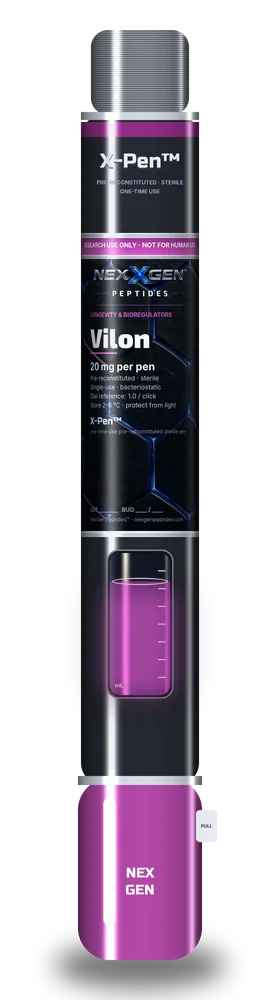
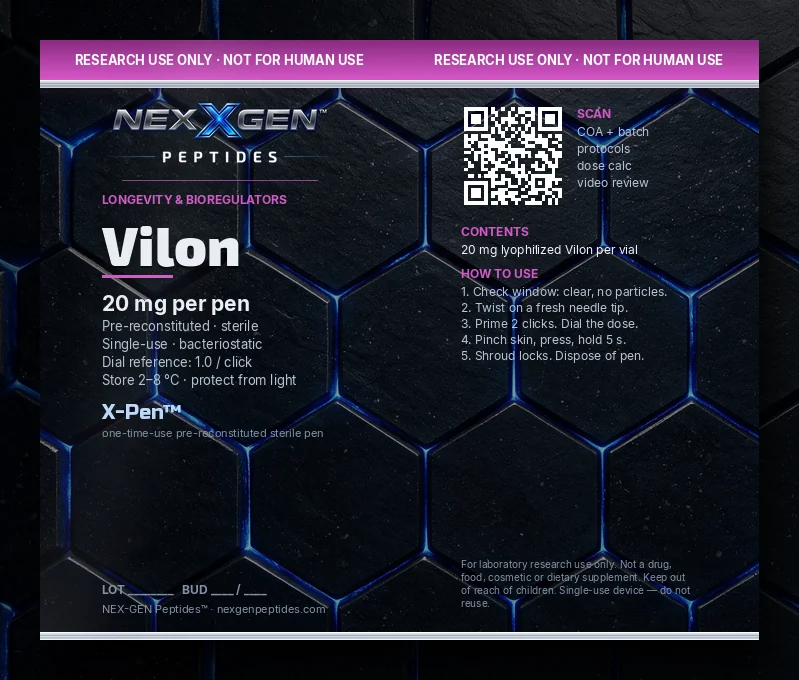
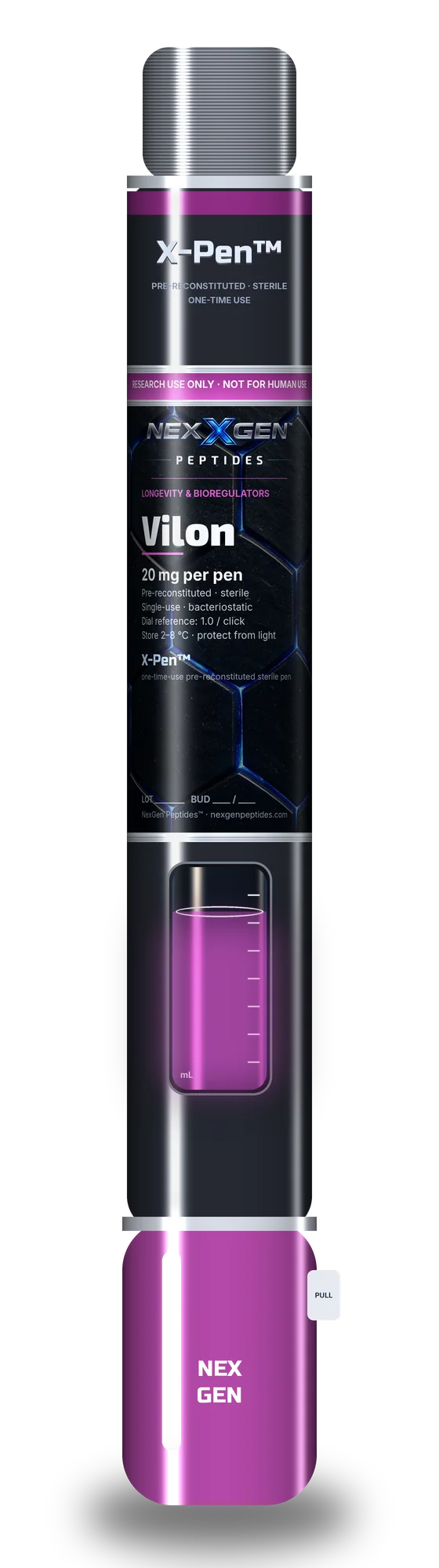
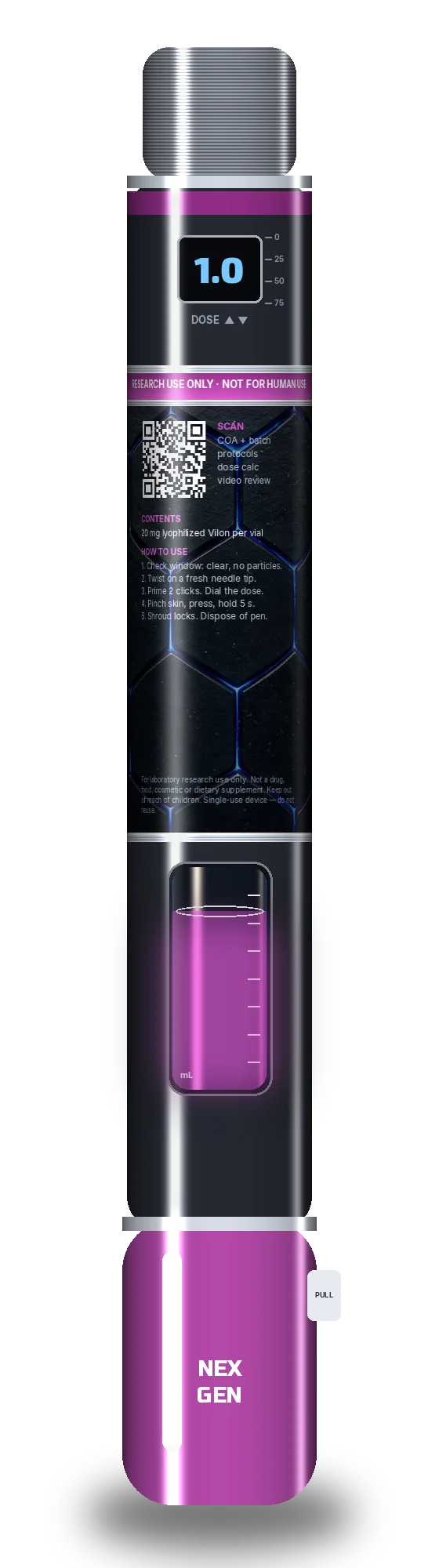
Vilon
Also known as: Lys-Glu dipeptide · Thymus/immune dipeptide bioregulator
A synthetic thymus-related dipeptide studied for immune regulation, thymic aging, and age-associated changes in immune function.
Vilon is the short synthetic dipeptide Lys-Glu (lysine-glutamate), developed in the Khavinson peptide-bioregulator research tradition. It is described as a thymus- or immune-related cytogen, a synthetic short peptide modeled on regulatory peptide activity associated with an organ system. This differs from cytomax products, which are natural tissue extracts containing mixtures of peptides and other constituents; cytogen products are defined short synthetic sequences. Vilon has been studied in experimental and Russian clinical contexts focused on immune regulation and age-related thymic changes.
Research has examined immune-cell function, gene expression, and responses associated with aging, with much of the mechanistic literature coming from animal, cellular, or Russian clinical work. Reports discuss changes in T-cell and immune parameters, but study designs and outcome reporting vary, and strong independently replicated randomized trials are scarce. Khavinson’s wider longevity literature describes long-term peptide-bioregulator programs and cohorts followed over decades; those program-level observations do not isolate Vilon’s individual effect or establish a causal longevity benefit.
The Handbook names Vilon as part of its Khavinson bioregulator rotation, including “Vilon ×2,” and describes an approach that rotates organ-system bioregulators rather than taking every product continuously. It does not specify a Vilon dose or route in that routine. Practitioner references report short daily courses of 1 mg subcutaneous or sublingual for 10–20 days, repeated once or twice yearly. These protocols are distinct from validated, standardized clinical dosing.
@SupplementGraveyard review
Subscribe to @SupplementGraveyard to catch it on release.
What it is studied for
Preclinical studies in the Khavinson research tradition examined immune-cell activity and age-associated immune changes after short-peptide exposure.
Russian clinical reports describe use of thymus-related peptide bioregulators in aging populations and report immune-parameter changes, with limited independent replication and variable study reporting.
Cell research has investigated transcriptional and immune-related gene-expression effects of short bioregulator peptides; these findings do not establish a clinical immune benefit.
Long-term Khavinson-program reports describe peptide bioregulator use in older cohorts, but do not isolate Vilon from other peptides or lifestyle and medical factors.
How it works
Vilon is a two-amino-acid peptide, Lys-Glu, proposed to modulate gene expression and immune-cell activity associated with thymic function. Research in the Khavinson framework describes effects on transcriptional regulation and T-lymphocyte differentiation or function, rather than a well-characterized single receptor pathway. The thymus supports T-cell maturation, and age-associated thymic involution is one rationale for studying thymus-related bioregulators. Direct human target engagement and a defined receptor have not been established; proposed immune effects should be distinguished from demonstrated clinical outcomes.
Protocols used in studies & practitioner literature
Informational only. These are protocols reported in published studies, product labels and practitioner references, listed so you can read the research intelligently. They are not dosing instructions. Injectable products on this site are research-use-only.
- Dose
- 1 mg
- Frequency
- Daily
- Timing
- No specific time given
- Cycle
- 10–20 days; 1–2 cycles per year
- Route
- Subcutaneous injection or sublingual
- Dose
- No dose stated
- Frequency
- Vilon listed as “×2” within the rotation
- Timing
- No specific time given
- Cycle
- Part of rotating organ-system cycles
- Route
- The Handbook does not specify the route for Vilon
When and how it is used
- The Handbook places Vilon in a broader rotating bioregulator approach, rather than specifying a standalone continuous routine or dose.
- The reported practitioner course is a short 10–20-day cycle; the cited reference gives either subcutaneous or sublingual use, without a route-specific comparative dose.
- Track the reason for use and clinician-selected immune measures rather than relying on subjective impressions alone; immune marker changes do not by themselves demonstrate improved clinical resilience.
- The Handbook’s broader Khavinson discussion describes rotating organ systems and using a small number of bioregulators at a time; it does not give a Vilon mixing or reconstitution method.
- For any injectable formulation, follow the product-specific handling instructions and qualified clinical guidance; vial concentration alone does not determine a safe preparation.
Synergies and stacks
Considerations and cautions
- Injectable Vilon is sold as research-use-only in this market; regulatory status and product quality vary by jurisdiction and supplier. It is not a standardized FDA-approved medicine.
- Human evidence is limited and largely comes from Russian reports; cohort-level longevity findings from multi-peptide programs cannot establish Vilon-specific effects. People with autoimmune disease, transplant history, immune-modifying medicines, or active cancer should consult a qualified clinician before considering immune-active products.
- Possible injection-site irritation and infection risks apply to injectable products; uncertain sterility or peptide identity increases risk. Check the current WADA list if subject to sport testing.
The Handbook take
The Handbook includes Vilon in its Khavinson bioregulator rotation and specifically lists “Vilon ×2.” It describes cycling and rotating across organ systems, but does not provide a standalone Vilon dose, route, or specific pairing in that section.
Frequently asked questions
What is the reported Vilon dose?
A practitioner-reported course is 1 mg daily for 10–20 days, given subcutaneously or sublingually, with one or two cycles yearly. The Handbook itself does not specify a dose.
How quickly does Vilon work?
There is no validated timeline for a noticeable effect. The reported protocols are short cycles, while clinical immune outcomes require objective measures and cannot be inferred from a subjective response.
What side effects can Vilon cause?
Injection-site irritation and infection are possible with injectable products. Human safety characterization is limited, so discuss immune conditions and medicines with a clinician before use.
Is sublingual Vilon different from injection?
The practitioner reference lists both routes, but comparative absorption and clinical outcomes have not been established. Do not assume that a sublingual amount is equivalent to an injectable amount.
Can Vilon be combined with Epitalon or thymus peptides?
Vilon is frequently discussed with Epitalon in Russian longevity research, and the Handbook places it in a broader bioregulator rotation. Evidence does not establish that combining them improves outcomes; use clinical oversight when multiple immune-active products are considered.
Is Vilon approved, and how should it be stored?
Injectable Vilon is sold as research-use-only in this market, and legal status varies. Storage depends on the specific formulation and manufacturer; follow documented product instructions and avoid products with unclear identity or sterility.
Sourcing
Related entries
Research supply
BioLongevity Labs products for laboratory research, available to buy now. BioLongevity Labs takes the order and ships it; these listings are separate from the educational material. Affiliate disclosure: BioLongevity Labs links and code JASONJOHNS (15% off eligible orders) are affiliate links and a paid code; NexGen may earn a commission at no extra cost to you if you buy through them.
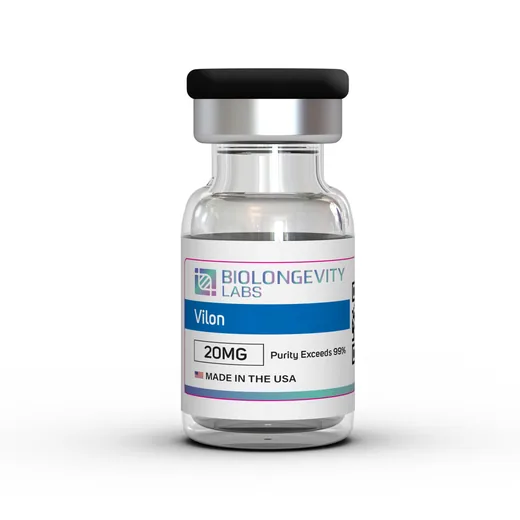
Research use only. Not for human consumption.
$68.97 as of Nov 22, 2026. Price at merchant may differ.
View research listing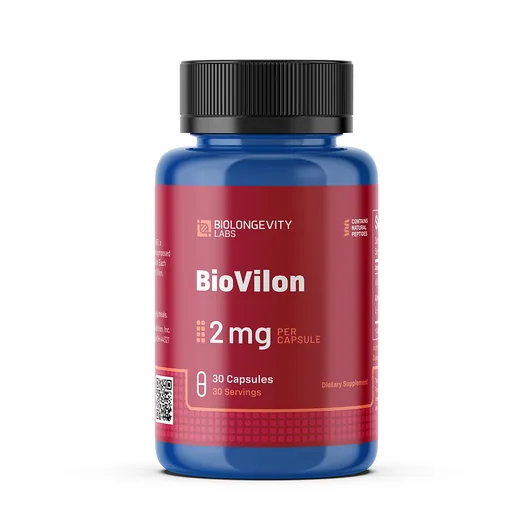
Research use only. Not for human consumption.
$194.99 as of Nov 22, 2026. Price at merchant may differ.
View research listingEducational content from an executive health coach, written as "what I would do if I were you" guidance — not medical advice, diagnosis or treatment. Injectable products sold on this site are for research use only and are not for human consumption. Talk with your licensed clinician before changing any protocol. Last reviewed November 2026.