
Reviews Peptide Supplements Thymic & Immune Research
BioVilon (Vilon / KE capsule)
Also known as Vilon, KE dipeptide, Lys-Glu
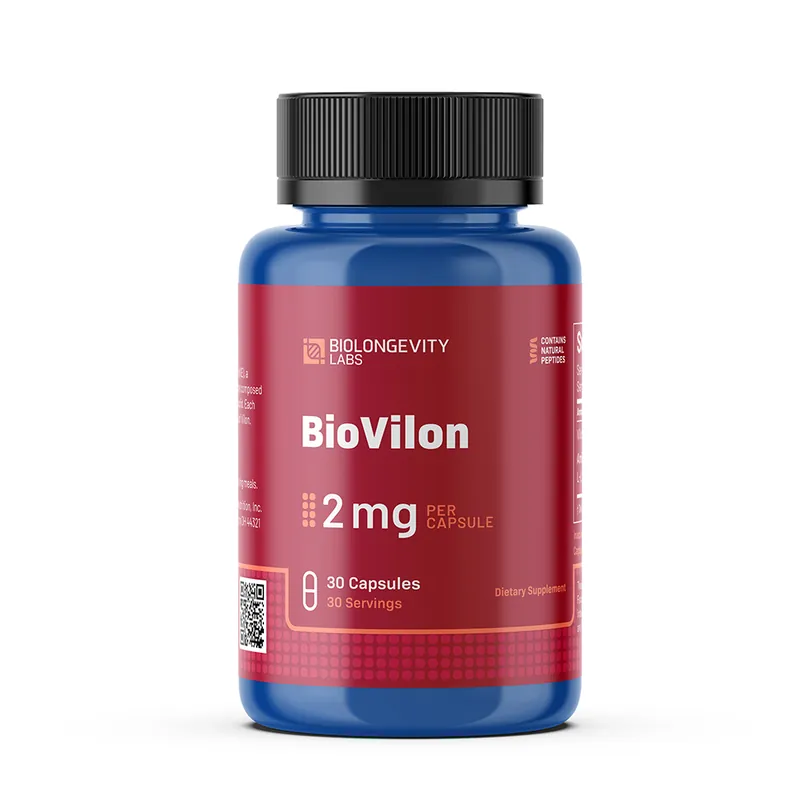
Oral capsule of Vilon, the Lys-Glu (KE) dipeptide, 2 mg per capsule. Research is mostly thymocyte and cultured-cell work plus sparse older Russian clinical reports.
- Advanced (draft)
- Compound evidence C · Animal / preclinical
- Researched, not personally tested
- capsule
- Rank pending
Grades describe published research on the compound, not this product.
What it is
Vilon is a synthetic dipeptide (lysine-glutamic acid) from the Khavinson bioregulator program, studied for effects on thymic cells and chromatin in aging cells. BioVilon contains 2 mg KE per vegetarian capsule, 30 capsules per bottle (label image). It is a defined peptide, distinct from thymus extracts such as Thymalin.
What it has been studied for
Thymocyte proliferation and signalling
AnimalMouse-thymocyte experiments reported effects on blast transformation and sphingomyelin-pathway signalling. Preclinical.
Protein-synthesis activity in human thymic cells
In vitroCo-culture of human thymocytes and thymic epithelial cells with Vilon or Epitalon changed nucleolar-organizer markers. Cell culture only.
Chromatin reactivation in lymphocytes from older donors
In vitroCultured lymphocytes from elderly people showed chromatin decondensation after Vilon exposure. Does not show whole-body effects.
Gene expression in aging stem-cell cultures
In vitroKE and other short peptides modulated aging-related gene expression in mesenchymal stem-cell cultures.
Coagulation markers in an older clinical report
Human (small / observational)A 2006 Russian report in a specific patient population is indexed as a trial but has limited methodological detail; not proof of consumer immune benefit.
This study examined the research compound, not the product sold by BioLongevity Labs. The findings do not establish that the product is safe or effective for people.
Research contexts
- Thymic-peptide and immunosenescence literature reviews
- Comparing defined dipeptides with thymus-extract bioregulators
- Researchers tracking Khavinson bioregulator formats
Cautions & unknowns
- Evidence is concentrated in one research network; independent replication is limited.
- Oral bioavailability of a free di-/tri-/tetrapeptide is not established: short peptides are largely broken down by gut and plasma peptidases, and no published human pharmacokinetic study of this capsule exists.
- Anyone on immune-modulating medication or with autoimmune conditions has no safety data for this product.
- Not studied in pregnancy or nursing.
- BioLongevity Labs designates this product for in-vitro / laboratory research use only; the merchant states it is not a drug, food, dietary supplement or cosmetic. This review describes the compounds and published research only, with no use, dosing or personal-use guidance.
- The bottle artwork shown on the product page carries a 'Supplement Facts' panel and the standard FDA structure/function disclaimer, which does not match the merchant's research-use-only designation; the research-use designation governs this review.
- No statement here has been evaluated by the FDA; nothing in this review is medical advice.
Jason’s take
Jason's hands-on review is coming.
Handbook §27 lists Vilon, without identifying the BLL BioVilon capsule.
Handbook §27 “My Current Protocol (Bonus Exclusive Content)”: Names Vilon without identifying the BLL capsule.
Handbook §25 “The Ultimate Guide to Peptides”: Discusses short peptide bioregulators as a group.
Compared products
One product reviewed so far. Comparison slots stay empty until Jason chooses alternatives.
- Product 1
BioLongevity Labs
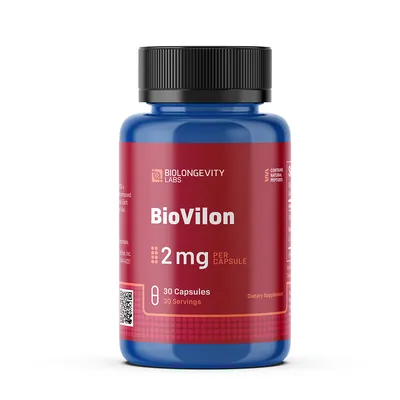
BioVilon
SKU SUPP-VILON
Researched, not personally tested
Where it shines
- Single defined active with an exact amount on the label (2 mg KE per capsule).
- Product page lists study populations and models for each citation instead of overstating them.
Where it falls short
- Expensive per mg: about $6.50 per capsule and $3.25 per mg of KE, versus $3.45/mg for BLL's own 20 mg Vilon vial (different format).
- No human pharmacokinetic or outcome study of oral KE at this amount.
- Highest-priced of BLL's four single-peptide capsules despite the smallest molecule.
Verdict: Clearly labelled, but the priciest way BLL offers Vilon and the oral format's absorption is unproven.
$194.99 as of Nov 22, 2026 at BioLongevity Labs
For in vitro research use only. Not for human or animal use.
NexGen formulation
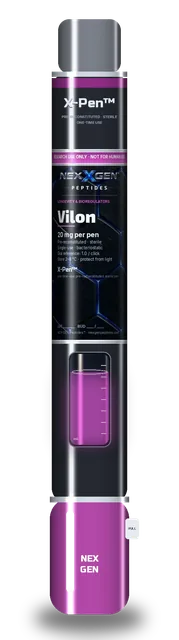
NexGen formulation in development
NexGen™ is Jason Johns' own brand. Illustrative render: formulation and name are not final.
Related reviews
Sources
- BioVilon product page BioLongevity Labs · accessed Nov 22, 2026
- Peptide Bioregulators: What Are They and What Do They Do? Jay Campbell · accessed Nov 22, 2026
- Effects of short peptides on thymocyte blast transformation (2002) PubMed · accessed Nov 22, 2026
- Effect of thymomimetic vilon on blood coagulation in diabetes mellitus type 1 patients (2006) PubMed · accessed Nov 22, 2026
- Argyrophilic proteins in human thymocytes co-cultured with vilon and epithalon (2004) PubMed · accessed Nov 22, 2026
- Vilon-induced reactivation of chromatin in cultured lymphocytes from old people (2004) PubMed · accessed Nov 22, 2026
- Gene expression in human mesenchymal stem cell aging cultures: modulation by short peptides (2020) PubMed · accessed Nov 22, 2026
Updated Nov 22, 2026. Written by the NexGen research team for @SupplementGraveyard™. Jason Johns is an executive health coach, not a licensed healthcare provider. This content is educational only and does not create a provider-patient relationship.