
Reviews Peptide Supplements Healthy Aging & Telomere Research
BioEpitalon (Epitalon / AEDG capsule)
Also known as BioEpithalon, Epithalon, Epitalon, AEDG, Ala-Glu-Asp-Gly
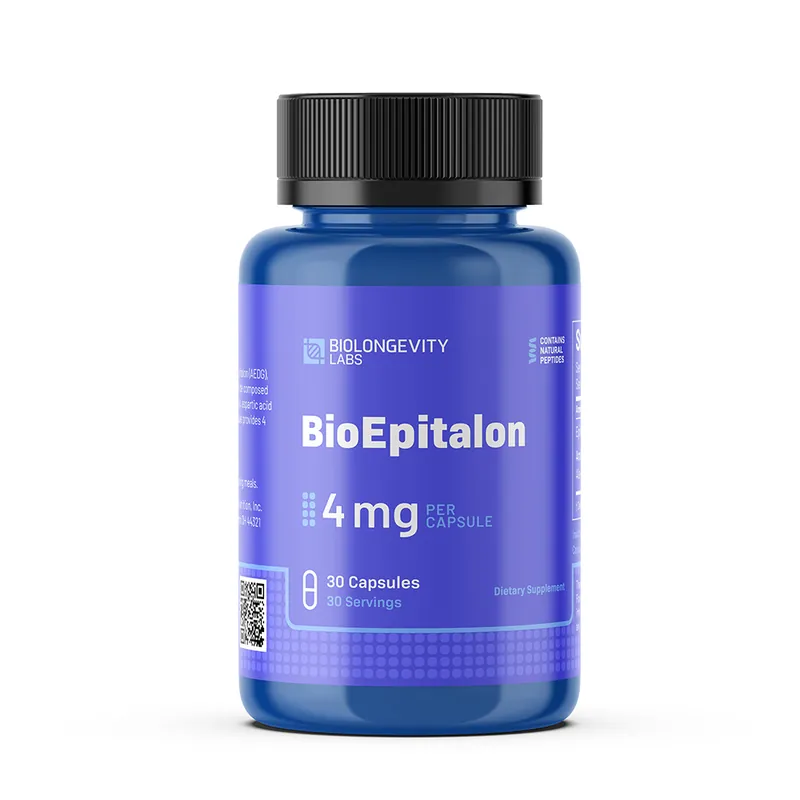
Oral capsule of the synthetic tetrapeptide Epitalon (AEDG), 4 mg per capsule. Its telomerase research is in cultured cells and aged animals; no human trial of this oral format exists.
- Advanced (draft)
- Compound evidence C · Animal / preclinical
- Researched, not personally tested
- capsule
- Rank pending
Grades describe published research on the compound, not this product.
What it is
Epitalon is a synthetic four-amino-acid peptide (Ala-Glu-Asp-Gly) developed by Vladimir Khavinson's group as a defined analog of the pineal extract Epithalamin. BioEpitalon puts 4 mg of AEDG in each vegetarian capsule (30 capsules per bottle, per the label image). BLL's page grades its own evidence candidly: human-cell, monkey and stem-cell studies, not human clinical trials.
What it has been studied for
Telomerase activity and telomere length in cultured human cells
In vitroKhavinson's 2003 fibroblast work and a 2025 cell-line study reported telomerase upregulation or alternative telomere lengthening after AEDG exposure. These are cell cultures, not evidence of longer human telomeres or lifespan.
Replicative capacity of human somatic cells
In vitroA 2004 fibroblast study reported cells passing their usual division limit with the peptide. Single-lab, cell-culture evidence.
Melatonin and cortisol rhythms in aged primates
AnimalA 2001 study in senescent rhesus monkeys reported restored evening melatonin and cortisol rhythms. Small animal study; not evidence of a human sleep effect.
Gene expression during neurogenesis
MechanisticStem-cell experiments plus molecular modelling proposed an epigenetic mechanism for AEDG. Mechanistic only.
This study examined the research compound, not the product sold by BioLongevity Labs. The findings do not establish that the product is safe or effective for people.
Research contexts
- Comparing labeled research-material formats
- Healthy-aging and telomere-biology literature reviews
- Readers who already follow Khavinson bioregulator research
Cautions & unknowns
- Almost all Epitalon literature comes from one research group (Khavinson / St. Petersburg); independent replication is thin.
- Oral bioavailability of a free di-/tri-/tetrapeptide is not established: short peptides are largely broken down by gut and plasma peptidases, and no published human pharmacokinetic study of this capsule exists.
- Telomerase activation is a theoretical concern for anyone with a history of cancer; this has not been studied for this product.
- Not studied in pregnancy, nursing or adolescents.
- BioLongevity Labs designates this product for in-vitro / laboratory research use only; the merchant states it is not a drug, food, dietary supplement or cosmetic. This review describes the compounds and published research only, with no use, dosing or personal-use guidance.
- The bottle artwork shown on the product page carries a 'Supplement Facts' panel and the standard FDA structure/function disclaimer, which does not match the merchant's research-use-only designation; the research-use designation governs this review.
- No statement here has been evaluated by the FDA; nothing in this review is medical advice.
Jason’s take
Jason's hands-on review is coming.
Handbook §§8, 21 and 27 mention Epitalon. The BLL BioEpitalon capsule itself is not named.
Handbook §8 “Everything Sleep”: Names Epitalon and a different Integrative Peptides formulation.
Handbook §27 “My Current Protocol (Bonus Exclusive Content)”: Mentions Epitalon; does not identify the BLL capsule.
Handbook §21 “12 Hallmarks of Aging (w/ Solutions)”: Listed as an intervention under the telomere-attrition hallmark.
Handbook §25 “The Ultimate Guide to Peptides”: Names Epitalon; it does not identify this capsule.
Compared products
- Product 1
BioLongevity Labs
BioEpitalon
SKU SUPP-EPITHALON
Researched, not personally tested
Where it shines
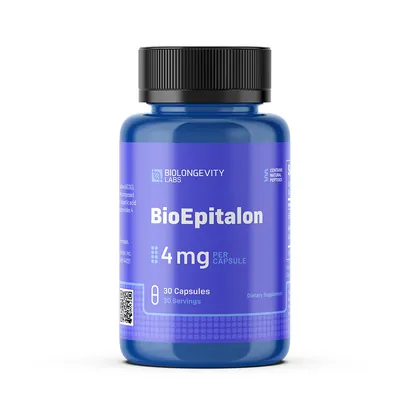
- Label discloses an exact amount: 4 mg AEDG per capsule, single active, no proprietary blend.
- BLL's page cites its PubMed sources and labels each by study type (cell, monkey, stem-cell), which is unusually candid.
- Works out to about $3.47 per capsule / $0.87 per mg of AEDG (list price 2026-11-22).
Where it falls short
- No published human pharmacokinetic data for oral AEDG; whether intact peptide reaches circulation is unknown.
- Per mg, costs more than BLL's own 20 mg Epitalon vial ($75.97, about $3.80/mg), though the formats are not equivalent.
- Purity claim ('99%') is a marketing statement; a batch COA was not reviewed for this page.
Verdict: A transparently labelled single-peptide capsule whose research base is real but preclinical and single-lab, with open questions about oral absorption.
$103.97 as of Nov 22, 2026 at BioLongevity Labs
For in vitro research use only. Not for human or animal use.
- Product 2Epitalon / Pinealon / Vesugen sublingual spray
Integrative Peptides
Epitalon / Pinealon / Vesugen sublingual spray
In the Handbook of Health
Verdict: A different product named in Handbook §8; not compared head-to-head.
Listed for comparison only. Not linked from this site.
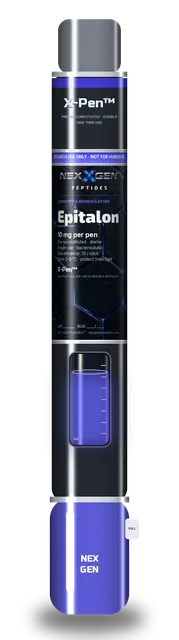
NexGen formulation
NexGen formulation in development
NexGen™ is Jason Johns' own brand. Illustrative render: formulation and name are not final.
Related reviews
- Epithalon (20mg)Peptides · Compound evidence C
- BioPinealon (Pinealon / EDR capsule)Peptide Supplements · Compound evidence C
- BioVesugen (Vesugen / KED capsule)Peptide Supplements · Compound evidence C
- BioVilon (Vilon / KE capsule)Peptide Supplements · Compound evidence C
- BioPinealBioregulators · Compound evidence D
Sources
- BioEpitalon product page BioLongevity Labs · accessed Nov 22, 2026
- Epitalon Peptide Benefits, Dosage & Side Effects Jay Campbell · accessed Nov 22, 2026
- Peptide Bioregulators: What Are They and What Do They Do? Jay Campbell · accessed Nov 22, 2026
- Epithalon peptide induces telomerase activity and telomere elongation in human somatic cells (2003) PubMed · accessed Nov 22, 2026
- Peptide promotes overcoming of the division limit in human somatic cell (2004) PubMed · accessed Nov 22, 2026
- Synthetic tetrapeptide epitalon restores disturbed neuroendocrine regulation in senescent monkeys (2001) PubMed · accessed Nov 22, 2026
- AEDG peptide (Epitalon) stimulates gene expression and protein synthesis during neurogenesis (2020) PubMed · accessed Nov 22, 2026
- Epitalon increases telomere length in human cell lines (2025) PubMed · accessed Nov 22, 2026
Updated Nov 22, 2026. Written by the NexGen research team for @SupplementGraveyard™. Jason Johns is an executive health coach, not a licensed healthcare provider. This content is educational only and does not create a provider-patient relationship.