
Reviews Bioregulators Thymic Peptide Models
Vilon
Also known as KE, Lys-Glu
A two-residue synthetic peptide studied in cell signaling and mouse aging research. Neither line verifies clinical immune or longevity outcomes.
- Advanced (draft)
- Compound evidence C · Animal / preclinical
- In the Handbook of Health
- lyophilized vial
- Rank pending
Grades describe published research on the compound, not this product.
What it is
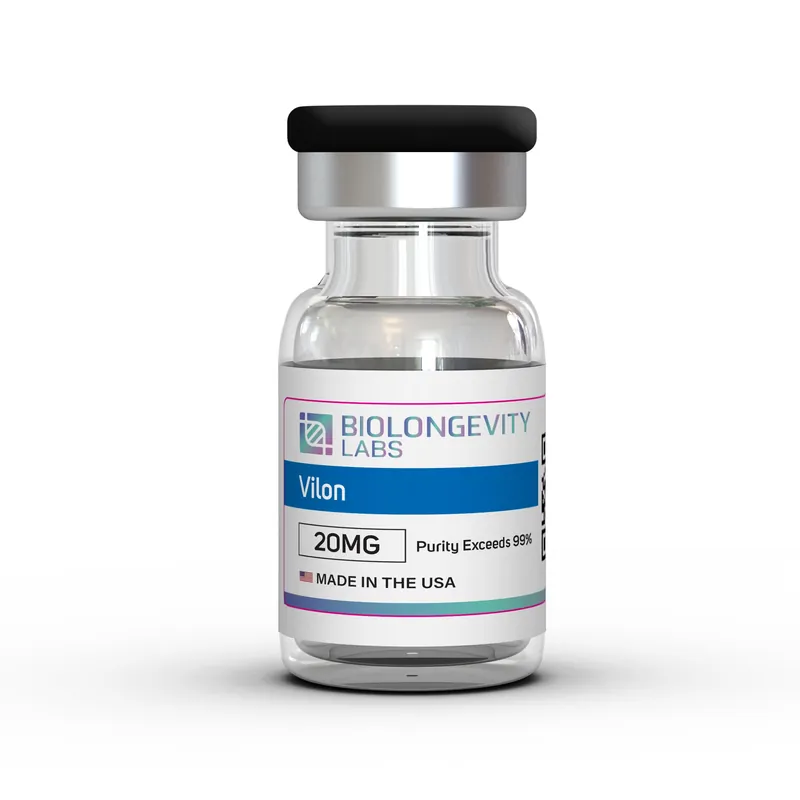
BLL’s Vilon is a 20 mg vial of the Lys-Glu dipeptide. It is sequence-defined, unlike thymus extracts such as Vladonix or Thymalin, and distinct from the Glu-Trp dipeptide Thymagen.
What it has been studied for
Cell signaling endpoints in a comparative model
In vitroVilon was included in a cell study comparing several thymic and other peptides. The investigators measured changes in laboratory signaling, not general immune function.
Aging endpoints in female mice
AnimalAn animal study examined synthetic thymic and pineal peptides using aging markers, survival, and spontaneous tumor incidence. The mouse results do not establish a human longevity effect.
Fibroblast changes during replicative aging
In vitroA human skin fibroblast culture study compared KE with AED for changes associated with repeated cell division. The cells were cultured and the findings do not establish human skin or organ outcomes.
This study examined the research compound, not the product sold by BioLongevity Labs. The findings do not establish that the product is safe or effective for people.
Research contexts
- Comparing thymic peptide identities and aging models
- Distinguishing cell-culture outcomes from animal survival
Cautions & unknowns
- Human immune benefit and long-term safety are unverified.
- BioLongevity Labs designates this product for in vitro research use only. Not for human or veterinary administration.
Jason’s take
Jason's hands-on review is coming.
Handbook §27, My Current Protocol (Bonus Exclusive Content). The Handbook records personal use of Vilon, without identifying a manufacturer or size.
Handbook §27 “My Current Protocol (Bonus Exclusive Content)”: The Handbook records personal use of Vilon, without identifying a manufacturer or size.
Compared products
One product reviewed so far. Comparison slots stay empty until Jason chooses alternatives.
- Product 1
BioLongevity Labs
Vilon (20mg)
SKU VILON-20MG · 20 mg
In the Handbook of Health
Where it shines
- The single KE sequence avoids confusion with EW or variable mixtures of thymus-derived peptides.
- BLL describes a certificate-of-analysis process; ask for the certificate that matches the exact lot.
Where it falls short
- The catalog does not establish whether the effects observed in old mouse studies translate to this SKU or to humans.
- No matching lot certificate was independently audited for this review. Analytical purity is not evidence of suitability for human use.
Verdict: A clear reagent identity with cell and animal literature, not a clinical immune or longevity product.
$68.97 as of Nov 22, 2026 at BioLongevity Labs
For in vitro research use only. Not for human or animal use.
Related reviews
Sources
- Vilon (20mg) product listing BioLongevity Labs · accessed Nov 22, 2026
- Peptide Bioregulators: Types, Uses, and Side Effects Jay Campbell · accessed Nov 22, 2026
- Comparative peptide experiments in the THP-1 cell line PubMed · accessed Nov 22, 2026
- Indexed research record (PMID 11163623) PubMed · accessed Nov 22, 2026
- Indexed research record (PMID 33231794) PubMed · accessed Nov 22, 2026
- Certificate of Analysis process BioLongevity Labs · accessed Nov 22, 2026
Updated Nov 22, 2026. Written by the NexGen research team for @SupplementGraveyard™. Jason Johns is an executive health coach, not a licensed healthcare provider. This content is educational only and does not create a provider-patient relationship.