
Thymalin & Thymulin
Also known as: Thymalin · Thymulin · Vladonix (thymus bioregulator)
Thymalin and Thymulin are distinct thymus-related immune bioregulators studied for immune signaling and age-associated immune changes.
Thymalin and Thymulin are related by their association with thymus biology, but they are not the same compound. Thymalin is a thymus-derived peptide extract historically used in Russian clinical practice and Khavinson bioregulator protocols. Thymulin, also called facteur thymique sérique, is a defined zinc-dependent nonapeptide produced by thymic epithelial cells. A separate oral product, Vladonix, is marketed as a thymus bioregulator and should not be assumed to be identical to either molecule. These distinctions matter when comparing studies, products, or protocols.
Research on thymalin includes older Russian clinical reports and studies of immune markers in older adults; the literature describes changes in T-cell-related measures and clinical outcomes in selected populations. Khavinson-associated reports also describe long-term follow-up of older adults receiving peptide bioregulators and report differences in survival or health measures over extended observation. Those cohort findings are observational and involve broader peptide-bioregulator programs, so they cannot isolate the effect of Thymalin or Thymulin. Thymulin research has examined thymic hormone activity, T-cell differentiation, and immune changes associated with zinc status and aging.
In the Handbook, Thymalin and Thymulin are grouped with thymosin alpha-1 and oral Thymogen Alpha-1 in a cycled immune-bioregulator rotation paired with zinc. Jay Campbell’s reference gives a Khavinson Thymalin protocol of 10 mg intramuscularly daily for 5–10 days, repeated one or two times yearly. The Handbook’s broader Khavinson framework uses roughly 30-day cycles, three bioregulators at a time, and rotation across organ systems. Thymulin itself is a different, zinc-dependent peptide and does not inherit Thymalin’s reported dose.
@SupplementGraveyard review
Subscribe to @SupplementGraveyard to catch it on release.
What it is studied for
Older clinical reports of thymalin in selected patient groups describe changes in immune indices, including T-cell-related measures. Study methods and reporting vary across the historical literature.
Khavinson-associated long-term cohort reports followed older adults receiving peptide-bioregulator programs and described differences in health or survival measures over extended follow-up. These observations do not isolate Thymalin or Thymulin as the cause.
Animal and experimental research has examined thymulin’s role in thymic signaling and T-cell differentiation; biological activity depends on its zinc-bound form.
The Handbook groups Thymalin and Thymulin with thymosin alpha-1 and Thymogen Alpha-1 in an immune rotation paired with zinc, while Jay Campbell lists a short-course Thymalin protocol.
How it works
Thymalin is a thymus-derived extract whose precise active constituents and receptor-level actions are less clearly defined than those of a single synthetic peptide. Its proposed effects involve thymus-associated immune regulation and T-cell maturation. Thymulin is a specific nonapeptide whose biological activity depends on zinc binding; it has been studied in thymic epithelial signaling and T-cell differentiation. Zinc availability can alter thymulin activity, but that does not make zinc supplementation a substitute for the peptide. Neither compound should be assumed to share the same pharmacology, dose, or evidence base as thymosin alpha-1.
Protocols used in studies & practitioner literature
Informational only. These are protocols reported in published studies, product labels and practitioner references, listed so you can read the research intelligently. They are not dosing instructions. Injectable products on this site are research-use-only.
- Dose
- 10 mg
- Frequency
- Daily
- Timing
- No specific time of day stated
- Cycle
- 5–10 days per course; repeated 1–2 times per year
- Route
- Intramuscular injection
- Dose
- No dose stated
- Frequency
- Cycled through the year with other immune bioregulators
- Timing
- No specific timing stated
- Cycle
- The broader Handbook bioregulator framework describes roughly 30-day cycles, three bioregulators at a time, rotated across organ systems
- Route
- Route varies by product; Handbook lists injectable and oral bioregulators
When and how it is used
- Do not transfer the 10 mg Thymalin protocol to Thymulin: Thymalin is an extract, while Thymulin is a defined zinc-dependent nonapeptide.
- The reported Thymalin course is 10 mg intramuscularly daily for 5–10 days, repeated one or two times per year. It is a reported protocol, not a validated universal schedule.
- The Handbook’s broader bioregulator framework uses approximately 30-day cycles, three bioregulators at a time, and rotation across organ systems; the immune group is paired with zinc.
- For immune-related use, track the purpose with a clinician-selected measure such as a complete blood count, relevant immune markers, or the clinical condition being monitored.
- Use product-specific preparation and storage instructions from a qualified clinician or dispensing pharmacy. Do not infer reconstitution volumes or routes from the name alone; thymus-derived extracts and synthetic peptides are not interchangeable.
Synergies and stacks
Considerations and cautions
- Thymalin and Thymulin are different substances; product labels and commercial names may be inconsistent. Verify identity, purity, route, and concentration with a qualified clinician.
- Injectable peptide products sold through research channels are research-use-only. Thymalin products may be extracts with variable composition, while Thymulin is a defined peptide; sterility and manufacturing quality are important concerns.
- The historical Khavinson literature and long-term cohort reports have methodological limitations, and observational findings do not prove that a peptide caused longevity or immune outcomes.
- Immune-modulating use warrants medical supervision in autoimmune disease, active malignancy, transplantation, immunosuppression, or significant infection.
- Thymulin’s zinc dependence does not justify high-dose zinc supplementation; excessive zinc can cause copper deficiency and other adverse effects. Review supplements and medicines with a clinician.
The Handbook take
The Ultimate Handbook of Health groups Thymalin, Thymulin, Thymosin α-1, and Thymogen Alpha-1 as immune bioregulators cycled through the year and paired with zinc. Its broader Khavinson framework describes roughly 30-day cycles, three bioregulators at a time, and rotation across organ systems; this is a framework for practitioner use rather than a clinical trial schedule. The Handbook distinguishes oral Thymogen from injectable thymus peptides, and the compounds should not be treated as interchangeable.
Frequently asked questions
Are Thymalin and Thymulin the same peptide?
No. Thymalin is a thymus-derived peptide extract, while Thymulin is a specific zinc-dependent nonapeptide. Their doses, evidence, and products are not interchangeable.
What is the reported Thymalin dose?
Jay Campbell’s reference gives 10 mg intramuscularly daily for 5–10 days, repeated one or two times per year. That protocol is for Thymalin and should not be applied to Thymulin.
How long does Thymalin or Thymulin take to work?
There is no single established onset timeline across these distinct compounds. Historical Thymalin courses last 5–10 days, while the Handbook’s broader bioregulator framework uses approximately 30-day cycles.
Why is zinc mentioned with Thymulin?
Thymulin’s biological activity depends on zinc binding, and the Handbook pairs its immune-bioregulator rotation with zinc. That does not mean everyone needs supplemental zinc or a high dose.
Can Thymalin be stacked with thymosin alpha-1?
The Handbook groups them in an immune-bioregulator rotation, and Jay Campbell mentions them together in an immunity-oriented framework. Their combination is not a standardized clinical regimen and merits clinician review.
Are Thymalin and Thymulin approved medicines?
Regulatory status varies by country and product, and injectable products sold through research channels are research-use-only. Check local rules, product identity, and anti-doping requirements with qualified professionals.
Sourcing
Related entries
Research supply
BioLongevity Labs products for laboratory research, available to buy now. BioLongevity Labs takes the order and ships it; these listings are separate from the educational material. Affiliate disclosure: BioLongevity Labs links and code JASONJOHNS (15% off eligible orders) are affiliate links and a paid code; NexGen may earn a commission at no extra cost to you if you buy through them.
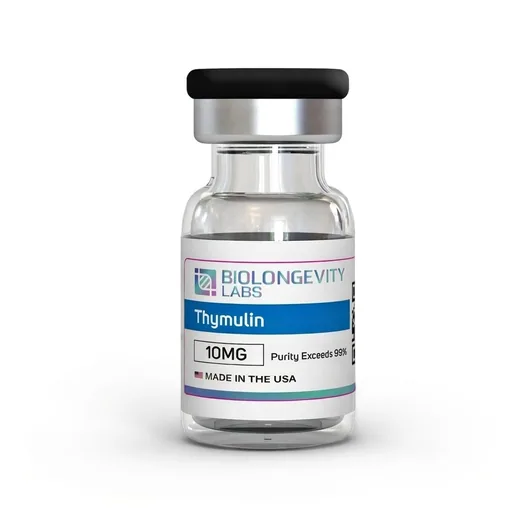
Research use only. Not for human consumption.
$56.97 as of Nov 22, 2026. Price at merchant may differ.
View research listingEducational content from an executive health coach, written as "what I would do if I were you" guidance — not medical advice, diagnosis or treatment. Injectable products sold on this site are for research use only and are not for human consumption. Talk with your licensed clinician before changing any protocol. Last reviewed November 2026.
