
KPV
Also known as: Lys-Pro-Val · alpha-MSH fragment (11-13)
KPV is a three-amino-acid alpha-MSH fragment studied for intestinal inflammation, inflammatory signaling, and allergic sensitivity.
KPV—lysine-proline-valine—is the C-terminal tripeptide fragment corresponding to amino acids 11–13 of alpha-melanocyte-stimulating hormone (α-MSH). α-MSH is a melanocortin peptide involved in pigmentation and immune signaling; KPV retains some anti-inflammatory activity without being the full hormone. Research has examined KPV in oral, topical, and targeted-delivery forms, including formulations designed to deliver it to inflamed intestinal tissue. It is distinct from BPC-157 and TB-500, although practitioners sometimes combine these peptides in broader tissue-repair or gut-support protocols.
Most mechanistic and efficacy findings come from laboratory and animal models. In cell studies, KPV has reduced inflammatory cytokine signaling, including NF-κB-associated responses. In mouse models of intestinal inflammation, oral or locally delivered KPV has reduced inflammatory markers and disease-associated changes in the colon; nanoparticle delivery studies have explored concentrating the peptide at inflamed intestinal sites. These results help explain why gut-directed use is discussed, but they do not establish a human clinical effect or a validated oral dose.
In practice, KPV is discussed as an oral gut-focused peptide or as a subcutaneous peptide in practitioner protocols. Jay Campbell describes starting subcutaneous use at 250 mcg daily and increasing to 500 mcg daily, split into one or two doses; oral KPV is used in gut-inflammation routines. The Ultimate Handbook of Health places KPV among its top oral peptides for gut health and allergic sensitivity and lists it in gut-support combinations. It also mentions KPV in the KLOW stack alongside GHK-Cu, BPC-157, and TB-500.
@SupplementGraveyard review
Subscribe to @SupplementGraveyard to catch it on release.
What it is studied for
Mouse colitis models, including chemically induced colitis, have reported reduced inflammatory cytokines and less severe colon inflammation after KPV administration. Oral and targeted-delivery formulations have also been investigated.
Cell experiments report reduced NF-κB-associated activity and inflammatory cytokine production, including TNF-α and IL-6, in stimulated immune or intestinal cell models.
The Handbook describes KPV as a gut and inflammation peptide used for allergic sensitivity, particularly in people with mast-cell activation or histamine-intolerance concerns; this is a practitioner framing rather than a quantified clinical-trial outcome.
Practitioner protocols use oral KPV for gut-focused support and subcutaneous KPV for broader inflammatory goals. These uses do not have a validated human efficacy estimate or standardized dose.
How it works
KPV has been studied as an anti-inflammatory signal related to α-MSH activity. In cellular models, reported effects include suppression of NF-κB pathway activation and lower production of inflammatory mediators such as TNF-α and IL-6. The peptide may influence melanocortin-associated immune signaling, but a single established human receptor mechanism has not been defined. Studies of intestinal delivery also suggest that local exposure matters: oral formulations and nanoparticles have been designed to bring KPV into contact with inflamed gut tissue rather than relying on systemic distribution.
Protocols used in studies & practitioner literature
Informational only. These are protocols reported in published studies, product labels and practitioner references, listed so you can read the research intelligently. They are not dosing instructions. Injectable products on this site are research-use-only.
- Dose
- Start at 250 mcg daily; increase to 500 mcg daily if tolerated
- Frequency
- Daily; 500 mcg may be divided into one or two doses
- Timing
- Not specified
- Cycle
- Not specified
- Route
- Subcutaneous injection
- Dose
- No dose specified
- Frequency
- Used orally for gut inflammation
- Timing
- No meal timing specified
- Cycle
- No cycle duration specified
- Route
- Oral
When and how it is used
- Oral use is framed as gut-focused; the available practitioner material does not give a validated meal schedule or oral dose.
- The reported subcutaneous protocol starts at 250 mcg daily and increases to 500 mcg daily, split into one or two doses. This is a reported practitioner protocol, not an individualized prescription.
- If injection-site welts occur, Jay Campbell’s references describes using 500 mcg at a different site; persistent or worsening reactions warrant medical assessment rather than repeated site changes.
- Do not infer a reconstitution volume from a vial label alone. Concentration depends on the vial’s peptide amount and diluent volume; sterile preparation and storage should follow a qualified clinician’s product-specific instructions.
- Track the target symptoms and relevant clinical measures over time, such as stool pattern, abdominal symptoms, and any suspected food or allergy triggers. Keep other diet or supplement changes stable when assessing a response.
Synergies and stacks
Considerations and cautions
- Injectable KPV products sold through peptide-research channels are research-use-only; product identity, concentration, sterility, and endotoxin control may vary. Oral products also vary in formulation and quality.
- Human clinical evidence, long-term safety data, and an established oral dosing standard are lacking. Animal and cell findings should not be treated as proof of human benefit.
- Subcutaneous use can cause local pain, redness, or welts; contamination or incorrect preparation can add infection and dosing risks. Seek medical review for severe reactions or new systemic symptoms.
- People with inflammatory, autoimmune, allergic, or gastrointestinal conditions should involve a licensed clinician, especially when taking immunomodulating medicines or managing a serious diagnosis.
- Check current anti-doping rules before use in tested sport; peptide classifications and product contents can change.
The Handbook take
The Ultimate Handbook of Health presents KPV as a top oral peptide for inflammation, gut health, and allergic sensitivity, especially in the context of mast-cell activation or histamine intolerance. It also lists KPV in gut-lining support combinations and includes it in the KLOW stack with GHK-Cu, BPC-157, and TB-500. The Handbook’s broader peptide guide says subcutaneous delivery can produce more pronounced effects than oral delivery, while identifying KPV as an oral gut-focused option.
Frequently asked questions
What is a commonly reported KPV dose?
Jay Campbell’s practitioner protocol starts subcutaneous KPV at 250 mcg daily and increases to 500 mcg daily, split into one or two doses. Practitioner references do not list a standardized oral dose.
How long does KPV take to work?
There is no reliable human timeline for KPV response. If it is being assessed in a gut routine, tracking symptoms consistently over several weeks is more informative than judging it from a single dose.
What side effects can KPV cause?
Reported injection-site effects include local welts, redness, or discomfort. Human safety data are limited, so new or worsening symptoms deserve clinical review.
Is oral KPV different from injectable KPV?
The Handbook describes oral KPV primarily for gut-focused use, while practitioner protocols also use subcutaneous KPV. Human studies have not established that one route is more effective for a given condition.
Can KPV be stacked with BPC-157 or TB-500?
The Handbook references KPV in the KLOW stack with BPC-157, TB-500, and GHK-Cu. This is a practitioner combination, not a regimen established by controlled combination trials.
Is KPV legal, permitted in sport, or suitable for self-injection?
Regulatory status depends on jurisdiction and product; injectable peptide products marketed for research are not approved medicines for routine self-treatment. Athletes should check current anti-doping rules, and injection decisions belong with a qualified clinician.
Sourcing
Related entries
Research supply
BioLongevity Labs products for laboratory research, available to buy now. BioLongevity Labs takes the order and ships it; these listings are separate from the educational material. Affiliate disclosure: BioLongevity Labs links and code JASONJOHNS (15% off eligible orders) are affiliate links and a paid code; NexGen may earn a commission at no extra cost to you if you buy through them.
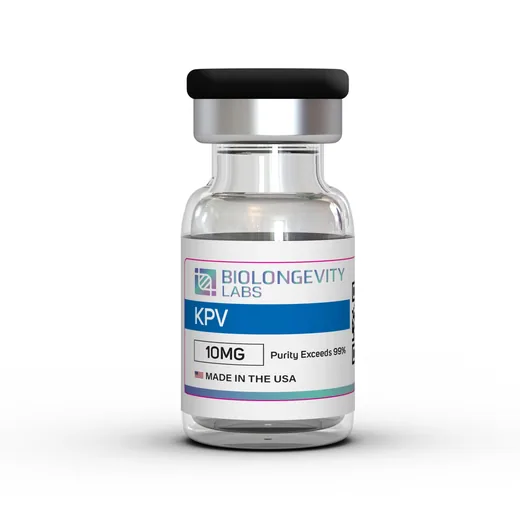
Research use only. Not for human consumption.
$52.97 as of Nov 22, 2026. Price at merchant may differ.
View research listingEducational content from an executive health coach, written as "what I would do if I were you" guidance — not medical advice, diagnosis or treatment. Injectable products sold on this site are for research use only and are not for human consumption. Talk with your licensed clinician before changing any protocol. Last reviewed November 2026.
