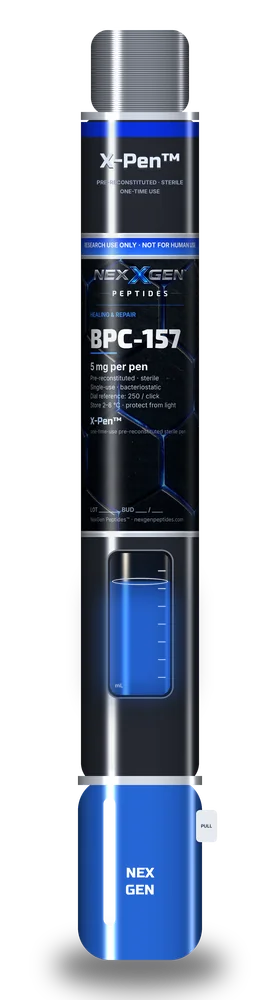
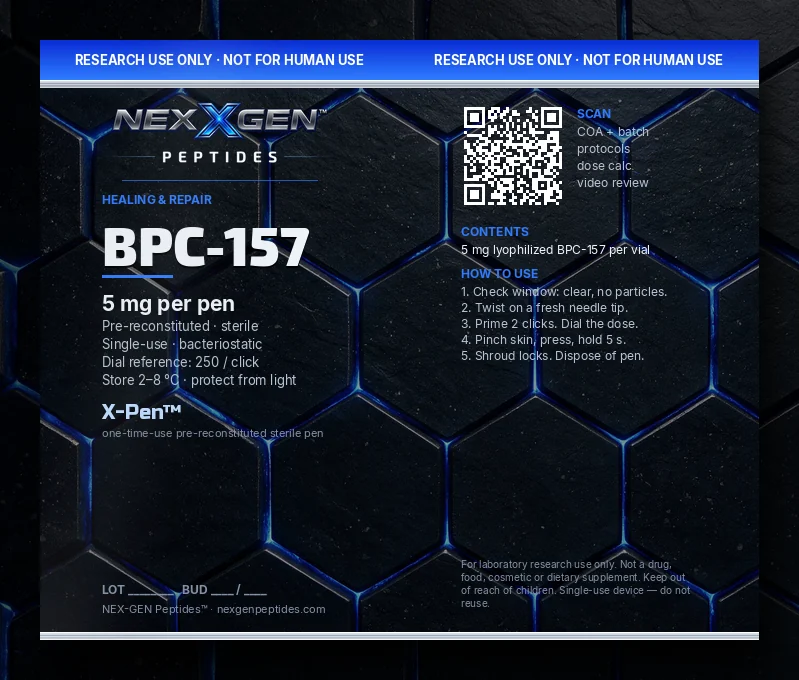
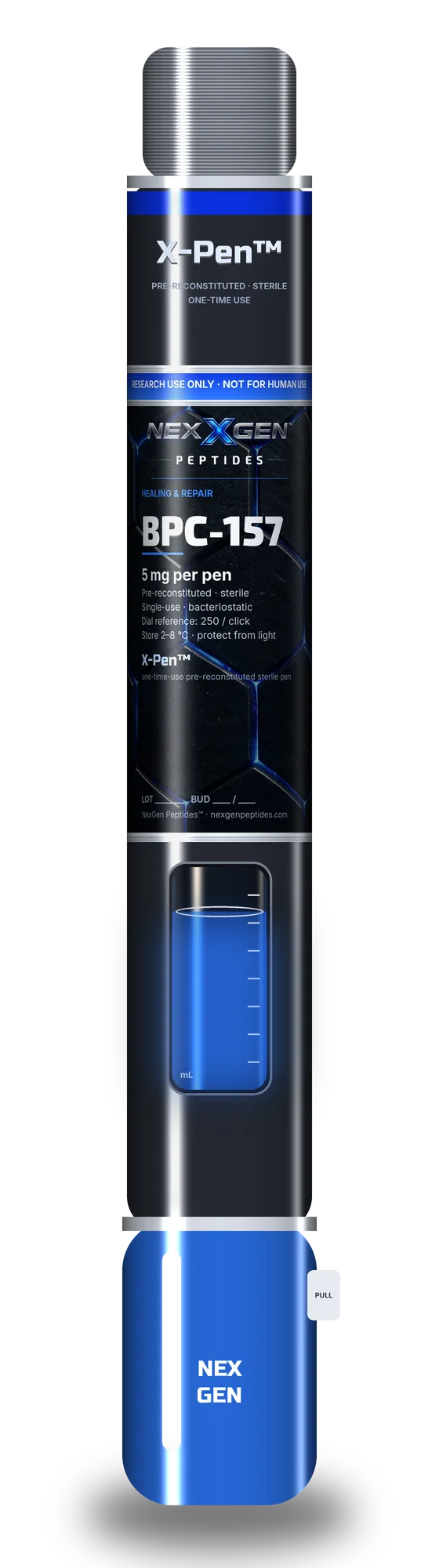
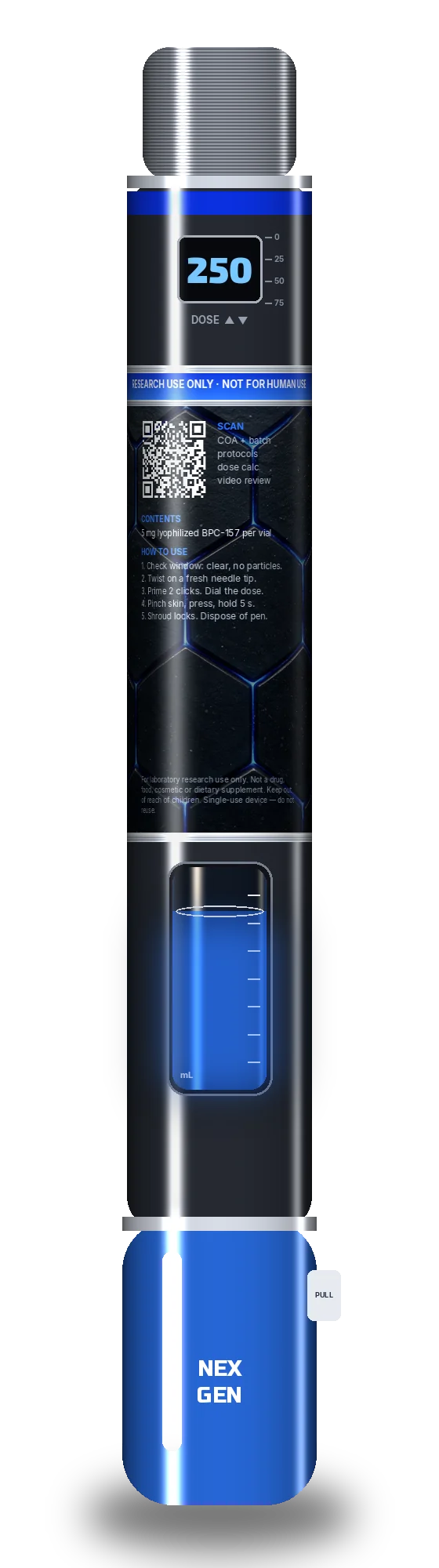
BPC-157
Also known as: Body Protection Compound-157 · Pentadecapeptide BPC 157
A synthetic 15-amino-acid peptide studied mainly in animal models of tendon, ligament, soft-tissue and gastrointestinal repair.
BPC-157, or Body Protection Compound-157, is a synthetic pentadecapeptide based on a sequence associated with a protective protein found in human gastric juice. Its 15 amino acids make it a short signaling peptide rather than a peptide bioregulator. Research began in Croatia in the 1990s, with much of the early work examining gastrointestinal protection. It is sold in oral and injectable forms, and topical formulations are also marketed. The Handbook describes oral BPC-157 as primarily gut-focused, while injectable use is presented as a systemic tissue-repair approach.
Research is dominated by animal experiments. Rat studies have examined gastric and intestinal lesions, tendon transection, ligament injury, muscle crush injury and nerve damage. Across these models, reported outcomes include improved tissue organization, angiogenesis and functional recovery; results are not equivalent to evidence of clinical benefit in people. A human clinical evidence base comparable to that for approved injury treatments has not been established. The exact product called BPC-157 is also not interchangeable with full-length proteins or with other peptides sometimes grouped under “healing peptides.”
In current practitioner practice, BPC-157 is used in injury-recovery protocols, often alongside TB-500, while oral capsules are commonly selected for gut-focused use. Jay Campbell’s reported protocols use subcutaneous injections and describe injection near the affected area as optional because the peptide is used systemically. The Handbook lists BPC-157 among both top oral and injectable peptides and pairs it with TB-500 for tissue repair. Any injury plan still needs diagnosis and appropriate rehabilitation; a peptide protocol does not replace evaluation of a significant tear or other structural injury.
@SupplementGraveyard review
Subscribe to @SupplementGraveyard to catch it on release.
What it is studied for
Rat tendon-transection and ligament-injury studies report improved healing-related histology and functional outcomes, including greater tendon organization and strength measures compared with injured controls.
Rodent models of gastric and intestinal injury, including drug-associated lesions, report reduced tissue damage and improved healing-related measures after BPC-157 exposure.
Preclinical studies of crushed muscle, peripheral nerve injury and other soft-tissue trauma report changes in angiogenesis, tissue repair and functional recovery.
Laboratory studies report effects on endothelial-cell migration and signaling associated with vessel formation and wound repair.
How it works
Proposed actions include modulation of nitric-oxide signaling, growth-factor pathways and angiogenesis. In preclinical models BPC-157 has been associated with VEGF expression, activation of FAK-paxillin and ERK/Akt signaling, and changes in growth-hormone-receptor expression. These pathways can influence endothelial-cell activity, cell migration and extracellular-matrix remodeling. Its reported effects on gastrointestinal models may also involve maintenance of mucosal integrity and modulation of inflammatory signaling. These mechanisms are derived largely from animal and laboratory research; a single validated human mechanism, receptor target or pharmacodynamic model has not been established.
Protocols used in studies & practitioner literature
Informational only. These are protocols reported in published studies, product labels and practitioner references, listed so you can read the research intelligently. They are not dosing instructions. Injectable products on this site are research-use-only.
- Dose
- 250–500 mcg per injection; commonly 250 mcg twice daily, with some protocols reporting up to 500 mcg daily
- Frequency
- Subcutaneous 1–2 times daily
- Timing
- No specific timing relative to meals is given for injections
- Cycle
- 4–8 weeks; practitioner guidance also describes at least 15 days off between cycles in GLOW-related protocols
- Route
- Subcutaneous injection
- Dose
- 200–300 mcg per injection (400–600 mcg daily)
- Frequency
- Twice daily
- Timing
- No specific timing reported
- Cycle
- Until the issue is described as healed; no fixed duration stated
- Route
- Subcutaneous injection
- Dose
- 2–4 pumps of a 3% formulation (reported application volume 0.21–0.81 mL)
- Frequency
- Per application; frequency not stated
- Timing
- Topical application
- Cycle
- Not stated
- Route
- Topical
When and how it is used
- Injection near the injury is described as optional in practitioner protocols; those protocols frame BPC-157 as systemic. Rotate injection sites if using an injectable product under qualified medical supervision.
- Oral use is framed primarily for gut-focused applications in the Handbook; it describes oral effects outside the digestive system as more limited than subcutaneous use.
- Record the injury’s baseline function and pain, range of motion, training tolerance and any clinician-directed imaging or rehabilitation measures so changes can be assessed over time.
- Do not infer a safe reconstitution method from a vial label. Injectable research products require appropriate sterile handling, storage instructions and professional oversight; follow the product-specific instructions supplied by a licensed pharmacy when applicable.
- Practitioner protocols commonly describe 4–8 weeks of use; the Handbook places BPC-157 periodically around injury or heavy-training blocks rather than as a permanent daily routine.
Synergies and stacks
Considerations and cautions
- BPC-157 injectable products sold by NexGenPeptides.com are research-use-only; no FDA-approved BPC-157 drug is available in the United States. FDA has identified BPC-157 among bulk substances raising safety concerns for compounding, including potential immunogenicity and limited safety information.
- Human clinical evidence is not comparable to the extensive animal literature; controlled human injury trials establishing dose, efficacy and long-term safety are lacking. Online products may have uncertain identity, purity, concentration and sterility.
- Possible effects, interactions, pregnancy safety and long-term risks have not been adequately characterized. Seek medical assessment for significant injury, worsening pain, infection signs or suspected tendon/ligament rupture; full tears may require procedural or surgical care.
- BPC-157 is prohibited by the World Anti-Doping Agency under the S0 category of non-approved substances. Athletes subject to testing should avoid it.
The Handbook take
The Handbook lists BPC-157 among its top oral peptides for gut health and among injectable peptides paired with TB-500 for tissue repair. It characterizes oral use as more gut-focused, with less effect on injuries outside the digestive system, and includes BPC-157 periodically during injury or heavy-training blocks.
Frequently asked questions
What is a commonly reported BPC-157 dose?
Jay Campbell’s practitioner protocols report 250–500 mcg subcutaneously per injection, often 250 mcg twice daily, for 4–8 weeks. These are practitioner-reported protocols, not an approved drug label dose.
How long does BPC-157 take to work?
There is no established human timeline. Practitioner protocols commonly run 4–8 weeks, while animal studies assess healing over model-specific intervals; those findings do not predict an individual’s response.
What are the side effects of BPC-157?
Reliable human side-effect rates have not been established. Potential concerns include unknown systemic effects, product contamination or dosing errors, and immune reactions; see the cautions before considering any research-use product.
Is oral or injectable BPC-157 better?
The Handbook positions oral BPC-157 mainly for gut-focused use and subcutaneous use for more systemic applications. Direct human comparisons have not established which route is more effective for a given condition.
Can BPC-157 be stacked with TB-500?
Yes, practitioner protocols and the Handbook commonly pair them as the Wolverine stack for tissue-repair use. The combination has not been validated in controlled human trials, and each component has separate safety concerns.
Is BPC-157 legal and allowed in sports?
It is sold as a research-use-only product, not an FDA-approved medicine in the United States, and WADA prohibits it in sport under category S0. Rules can vary by jurisdiction and competition body.
Sourcing
Related entries
Research supply
BioLongevity Labs products for laboratory research, available to buy now. BioLongevity Labs takes the order and ships it; these listings are separate from the educational material. Affiliate disclosure: BioLongevity Labs links and code JASONJOHNS (15% off eligible orders) are affiliate links and a paid code; NexGen may earn a commission at no extra cost to you if you buy through them.
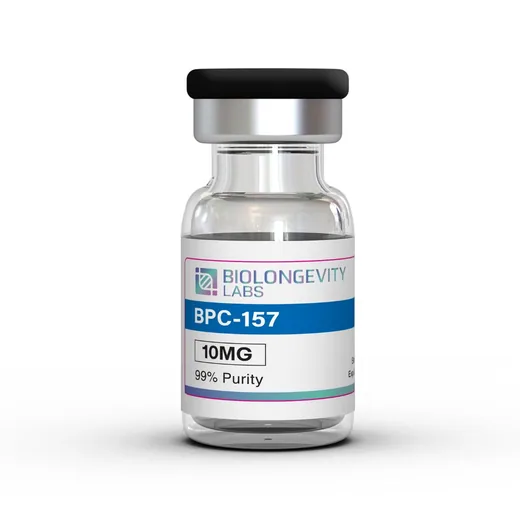
Research use only. Not for human consumption.
$55.97 as of Nov 22, 2026. Price at merchant may differ.
View research listingEducational content from an executive health coach, written as "what I would do if I were you" guidance — not medical advice, diagnosis or treatment. Injectable products sold on this site are for research use only and are not for human consumption. Talk with your licensed clinician before changing any protocol. Last reviewed November 2026.