
Reviews Peptides Gastric-Derived & Connective-Tissue Peptides
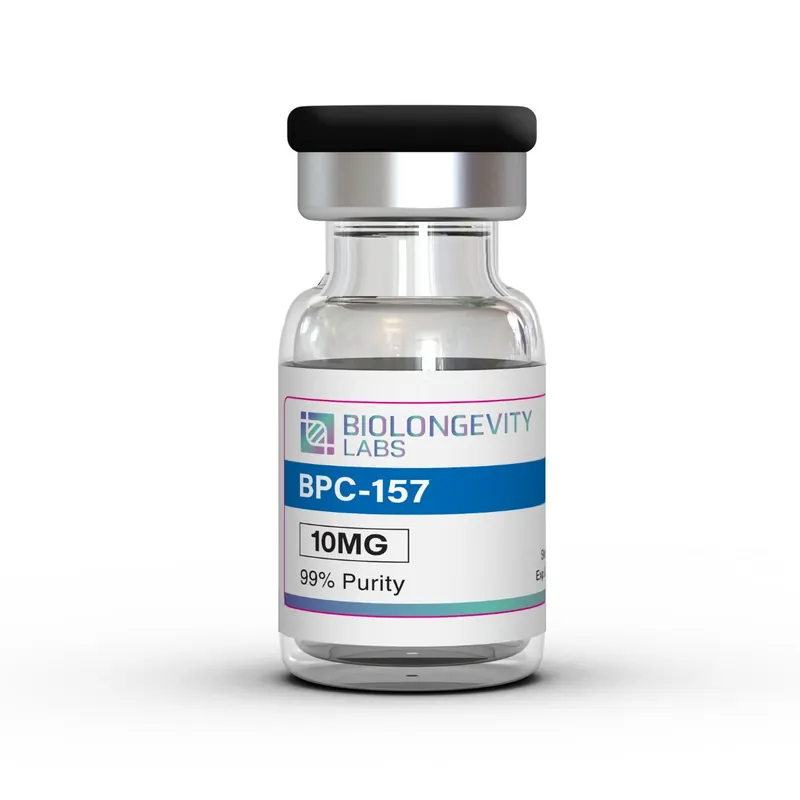
BPC-157 (10mg)
Also known as BPC 157
A synthetic 15-residue peptide studied in rodent tendon and gastrointestinal models and in tendon cell cultures. Human efficacy of the vial is not established.
- Intermediate (draft)
- Compound evidence C · Animal / preclinical
- In the Handbook of Health
- lyophilized vial
- Rank pending
Grades describe published research on the compound, not this product.
What it is
BLL offers BPC-157 as a 10 mg single-peptide vial. The sequence is associated with research on a peptide fragment described in human gastric juice; this product is synthetic research material.
What it has been studied for
Tendon and muscle injury endpoints in rats
AnimalAnimal studies recorded early functional measures and vascular or inflammatory markers after experimental injury. They do not establish efficacy for human tendon or ligament injuries.
Gastrointestinal injury markers in rats
AnimalA rat study measured gastrointestinal lesions in experimental models with anti-inflammatory drug exposure and separately examined arthritis-related measures. It is not a human gut-health study.
Cell migration and tendon explant outgrowth
In vitroCultured tendon fibroblasts and explants were used to measure migration, outgrowth, and cell survival. These assays do not demonstrate clinical tissue repair.
This study examined the research compound, not the product sold by BioLongevity Labs. The findings do not establish that the product is safe or effective for people.
Research contexts
- Literature review: tendon and muscle injury endpoints in rats
- Literature review: gastrointestinal injury markers in rats
Cautions & unknowns
- Animal and cell studies do not establish a favorable risk–benefit profile in humans.
- BioLongevity Labs designates this product for in vitro research only. It is not for human or veterinary use.
Jason’s take
Jason's hands-on review is coming.
Handbook §27 mentions BPC-157 and names other products, but does not identify the BLL 10 mg vial.
Handbook §27 “My Current Protocol (Bonus Exclusive Content)”: Mentions BPC-157 and names other products, but does not identify the BLL 10 mg vial.
Compared products
- Product 1
BioLongevity Labs
BPC-157 (10mg)
SKU BPC-10MG · 10 mg
In the Handbook of Health
Where it shines
- The listing identifies one compound in a 10 mg vial rather than a fixed blend.
- BLL describes a third-party certificate-of-analysis process; this review did not independently audit the relevant lot.
Where it falls short
- Animal and cell studies do not establish a favorable risk–benefit profile in humans.
Verdict: BPC-157 (10mg) is a labeled laboratory material; the cited studies do not validate this BLL product.
$55.97 as of Nov 22, 2026 at BioLongevity Labs
For in vitro research use only. Not for human or animal use.
- Product 2BPC-157
Integrative Peptides
BPC-157
In the Handbook of Health
Where it shines
- The Handbook names this comparison formula or ingredient.
Where it falls short
- This is a separate formulation and is not equivalent to the BLL laboratory product.
- The Handbook does not identify which oral formulation; the distributor’s collection includes multiple versions.
Verdict: Handbook reference only, not a recommendation or a direct equivalent.
- Product 3Ultimate GI Repair (BPC-157 · KPV · GHK-Cu · Larazotide)
LVLUP Health
Ultimate GI Repair (BPC-157 · KPV · GHK-Cu · Larazotide)
In the Handbook of Health
Where it shines
- The Handbook names this comparison formula or ingredient.
Where it falls short
- This is a separate formulation and is not equivalent to the BLL laboratory product.
Verdict: Handbook reference only, not a recommendation or a direct equivalent.
Related reviews
- BPC-157 + TB-500 Blend (10mg)Peptides · Compound evidence D
- GLOW Blend (BPC-157 TB-500 GHK-CU) (70mg)Peptides · Compound evidence D
- KLOW Blend (GHK-Cu, BPC-157, TB-500, KPV) 80mgPeptides · Compound evidence D
- Regeno Blend (BPC-157, TB-500, Cartalax) 30mgBioregulators · Compound evidence D
- BioRestore (oral BPC-157 + PEA + hyaluronic acid)Peptide Supplements · Compound evidence B
- BioGutPro (BPC-157 + KPV + larazotide + GHK-Cu + tributyrin + zinc carnosine)Peptide Supplements · Compound evidence B
Sources
- BPC-157 (10mg) catalog listing BioLongevity Labs · accessed Nov 22, 2026
- Study record (PMID 18594781) PubMed · accessed Nov 22, 2026
- Study record (PMID 20388964) PubMed · accessed Nov 22, 2026
- Study record (PMID 9403784) PubMed · accessed Nov 22, 2026
- Study record (PMID 21030672) PubMed · accessed Nov 22, 2026
- Certificate of Analysis process BioLongevity Labs · accessed Nov 22, 2026
Updated Nov 22, 2026. Written by the NexGen research team for @SupplementGraveyard™. Jason Johns is an executive health coach, not a licensed healthcare provider. This content is educational only and does not create a provider-patient relationship.