
Reviews Peptide Supplements Tissue Repair & Inflammation Research
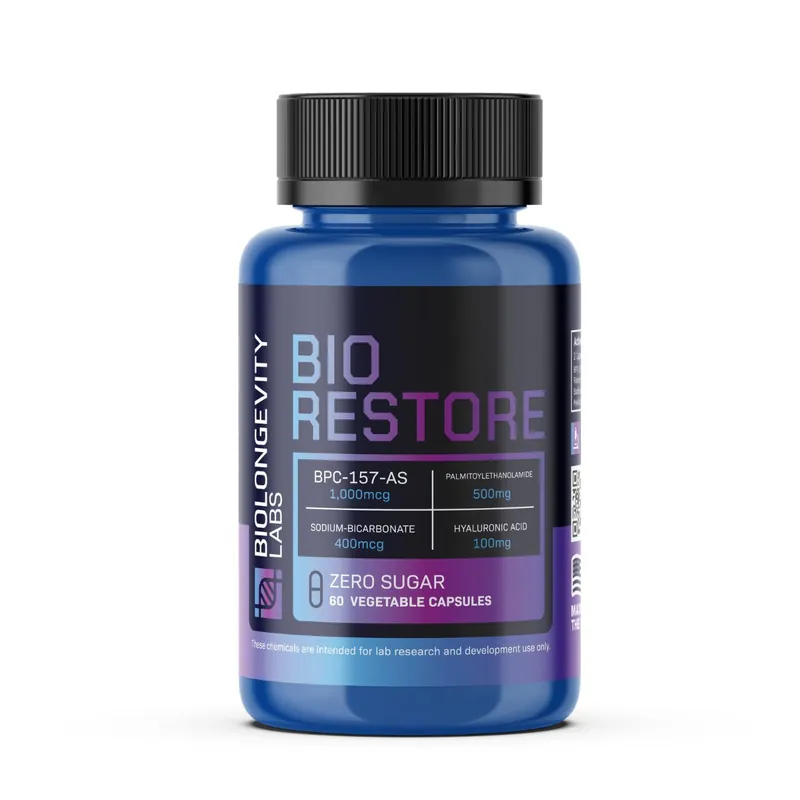
BioRestore (oral BPC-157 + PEA + hyaluronic acid)
Also known as BPC-157 arginate, Palmitoylethanolamide, PEA
Capsule pairing BPC-157 arginine salt with palmitoylethanolamide (PEA), hyaluronic acid and sodium bicarbonate. PEA has human trial data; oral BPC-157 is almost entirely animal research.
- Advanced (draft)
- Compound evidence B · Limited human data
- Researched, not personally tested
- capsule
- Rank pending
Grades describe published research on the compound, not this product.
What it is
BioRestore lists 60 capsules per bottle. Label amounts expressed per capsule: BPC-157 arginine salt 500 mcg, palmitoylethanolamide 250 mg, hyaluronic acid 50 mg and sodium bicarbonate 200 mg.
What it has been studied for
BPC-157: tendon, ligament, muscle and gut healing models
AnimalA large rat literature, mostly from one Zagreb group, reports faster healing across tissues. Human evidence is limited to small pilot and case reports.
BPC-157 human safety
Human (small / observational)A 2025 pilot of intravenous BPC-157 in a handful of adults reported no serious adverse events; a 2026 systematic review found human efficacy evidence scarce.
PEA and pain scores
Human RCTA 2023 meta-analysis examined symptom outcomes in double-blind trials of separately studied PEA formulations. It did not evaluate BioRestore.
Sodium bicarbonate as a buffer
Human RCTThe ISSN position stand supports bicarbonate for high-intensity exercise at gram-level doses far above the 400 mg here; its role in this formula is not studied.
Hyaluronic acid and joint comfort
Human (small / observational)Most joint evidence concerns injected HA, which the AAOS knee guideline does not recommend for routine use; oral HA data are limited to small trials.
This study examined the research compound, not the product sold by BioLongevity Labs. The findings do not establish that the product is safe or effective for people.
Research contexts
- Comparing oral BPC-157 combination formulas
- PEA research reviews
- Recovery-focused literature reviews
Cautions & unknowns
- BPC-157 is not approved anywhere; FDA has listed it among substances with significant safety risks for compounding, and it is prohibited in sport (WADA S0).
- BPC-157 is pro-angiogenic in animal models; theoretical concern for anyone with a cancer history.
- Oral bioavailability of a 15-amino-acid peptide in humans is unproven; animal studies suggest stability in gastric juice, but human PK is lacking.
- Sodium content (bicarbonate) matters for anyone restricting sodium.
- Not studied in pregnancy or nursing.
- BioLongevity Labs designates this product for in-vitro / laboratory research use only; the merchant states it is not a drug, food, dietary supplement or cosmetic. This review describes the compounds and published research only, with no use, dosing or personal-use guidance.
- No statement here has been evaluated by the FDA; nothing in this review is medical advice.
Jason’s take
Jason's hands-on review is coming.
Handbook §§25 and 27 mention BPC-157 and §27 names separate PEA products. BioRestore is not named.
Handbook §25 “The Ultimate Guide to Peptides”: Mentions BPC-157 without identifying BioRestore.
Handbook §27 “My Current Protocol (Bonus Exclusive Content)”: Names separate PEA products from Neurogan Health and MCS Formulas and mentions BPC-157.
Compared products
One product reviewed so far. Comparison slots stay empty until Jason chooses alternatives.
- Product 1
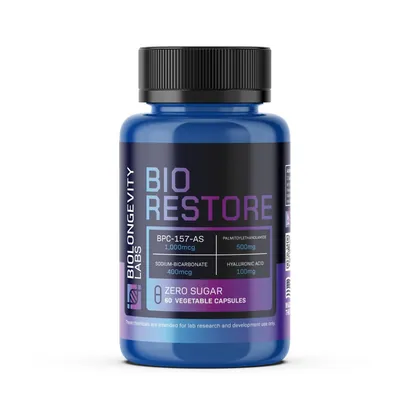
BioLongevity Labs
BioRestore
SKU SUPP-BIOREST
Researched, not personally tested
Where it shines
- Every ingredient listed with an amount; uses the arginate salt form Jay Campbell describes as more acid-stable.
- PEA, the second active, has a genuine RCT meta-analysis behind it.
- About $2.20 per capsule, cheaper than BioGutPro.
Where it falls short
- The finished formulation lacks human safety or efficacy data.
- The label does not establish buffering or other benefits of the finished formulation.
- Product page uses disease names (gastritis, ulcerative colitis) and 'without harmful side effects' language that overstates the evidence.
Verdict: Better grounded than most BPC-157 products thanks to PEA, but the headline peptide's oral human evidence is still missing.
$131.97 as of Nov 22, 2026 at BioLongevity Labs
For in vitro research use only. Not for human or animal use.
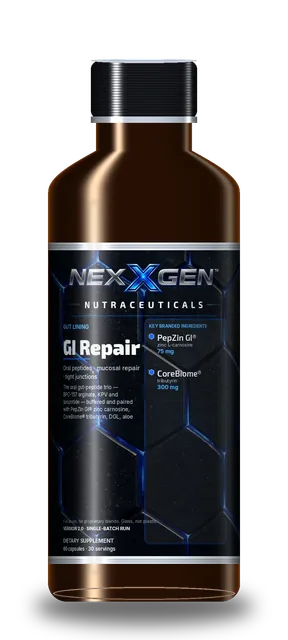
NexGen formulation
NexGen formulation in development
NexGen™ is Jason Johns' own brand. Illustrative render: formulation and name are not final.
Related reviews
- BPC-157 (10mg)Peptides · Compound evidence C
- BioGutPro (BPC-157 + KPV + larazotide + GHK-Cu + tributyrin + zinc carnosine)Peptide Supplements · Compound evidence B
- BPC-157 + TB-500 Blend (10mg)Peptides · Compound evidence D
- Regeno Blend (BPC-157, TB-500, Cartalax) 30mgBioregulators · Compound evidence D
- BioRegenix Recovery Cream (topical peptide bioregulator cream)Topicals · Compound evidence D
Sources
- BioRestore product page BioLongevity Labs · accessed Nov 22, 2026
- BPC-157 Oral vs Injection: Dosing and Full Comparison Jay Campbell · accessed Nov 22, 2026
- BPC 157 and standard angiogenic growth factors (2018) PubMed · accessed Nov 22, 2026
- Stable gastric pentadecapeptide BPC 157 and wound healing (2021) PubMed · accessed Nov 22, 2026
- Safety of intravenous infusion of BPC157 in humans: a pilot study (2025) PubMed · accessed Nov 22, 2026
- Human evidence for BPC-157 in orthopaedic and regenerative medicine: systematic review (2026) PubMed · accessed Nov 22, 2026
- Palmitoylethanolamide in chronic pain: meta-analysis of double-blind RCTs (2023) PubMed · accessed Nov 22, 2026
- ISSN position stand: sodium bicarbonate and exercise performance (2021) PubMed · accessed Nov 22, 2026
- AAOS clinical practice guideline: management of osteoarthritis of the knee (2022) PubMed · accessed Nov 22, 2026
Updated Nov 22, 2026. Written by the NexGen research team for @SupplementGraveyard™. Jason Johns is an executive health coach, not a licensed healthcare provider. This content is educational only and does not create a provider-patient relationship.