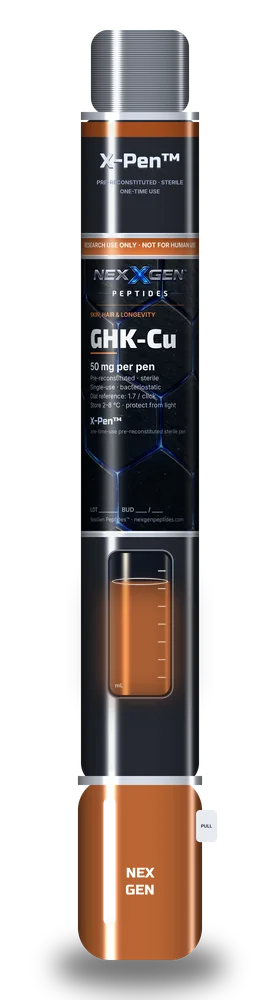
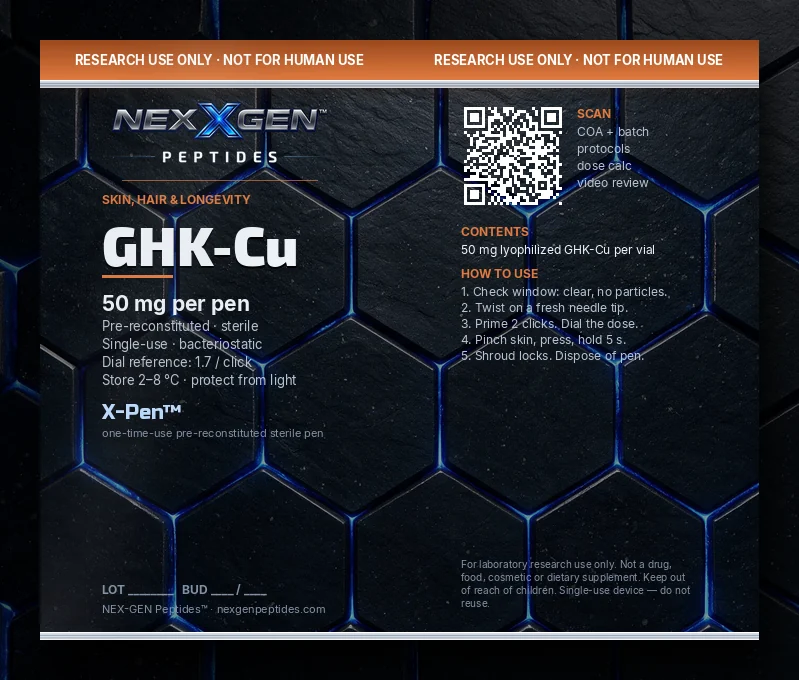
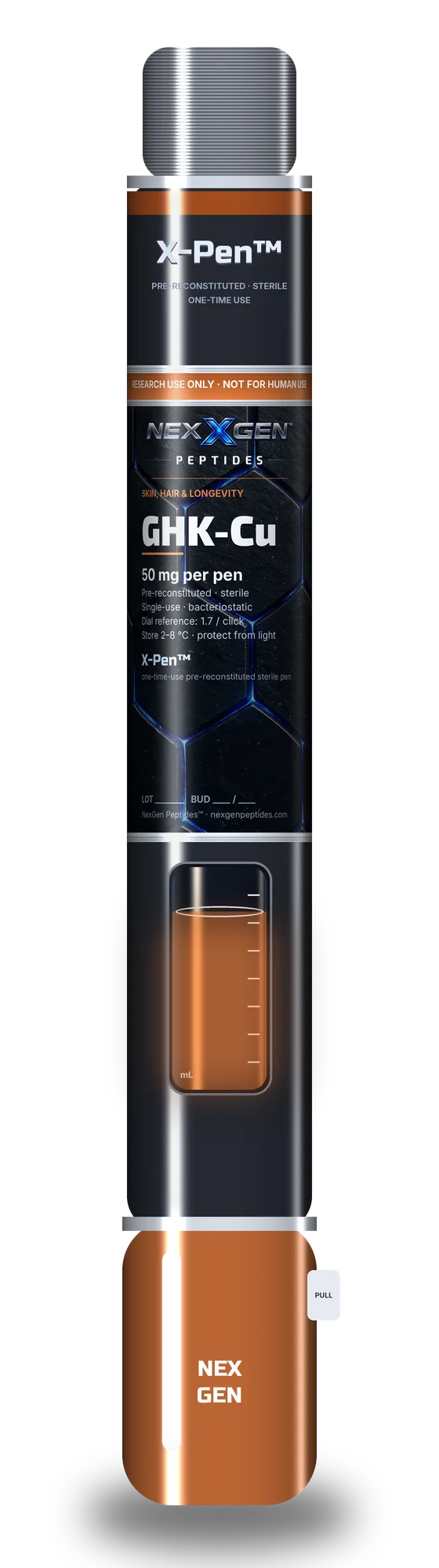
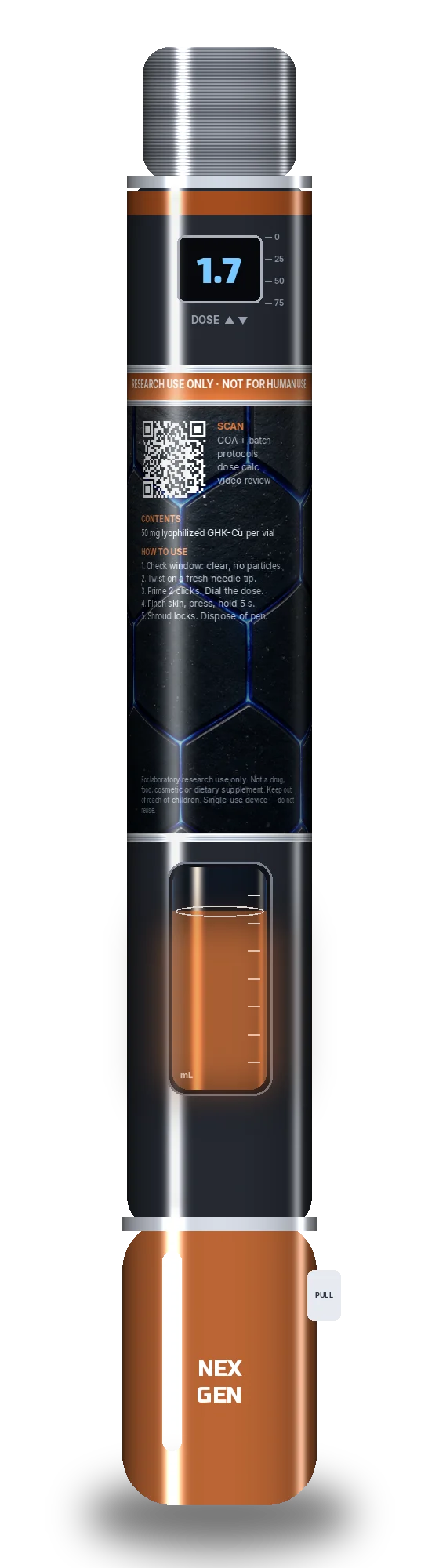
GHK-Cu
Also known as: Copper peptide · Glycyl-L-histidyl-L-lysine copper
A naturally occurring copper-binding tripeptide studied for skin repair, collagen remodeling, wound healing and hair-related applications.
GHK-Cu is a copper complex of glycyl-L-histidyl-L-lysine, a naturally occurring tripeptide first isolated from human plasma by Loren Pickart in the 1970s. Plasma concentrations decline with age, a finding that helped motivate interest in its role in tissue maintenance. The peptide binds copper(II), and related formulations are used in cosmetic products, wound-care research and practitioner peptide protocols. Routes include topical preparations and, in practitioner settings, injectable or liposomal oral products. These routes have different absorption and evidence profiles and should not be treated as interchangeable.
Research includes cell, animal and human cosmetic studies. Laboratory work reports effects on collagen and glycosaminoglycan production, matrix metalloproteinases and inflammatory signaling. Small human topical studies have evaluated skin appearance, fine lines and skin density over approximately 8–12 weeks, while wound studies have examined tissue repair. Hair applications are mostly early-stage or cosmetic research. Injectable GHK-Cu has a much smaller human evidence base than topical cosmetic use, and liposomal oral products have not been studied to the same degree as topical preparations.
In current practice, topical GHK-Cu is the most established consumer format, included in serums and other skin products. The Handbook describes it for wound healing and hair, skin and nails, and notes topical and liposomal oral availability. Jay Campbell’s protocols also describe injectable use, topical 3% formulations and inclusion in GLOW blends with TB-500 and BPC-157. For skin routines, topical products are generally applied according to their product directions; injectable protocols require distinct safety considerations and are not equivalent to cosmetic use.
@SupplementGraveyard review
Subscribe to @SupplementGraveyard to catch it on release.
What it is studied for
Small topical studies in adults using copper-peptide formulations over roughly 8–12 weeks reported improvements in measures such as skin thickness, density or fine-line appearance; the products and study designs varied.
Animal wound models report changes in healing, collagen organization and tissue remodeling after topical or local copper-peptide exposure.
Cell studies report increased collagen and glycosaminoglycan production alongside modulation of matrix metalloproteinases and related matrix-remodeling signals.
GHK-Cu is used in topical hair and scalp products and in some injectable practitioner protocols; controlled clinical evidence establishing hair-growth outcomes is limited.
How it works
GHK binds copper(II), creating a complex that can influence copper delivery and repair-related gene expression. Laboratory studies report changes in collagen synthesis, glycosaminoglycan production and extracellular-matrix remodeling, including regulation of matrix metalloproteinases and their inhibitors. Proposed signaling effects also include modulation of inflammatory mediators, antioxidant enzymes and growth-related pathways. These actions may contribute to fibroblast activity, skin remodeling and wound repair. GHK-Cu does not have one confirmed human receptor mechanism, and effects vary by concentration, formulation and route; topical cosmetic findings should not be extrapolated to injectable exposure.
Protocols used in studies & practitioner literature
Informational only. These are protocols reported in published studies, product labels and practitioner references, listed so you can read the research intelligently. They are not dosing instructions. Injectable products on this site are research-use-only.
- Dose
- 1.7 mg (10 insulin-syringe units) from a 50 mg vial reconstituted with 3 mL bacteriostatic water
- Frequency
- Once daily
- Timing
- Morning
- Cycle
- 8 weeks on, 8 weeks off
- Route
- Subcutaneous injection
- Dose
- 1–2 mg per injection
- Frequency
- 5 days on, 2 days off
- Timing
- No specific timing reported
- Cycle
- Cycle duration not stated; copper monitoring is noted
- Route
- Subcutaneous injection
- Dose
- 2–4 pumps (reported volume 0.21–0.81 mL) per application
- Frequency
- Per application; frequency not stated
- Timing
- Topical application
- Cycle
- Not stated
- Route
- Topical
- Dose
- GHK-Cu:TB-500:BPC-157 ratio 5:1:1; example blend 50 mg:10 mg:10 mg
- Frequency
- Varies by blend protocol
- Timing
- No specific timing reported
- Cycle
- At least 15 days off between cycles in reported guidance
- Route
- Subcutaneous injection
When and how it is used
- Topical GHK-Cu is commonly used as part of a skin-care routine; follow the product’s application directions and avoid applying to irritated or broken skin unless the product is intended for that use.
- The reported injectable dilution is 50 mg in 3 mL, equivalent to about 16.7 mg/mL; 10 units on a U-100 insulin syringe equals 0.1 mL, or about 1.67 mg. This arithmetic describes the reported protocol, not a recommendation to prepare or inject a research product.
- Jay Campbell notes that injections can sting and advises rotating sites. Copper status should be monitored in protocols using injectable GHK-Cu, particularly with repeated or prolonged use.
- The Handbook notes liposomal oral GHK-Cu, and its personal-routine section describes two sublingual sprays from a named product. This is a product-specific use example, not a general dose standard.
- For skin outcomes, keep photos and consistent skin measures under similar lighting; for hair protocols, track shedding and scalp photographs over time. Cosmetic changes are generally assessed over weeks rather than after one application.
- Storage depends on whether the product is a finished topical formula or a reconstituted injectable. Follow the exact product label and pharmacy instructions; do not assume topical storage instructions apply to an injectable.
Synergies and stacks
Considerations and cautions
- Injectable GHK-Cu products sold by NexGenPeptides.com are research-use-only. Injectable use is not an FDA-approved indication; topical cosmetic products and injectable research preparations are not interchangeable.
- Excess copper exposure can be harmful. Repeated injectable use warrants clinician oversight and attention to copper and ceruloplasmin status, especially with liver disease, Wilson disease, copper supplements or other copper-containing products.
- Reported or plausible topical effects include irritation, redness or sensitivity. Injection adds risks of pain, infection, dosing error and immune reaction, particularly when product sterility and concentration are uncertain.
- Human studies of topical cosmetic formulations are relatively small and do not establish benefits for every product, dose, route or claim. Evidence for injectable and liposomal oral formulations is much less developed than routine cosmetic use.
- GHK-Cu is not listed as a WADA-prohibited substance by name in the way BPC-157 and thymosin beta-4 derivatives are; athletes should confirm current rules and assess contamination risks for any unregulated product.
The Handbook take
The Handbook describes GHK-Cu as a copper peptide used for wound healing and benefits to hair, skin and nails. It lists topical and liposomal oral formats and places injectable GHK-Cu in practitioner peptide practice; its routine also includes topical GHK-Cu skin products.
Frequently asked questions
What is a commonly reported GHK-Cu dose?
Jay Campbell reports 1.7 mg subcutaneously each morning from a 50 mg vial mixed with 3 mL bacteriostatic water, using an 8-weeks-on, 8-weeks-off cycle. This is a practitioner protocol, not an approved drug label dose.
How long does topical GHK-Cu take to show results?
Small cosmetic studies assess outcomes over roughly 8–12 weeks. Individual results depend on formulation, skin condition and consistent use, and cosmetic studies do not establish injectable effects.
What are GHK-Cu side effects?
Topical products may cause irritation or sensitivity. Injectable use adds risks such as pain, infection, dosing error and uncertain systemic copper effects; repeated use raises concern about copper balance.
Is topical GHK-Cu the same as injectable GHK-Cu?
No. Topical products act at the skin and have a distinct evidence base; injectable products create systemic exposure and have different risks. A cosmetic serum should not be used as an injectable.
Can GHK-Cu be stacked with BPC-157 and TB-500?
Some practitioner GLOW protocols combine them at a 5:1:1 ratio. The combination has not been established in controlled clinical studies, and each injectable component carries separate safety concerns.
Does GHK-Cu help hair growth?
GHK-Cu is used in hair and scalp products, and early research and practitioner use explore this application. The clinical evidence is not as strong as the marketing claims sometimes suggest; track outcomes and discuss persistent hair loss with a clinician.
Sourcing
Related entries
Research supply
BioLongevity Labs products for laboratory research, available to buy now. BioLongevity Labs takes the order and ships it; these listings are separate from the educational material. Affiliate disclosure: BioLongevity Labs links and code JASONJOHNS (15% off eligible orders) are affiliate links and a paid code; NexGen may earn a commission at no extra cost to you if you buy through them.
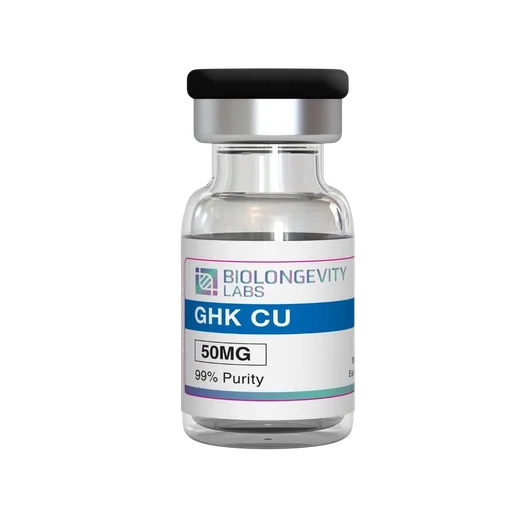
Research use only. Not for human consumption.
$39.97 as of Nov 22, 2026. Price at merchant may differ.
View research listingEducational content from an executive health coach, written as "what I would do if I were you" guidance — not medical advice, diagnosis or treatment. Injectable products sold on this site are for research use only and are not for human consumption. Talk with your licensed clinician before changing any protocol. Last reviewed November 2026.