
Pinealon
Also known as: Glu-Asp-Arg tripeptide · Brain/pineal tripeptide bioregulator
A synthetic Glu-Asp-Arg tripeptide bioregulator studied for neuroprotection, cognitive function, and sleep-related biology.
Pinealon is the synthetic tripeptide Glu-Asp-Arg (glutamic acid-aspartic acid-arginine), developed within the Khavinson peptide-bioregulator tradition. It is described as a brain- or pineal-related cytogen: a defined synthetic short peptide, unlike cytomax products, which are natural tissue extracts containing mixtures of peptides. Its research themes include neuronal stress responses, cognitive performance, and circadian or sleep-related support. Although its name and some proposed roles overlap with pineal research, Pinealon is a peptide rather than melatonin or a direct replacement for a pineal hormone.
Preclinical studies have explored cellular protection from oxidative stress and hypoxia, neuronal survival, and behavioral or cognitive measures in animal models. Russian clinical reports discuss nootropic and neuroprotective use, but the clinical literature is limited and methods and outcome reporting vary. There is no widely replicated body of modern randomized trials establishing a specific cognitive effect size in healthy adults. Khavinson’s wider program describes peptide bioregulators in long-running older-adult cohorts, but those broad observations do not isolate Pinealon’s effects.
The Handbook lists sublingual Epitalon, Pinealon, and Vesugen as travel products; it does not give Pinealon a dose or describe a specific daily routine. Practitioner references report 1 mg daily for 10–20 days, either sublingually or subcutaneously. In practice, its fit is experimental and distinct from established sleep measures such as consistent sleep timing and morning light exposure. Cognitive or sleep concerns warrant assessment for common causes rather than relying on a peptide cycle alone.
@SupplementGraveyard review
Subscribe to @SupplementGraveyard to catch it on release.
What it is studied for
Cell studies have examined Pinealon in oxidative-stress or hypoxia models and reported changes in neuronal cell survival and stress-response measures.
Preclinical work has assessed learning, memory, or behavior in animal models alongside cellular stress outcomes; these results do not establish a human cognitive effect.
Pinealon is used in some bioregulator routines for sleep or circadian themes, but the Handbook’s travel listing gives no sleep outcome data or protocol.
Russian clinical reports describe neuroprotective or cognitive use, but study designs and reporting vary and independent replication is limited.
How it works
Pinealon is proposed to influence neuronal gene expression and cellular responses to oxidative stress, hypoxia, and age-related changes. Experimental work has examined antioxidant defenses, neuronal survival, and signaling involved in cellular stress adaptation. A validated single receptor target or clinically confirmed human pathway has not been established. Its proposed cognitive or sleep effects are not equivalent to direct neurotransmitter replacement or melatonin agonism; the main mechanistic evidence remains experimental and comes largely from cell and animal models.
Protocols used in studies & practitioner literature
Informational only. These are protocols reported in published studies, product labels and practitioner references, listed so you can read the research intelligently. They are not dosing instructions. Injectable products on this site are research-use-only.
- Dose
- 1 mg
- Frequency
- Daily
- Timing
- No specific time given
- Cycle
- 10–20 days
- Route
- Sublingual or subcutaneous injection
- Dose
- No dose stated
- Frequency
- No frequency stated
- Timing
- Used while traveling
- Cycle
- No cycle stated
- Route
- Sublingual
When and how it is used
- The Handbook lists sublingual Pinealon as part of a travel routine with Epitalon and Vesugen; it does not give a dose or duration.
- Practitioner literature reports a short daily 10–20-day course, but does not establish a best time of day or equivalence between sublingual and injectable routes.
- For sleep-focused use, track sleep timing, awakenings, and daytime alertness; for cognition, choose a consistent metric rather than relying only on perceived changes.
- The Handbook does not provide reconstitution math, mixing instructions, or product storage details. Follow formulation-specific documentation for any product and avoid guessing from vial size.
- Address basic sleep cues—regular wake time, morning light, and a dark evening environment—independently of peptide use.
Synergies and stacks
Considerations and cautions
- Injectable Pinealon is sold as research-use-only in this market; it is not an FDA-approved medicine, and legal status, identity, purity, and sterility depend on the product and jurisdiction.
- Most mechanistic evidence is preclinical, while clinical reports are limited and difficult to compare. Consult a qualified clinician before use, especially with neurologic conditions, pregnancy, breastfeeding, or medicines affecting the central nervous system.
- Possible injection-site reactions and infection apply to injectable products. Athletes subject to drug testing should check the current WADA prohibited list and applicable rules.
The Handbook take
The Handbook includes Pinealon in the sublingual Epitalon/Pinealon/Vesugen travel grouping. It does not assign Pinealon a dose, a standalone cycle, or a defined cognitive protocol.
Frequently asked questions
What dose of Pinealon is reported?
A practitioner-reported course is 1 mg daily for 10–20 days, by sublingual or subcutaneous route. The Handbook’s travel listing does not state a dose.
How long until Pinealon affects cognition or sleep?
There is no validated onset time. The reported course lasts 10–20 days, but that duration does not establish when an individual should expect a measurable cognitive or sleep change.
What side effects are associated with Pinealon?
Human safety data are limited; injectable use can cause local irritation or infection. A clinician should review neurologic conditions and concurrent medicines before considering use.
Can Pinealon be taken orally or sublingually instead of injected?
The Handbook lists it as sublingual for travel, and practitioner references also describe subcutaneous use. Comparative absorption and outcomes are not established, so the routes should not be treated as interchangeable.
Can Pinealon be stacked with Epitalon?
The Handbook groups them in one travel routine, and their proposed research areas overlap. No established clinical evidence shows that combining them improves cognition, sleep, or longevity.
Is Pinealon legal and how should it be stored?
Regulatory status varies, and injectable products are sold as research-use-only in this market. Store only according to the specific manufacturer’s documented instructions; avoid products with uncertain identity, handling, or sterility.
Sourcing
Related entries
Research supply
BioLongevity Labs products for laboratory research, available to buy now. BioLongevity Labs takes the order and ships it; these listings are separate from the educational material. Affiliate disclosure: BioLongevity Labs links and code JASONJOHNS (15% off eligible orders) are affiliate links and a paid code; NexGen may earn a commission at no extra cost to you if you buy through them.
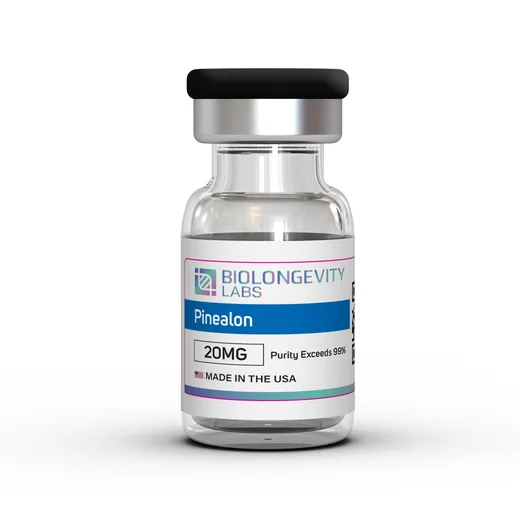
Research use only. Not for human consumption.
$69.97 as of Nov 22, 2026. Price at merchant may differ.
View research listing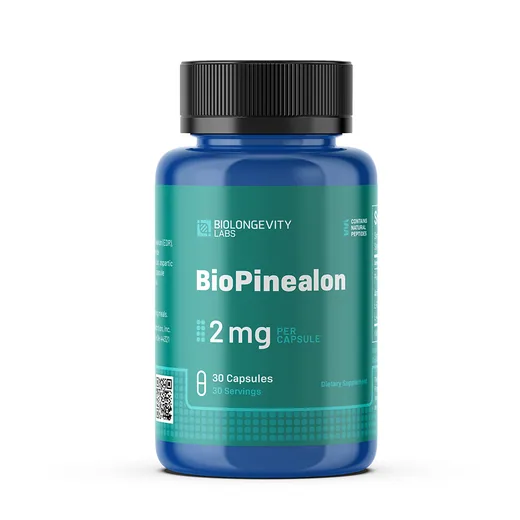
Research use only. Not for human consumption.
$124.97 as of Nov 22, 2026. Price at merchant may differ.
View research listingEducational content from an executive health coach, written as "what I would do if I were you" guidance — not medical advice, diagnosis or treatment. Injectable products sold on this site are for research use only and are not for human consumption. Talk with your licensed clinician before changing any protocol. Last reviewed November 2026.
