
Semax
Also known as: N-Acetyl Semax Amidate · NA-Semax · ACTH(4-10)-Pro-Gly-Pro
A modified ACTH-derived peptide studied and used in Russia for neuroprotection, post-stroke recovery, attention, and cognitive performance.
Semax is a synthetic heptapeptide based on the ACTH(4–7) sequence and extended with Pro-Gly-Pro: Met-Glu-His-Phe-Pro-Gly-Pro. N-acetyl Semax amidate is a related modified form used in some practitioner products. Developed in Russia, Semax is primarily administered intranasally in its regional clinical use; subcutaneous protocols appear in practitioner settings. It is classed as a nootropic peptide and is distinct from full-length ACTH, with no intended adrenal-steroid replacement role.
Russian clinical research has investigated intranasal Semax in acute ischemic stroke and neurologic recovery, including controlled clinical studies reporting changes in neurologic status and recovery measures alongside standard care. The study literature is regionally concentrated, with varying designs and reporting. Experimental research reports effects on BDNF, NGF, and other neurotrophic or stress-response markers, especially in animal models. Evidence for enhanced memory, focus, or work performance in healthy users is substantially more limited than the neurologic research claims.
The Handbook groups Semax with Selank, Cerebrolysin, and Cortexin as nootropic peptides, associating the group with brain function, reaction time, memory, anxiety, and BDNF. It also lists Semax in a cycled Neuro Regenerate product and in an as-needed nootropic routine; it does not give a Semax dose or timing in those routines. JayCampbell.com protocols commonly favor morning intranasal use, while other practitioner protocols use small subcutaneous doses. Semax is approved for certain uses in Russia, while availability and regulation differ elsewhere.
@SupplementGraveyard review
Subscribe to @SupplementGraveyard to catch it on release.
What it is studied for
Russian clinical studies have evaluated intranasal Semax alongside standard stroke care and reported improvements in neurologic recovery measures; trial designs and independent replication vary.
Experimental studies report changes in BDNF, NGF, or related neurotrophic markers after Semax administration in brain-injury and stress models.
Russian clinical research and regional use include cognitive or attention-related outcomes, while evidence for enhancement in healthy adults is much less developed.
Laboratory research has examined neuronal stress responses and survival pathways, supporting mechanistic investigation rather than a stand-alone clinical outcome.
How it works
Semax is proposed to modulate neurotrophic signaling, including brain-derived neurotrophic factor (BDNF) and nerve growth factor (NGF), and to influence dopaminergic, serotonergic, and stress-response pathways. Animal and laboratory work reports changes in neurotrophin expression and neuronal resilience after ischemic or other stress. The peptide is derived from a short ACTH fragment but lacks the full hormone’s corticosteroid-stimulating activity in the intended pharmacology. A single definitive receptor mechanism has not been established, and the neurotrophic findings do not by themselves predict cognitive benefit in healthy people.
Protocols used in studies & practitioner literature
Informational only. These are protocols reported in published studies, product labels and practitioner references, listed so you can read the research intelligently. They are not dosing instructions. Injectable products on this site are research-use-only.
- Dose
- 750–1,000 mcg/day intranasal
- Frequency
- Daily
- Timing
- Morning
- Cycle
- No cycle stated
- Route
- Intranasal
- Dose
- 100–300 mcg/day
- Frequency
- Daily
- Timing
- Morning
- Cycle
- No cycle stated
- Route
- Subcutaneous injection
- Dose
- 0.5–1.0 mg/day
- Frequency
- Daily
- Timing
- Morning
- Cycle
- No cycle stated
- Route
- Route not specified in the reference
- Dose
- 1 mg (reported as 10 units)
- Frequency
- 2–3 days per week
- Timing
- Morning
- Cycle
- Eight weeks on, eight weeks off; reference specifies men
- Route
- Subcutaneous injection
- Dose
- 250–600 mcg
- Frequency
- Daily or as needed
- Timing
- Morning
- Cycle
- Four days on, four days off; reference specifies women
- Route
- Route not specified in the reference
- Dose
- One spray from a 10 mg bottle once daily
- Frequency
- Daily
- Timing
- Morning
- Cycle
- Seven days, then adjust according to the cited protocol
- Route
- Intranasal
When and how it is used
- The cited practitioner protocols favor morning use; evening use may be a poor fit for people who notice stimulation or sleep disruption.
- The reference describes starting with one intranasal spray daily for seven days before adjustment; spray concentration and delivered amount depend on the specific device and formulation.
- A cited protocol advises not starting Semax and Selank alongside several other nootropics at once, so responses and unwanted effects are easier to attribute.
- Track attention, sleep, headache, nasal irritation, and the specific cognitive or recovery measure relevant to use. For stroke recovery, use belongs within clinician-directed care, not as a replacement for standard rehabilitation.
- The notes do not provide a universal vial concentration or reconstitution method. For injectable products, follow product-specific handling information and qualified clinical guidance; do not infer units from milligrams without a verified concentration.
Synergies and stacks
Considerations and cautions
- Semax is approved or used as a medicine for certain indications in Russia; it is not FDA-approved in the United States, and availability and legal status differ by country. Products sold as research-use-only may not match regulated regional products in identity or quality.
- Reported adverse effects include nasal irritation, headache, dizziness, agitation, or sleep disruption; safety data for long-term use and for modified forms such as N-acetyl Semax amidate are limited. Review use with a clinician, especially with psychiatric or neurologic conditions, pregnancy, breastfeeding, or medicines affecting mood and cognition.
- Intranasal products require clean handling and a correctly calibrated device; injectable use adds risks of contamination, infection, and dosing error. Check current WADA rules before sport use.
The Handbook take
The Handbook groups Semax with Selank, Cerebrolysin, and Cortexin as nootropic peptides and associates the group with cognition, reaction time, memory, anxiety, and BDNF. It also lists Semax in a cycled Neuro Regenerate blend and in an as-needed routine, without specifying a Semax dose or exact schedule.
Frequently asked questions
What is a common reported Semax dose?
JayCampbell.com protocols include 750–1,000 mcg daily intranasally or 100–300 mcg daily subcutaneously; other listed protocols range from 0.5–1 mg daily or use an eight-weeks-on/eight-weeks-off schedule. These are different practitioner protocols and formulations.
How quickly does Semax work?
Some users report acute changes in alertness, but reliable onset and duration have not been established for cognitive enhancement. Stroke studies evaluate recovery over a clinical course alongside standard care rather than immediate nootropic effects.
What side effects can Semax cause?
Reported effects include nasal irritation, headache, dizziness, agitation, and sleep disruption. Long-term safety information is limited, particularly for modified products and nonstandard routes.
Is intranasal Semax better than injection?
Intranasal administration is the principal route in Russian clinical use and is also common in practitioner protocols; subcutaneous protocols are separately reported. Comparative evidence does not establish that one route is universally better.
Can Semax be stacked with Selank or other nootropics?
The Handbook lists Semax with other nootropic peptides, but practitioner guidance recommends initially avoiding simultaneous introduction of Semax, Selank, and multiple nootropics. That makes it easier to identify effects and side effects.
Is Semax legal and does it affect drug testing?
Semax has regional medical use in Russia, while it is not FDA-approved in the United States and regulatory status varies elsewhere. Athletes should check the current WADA prohibited list and their sport’s rules; product contents may also differ from regulated medicines.
Sourcing
Related entries
Research supply
BioLongevity Labs products for laboratory research, available to buy now. BioLongevity Labs takes the order and ships it; these listings are separate from the educational material. Affiliate disclosure: BioLongevity Labs links and code JASONJOHNS (15% off eligible orders) are affiliate links and a paid code; NexGen may earn a commission at no extra cost to you if you buy through them.
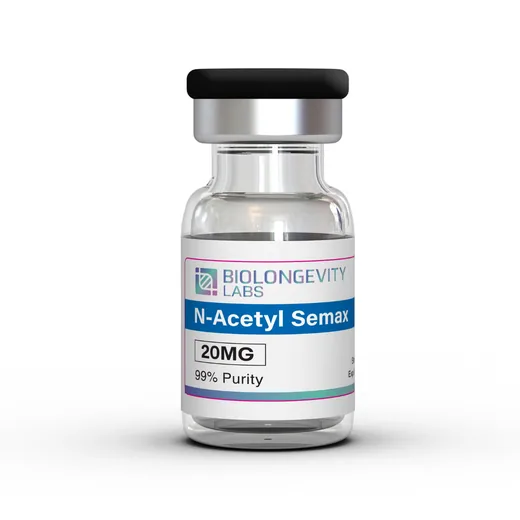
Research use only. Not for human consumption.
$64.97 as of Nov 22, 2026. Price at merchant may differ.
View research listingEducational content from an executive health coach, written as "what I would do if I were you" guidance — not medical advice, diagnosis or treatment. Injectable products sold on this site are for research use only and are not for human consumption. Talk with your licensed clinician before changing any protocol. Last reviewed November 2026.
