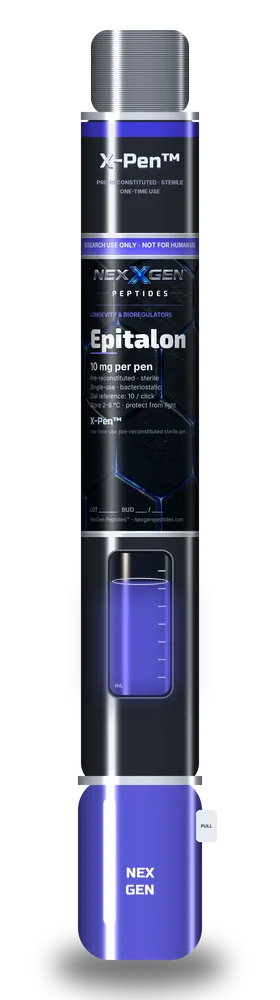
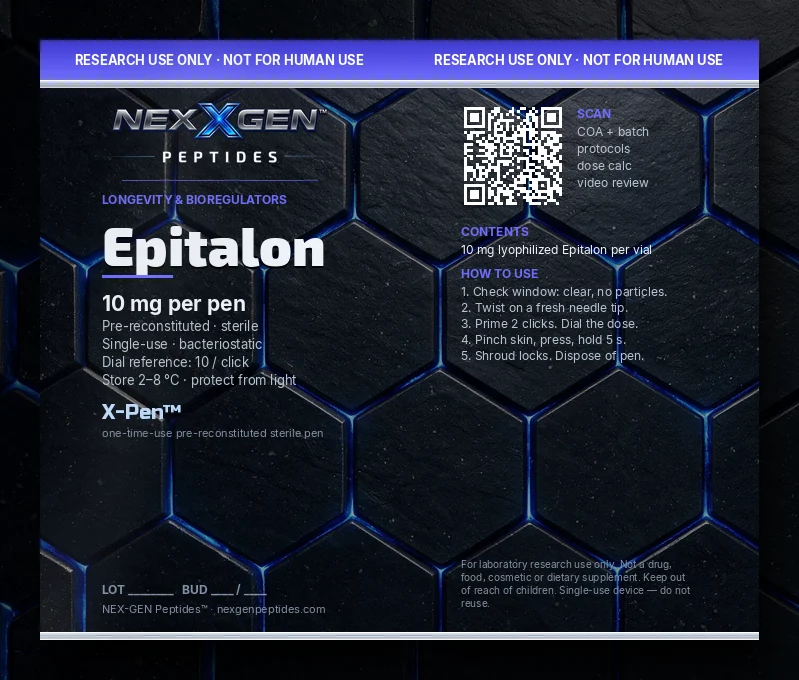
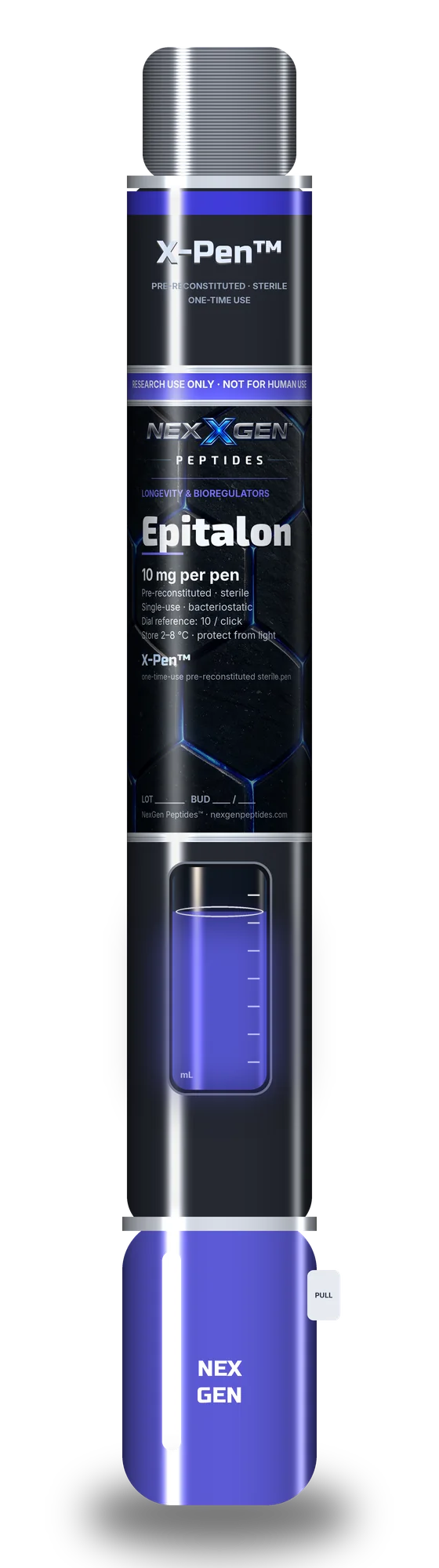
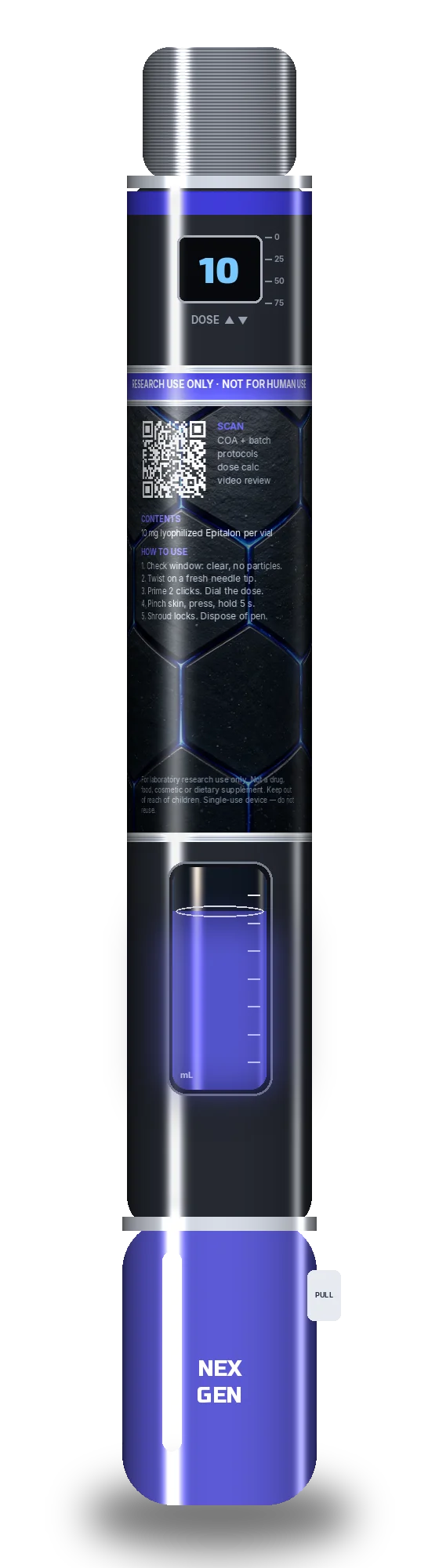
Epitalon
Also known as: Epithalon · Epithalone · Ala-Glu-Asp-Gly · Synthetic pineal tetrapeptide
A synthetic pineal tetrapeptide studied for telomere biology, circadian signaling, sleep, and age-related changes in immune function.
Epitalon—also spelled Epithalon or Epithalone—is the synthetic tetrapeptide Ala-Glu-Asp-Gly, modeled on peptide fractions associated with the pineal gland. Russian researcher Vladimir Khavinson and colleagues developed it within a broader program of short peptide bioregulators. Research has examined effects on pineal signaling, gene expression, telomerase activity, and age-related physiology. It is distinct from pineal hormones such as melatonin: it is a short peptide, not a hormone replacement. The proposed longevity rationale combines cellular-aging findings with reported changes in sleep and circadian function.
Laboratory studies, including work in cultured human fetal fibroblasts, reported increased telomerase activity and longer telomeres after exposure to Epitalon. Animal research has examined lifespan, stress responses, and age-associated function. Russian clinical and observational reports describe use in older adults and report changes in sleep, immune markers, or survival; the reports do not provide the kind of independently replicated, rigorously controlled evidence needed to establish the size of those effects. Telomere findings in cells do not demonstrate that a course extends human lifespan.
In Jason Johns’s Handbook, Epitalon is framed as an anti-aging bioregulator associated with telomere, circadian, sleep, and immune themes, and is cycled twice yearly around clock changes. The Handbook also lists sublingual Epitalon, Pinealon, and Vesugen for travel. Other practitioner protocols use short annual or semiannual cycles rather than continuous use. It is best understood as an experimental longevity peptide, not a substitute for sleep scheduling, light exposure, or evaluation of persistent sleep problems.
@SupplementGraveyard review
Subscribe to @SupplementGraveyard to catch it on release.
What it is studied for
Cultured human fetal fibroblast experiments reported increased telomerase activity and telomere length after peptide exposure; these cell findings do not measure clinical aging outcomes.
Russian clinical reports in older adults describe sleep and circadian changes during peptide courses, but the reports do not establish a reproducible effect size against a strong placebo-controlled comparison.
Rodent studies in the Khavinson research tradition examined lifespan and age-associated function after peptide administration; findings are preclinical and protocol-dependent.
Russian clinical reports describe immune or health-marker changes in older populations receiving peptide bioregulator courses, often as part of broader treatment programs.
How it works
Epitalon is proposed to influence pineal and neuroendocrine signaling and the expression of genes involved in cellular aging. In vitro work reports activation of telomerase, the ribonucleoprotein enzyme that adds TTAGGG repeats to chromosome ends, with telomere-length changes in cultured cells. Research also proposes effects on melatonin-related circadian signaling and antioxidant or immune pathways, but a specific, validated human receptor target has not been established. Its short peptide structure makes it unlike melatonin and does not imply that it directly replaces pineal hormones.
Protocols used in studies & practitioner literature
Informational only. These are protocols reported in published studies, product labels and practitioner references, listed so you can read the research intelligently. They are not dosing instructions. Injectable products on this site are research-use-only.
- Dose
- 10 mg
- Frequency
- Three times weekly
- Timing
- No specific time given
- Cycle
- Three weeks, once yearly
- Route
- Subcutaneous injection
- Dose
- 10 mg
- Frequency
- Daily
- Timing
- No specific time given
- Cycle
- 10 days yearly, for two years
- Route
- Intramuscular injection
- Dose
- 10 mg per administration; 50 mg total per course
- Frequency
- Every third day
- Timing
- No specific time given
- Cycle
- Until 50 mg total; every six months for three years
- Route
- Intramuscular injection
- Dose
- 1 mg
- Frequency
- Nightly
- Timing
- Evening
- Cycle
- No cycle specified
- Route
- Subcutaneous injection
- Dose
- 5–10 mg daily
- Frequency
- Daily
- Timing
- No specific time given
- Cycle
- 10–20 days; repeated every 6–12 months, with at least four months between cycles
- Route
- Injection
- Dose
- No dose stated
- Frequency
- Cycled twice yearly
- Timing
- Around clock changes
- Cycle
- Twice a year
- Route
- Subcutaneous injection
When and how it is used
- The Handbook places its subcutaneous cycle around seasonal clock changes; consistent morning light, evening darkness, and sleep timing remain the practical circadian anchors.
- Some practitioner literature describes evening administration, while other cycles specify no time of day; avoid assuming a universal timing rule.
- The Handbook lists sublingual Epitalon alongside Pinealon and Vesugen for travel, but does not give a sublingual dose or conversion from injectable products.
- Track sleep timing, sleep quality, and any relevant clinician-selected laboratory measures before and after a cycle; changes in these measures are not equivalent to a longevity outcome.
- Injectable handling, product identity, sterility, storage, and reconstitution depend on the specific product and manufacturer. Do not infer a mixing volume or dose from vial size alone.
Synergies and stacks
Considerations and cautions
- Epitalon is sold as research-use-only in injectable form in this market; it is not an FDA-approved medicine, and product purity, dose accuracy, sterility, and labeling can vary.
- Human longevity claims rely substantially on Russian reports and cell or animal studies; telomerase activation in cultured cells does not establish human lifespan extension. Discuss use with a qualified clinician, particularly during pregnancy, breastfeeding, active cancer evaluation, or use of medicines affecting immune or endocrine function.
- Injection can cause local pain, redness, swelling, or infection; unsterile preparation or administration adds serious risk. WADA status should be checked against the current prohibited list before sport use.
The Handbook take
The Handbook frames Epitalon as an anti-aging peptide associated with telomeres, circadian rhythm, sleep, and immune function. Its personal routine cycles subcutaneous Epitalon twice yearly around clock changes and lists sublingual Epitalon/Pinealon/Vesugen for travel. The Handbook gives no dose for those routines.
Frequently asked questions
What dose of Epitalon is commonly reported?
Reported practitioner protocols range from 1 mg nightly to 5–10 mg daily in short cycles; other cited protocols use 10 mg several times weekly or as an injection course. These are distinct protocols, not interchangeable dosing instructions.
How long does Epitalon take to work?
There is no dependable onset timeline for the commonly claimed longevity effects. Sleep or circadian changes, when reported, are generally assessed during or after a short course, while cell telomere findings cannot predict an individual response.
What are Epitalon’s side effects?
Injection-site discomfort, redness, or swelling are possible, and contamination can cause infection. Human safety data are limited; discuss medical conditions and concurrent medicines with a clinician before considering use.
Is oral or sublingual Epitalon as effective as injection?
The Handbook lists sublingual Epitalon for travel, but it does not provide a dose or comparative evidence. Injectable and sublingual products should not be assumed to have equivalent absorption or effects.
Can Epitalon be stacked with Pinealon or Vesugen?
The Handbook groups these peptides in its travel routine, and practitioner literature sometimes combines bioregulators. There is no established clinical evidence that stacking produces greater benefit; introducing several products at once also makes effects harder to interpret.
Is Epitalon legal, and is it stored in the refrigerator?
Rules vary by country, and research-use-only injectable products are not equivalent to approved medicines. Storage depends on the specific manufacturer and formulation; follow its documented handling instructions, and do not use a product with uncertain identity or sterility.
Sourcing
Related entries
Research supply
BioLongevity Labs products for laboratory research, available to buy now. BioLongevity Labs takes the order and ships it; these listings are separate from the educational material. Affiliate disclosure: BioLongevity Labs links and code JASONJOHNS (15% off eligible orders) are affiliate links and a paid code; NexGen may earn a commission at no extra cost to you if you buy through them.
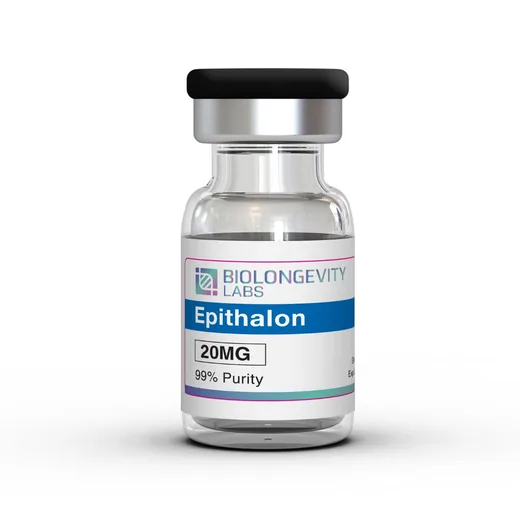
Research use only. Not for human consumption.
$75.97 as of Nov 22, 2026. Price at merchant may differ.
View research listing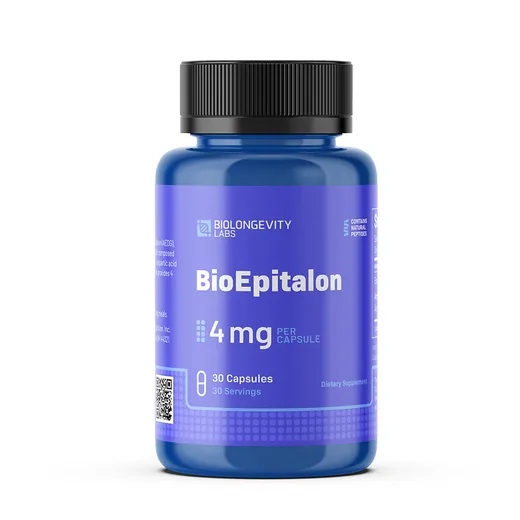
Research use only. Not for human consumption.
$103.97 as of Nov 22, 2026. Price at merchant may differ.
View research listingEducational content from an executive health coach, written as "what I would do if I were you" guidance — not medical advice, diagnosis or treatment. Injectable products sold on this site are for research use only and are not for human consumption. Talk with your licensed clinician before changing any protocol. Last reviewed November 2026.