
SS-31
Also known as: Elamipretide · Bendavia · MTP-131
A mitochondria-targeting tetrapeptide studied for cardiolipin interactions, mitochondrial function, and cellular energy production.
SS-31, also called elamipretide, Bendavia, and MTP-131, is a synthetic, cell-permeable tetrapeptide designed to concentrate at the inner mitochondrial membrane. Its sequence is D-Arg-dimethylTyr-Lys-Phe-NH2. The peptide binds cardiolipin, a phospholipid that helps organize inner-membrane structure and respiratory-chain proteins. Researchers have studied it as a way to support mitochondrial membrane organization and energy production, including in rare mitochondrial disorders and heart disease. The Handbook places SS-31 in a training-season mitochondrial-peptide rotation and describes it as a mitochondrial-repair step before MOTS-c.
Human studies have tested elamipretide in mitochondrial myopathy, Barth syndrome, and heart-failure populations, using both subcutaneous and intravenous administration. In the randomized TAZPOWER crossover study, 12 people with Barth syndrome received 40 mg subcutaneously daily during treatment periods; the trial did not meet its primary efficacy endpoint, though some secondary measures and individual responses were explored. A phase 2 study in primary mitochondrial myopathy also evaluated daily subcutaneous treatment over four weeks, with mixed results across functional endpoints. These trials establish clinical investigation, not a general performance or longevity effect.
In clinical research, dosing and monitoring depend on the disease and study design; these protocols should not be equated with wellness use. Practitioner literature separately cites 5–10 mg subcutaneously daily or several times weekly for short cycles, while JayCampbell.com references a 10 mg subcutaneous dose. The Handbook groups SS-31 with MOTS-c and Humanin for mitochondrial concerns and says it is used by training season. Persistent fatigue, exercise intolerance, or cardiac symptoms call for clinical evaluation rather than self-directed peptide use.
@SupplementGraveyard review
Subscribe to @SupplementGraveyard to catch it on release.
What it is studied for
TAZPOWER enrolled 12 people with Barth syndrome in a randomized crossover study of 40 mg subcutaneous elamipretide daily during treatment periods; the primary endpoint was not met.
A phase 2 study evaluated daily subcutaneous elamipretide over four weeks in primary mitochondrial myopathy; results across walking and fatigue measures were mixed.
Clinical programs have tested intravenous or subcutaneous elamipretide in cardiac populations, including heart failure; findings are disease- and endpoint-specific rather than evidence for general cardiovascular enhancement.
Laboratory work shows SS-31 binding to cardiolipin and investigates effects on cristae structure, respiratory-chain organization, and oxidative stress.
How it works
SS-31 is a positively charged aromatic-cationic tetrapeptide that crosses cell membranes and associates with cardiolipin in the inner mitochondrial membrane. Cardiolipin helps stabilize cristae and supports the organization of respiratory-chain complexes and ATP synthase. By binding cardiolipin, SS-31 is proposed to improve membrane organization, electron transport, and mitochondrial efficiency while reducing electron leak and reactive oxygen species. Its proposed effects do not rely on acting as a conventional antioxidant scavenger. Human clinical studies have examined functional outcomes, but mechanistic benefits have not translated into consistent efficacy across all trial endpoints.
Protocols used in studies & practitioner literature
Informational only. These are protocols reported in published studies, product labels and practitioner references, listed so you can read the research intelligently. They are not dosing instructions. Injectable products on this site are research-use-only.
- Dose
- 10 mg per injection
- Frequency
- Subcutaneous; daily or several times weekly
- Timing
- No consistent time-of-day requirement
- Cycle
- 4–8 weeks
- Route
- Subcutaneous injection
- Dose
- 5–10 mg
- Frequency
- Daily or several times weekly
- Timing
- No consistent time-of-day requirement
- Cycle
- 4–8 weeks
- Route
- Subcutaneous injection
- Dose
- 40 mg daily
- Frequency
- Once daily during treatment periods
- Timing
- Study-administered on a daily schedule
- Cycle
- Randomized crossover treatment periods; 12 participants enrolled
- Route
- Subcutaneous injection
When and how it is used
- Clinical research and practitioner protocols use different doses; do not transfer a trial dose to an unsupervised wellness protocol.
- The Handbook describes SS-31 as a mitochondrial-repair step before MOTS-c and places mitochondrial peptides in a training-season rotation. This is a conceptual sequence, not a validated combination protocol.
- Track the intended outcome before starting any clinician-supervised protocol, such as six-minute walk distance, fatigue scales, exercise tolerance, or disease-specific cardiac measures.
- No universal reconstitution volume or post-reconstitution storage period applies across products. Use only product-specific pharmacy directions; do not assume that a research vial has sterile or validated contents.
- In clinical studies, treatment was administered on a regular daily schedule; no food timing requirement is established in those protocols.
Synergies and stacks
Considerations and cautions
- SS-31 research products on this site are sold for research use only. Elamipretide has been investigated in clinical trials, but a trial protocol is not a general-purpose wellness dose; regulatory status and approved indications should be confirmed with a clinician and current local regulator.
- Human trial experience includes injection-site reactions and other adverse events; safety varies by population and route. The clinical studies cited here do not establish long-term safety for healthy users.
- People with mitochondrial disease, cardiac symptoms, or complex medication regimens should work with a specialist rather than use an unregulated peptide product. Product sterility, identity, purity, and concentration are key risks with research-vendor injectables.
- Elamipretide is not a general-purpose performance supplement and is subject to sport anti-doping rules; athletes should check the current WADA prohibited list and applicable sport rules.
The Handbook take
The Handbook lists SS-31 among mitochondrial peptides used by training season with MOTS-c and SLU-PP-332, and groups it with Humanin for mitochondrial density and function. Its “Everything Mitochondria” discussion frames SS-31 as a mitochondrial-repair step before MOTS-c. The Handbook connects this category to chronic fatigue and exercise-induced malaise, rather than presenting a clinical dosing guideline.
Frequently asked questions
What dose of SS-31 is commonly reported?
Practitioner protocols range from 5–10 mg subcutaneously daily or several times weekly, often for 4–8 weeks. A Barth syndrome study used 40 mg daily, but that was a disease-specific clinical study protocol, not a routine wellness dose.
How long does SS-31 take to work?
Clinical studies generally assessed outcomes over weeks, not after a single injection. Results have varied by condition and endpoint, so a reliable timeline for healthy users is not known.
What side effects are associated with SS-31?
Injection-site reactions are among the reported adverse effects in clinical use and trials. The full safety profile depends on the population, dose, and route.
Is SS-31 taken orally or by injection?
Clinical and practitioner protocols use injection, including subcutaneous and intravenous routes in studies. There is no comparable established oral protocol in the clinical literature.
Can SS-31 be combined with MOTS-c or Humanin?
The Handbook places SS-31 with MOTS-c and Humanin in a mitochondrial-peptide framework and describes SS-31 before MOTS-c. The combinations have not been established in controlled clinical trials.
Is SS-31 approved or legal?
Its regulatory status depends on the country and specific product; research-vendor products on this site are research-use-only. Clinical investigation or prescription access in a particular setting does not make every online product an approved medicine.
Sourcing
Related entries
Research supply
BioLongevity Labs products for laboratory research, available to buy now. BioLongevity Labs takes the order and ships it; these listings are separate from the educational material. Affiliate disclosure: BioLongevity Labs links and code JASONJOHNS (15% off eligible orders) are affiliate links and a paid code; NexGen may earn a commission at no extra cost to you if you buy through them.
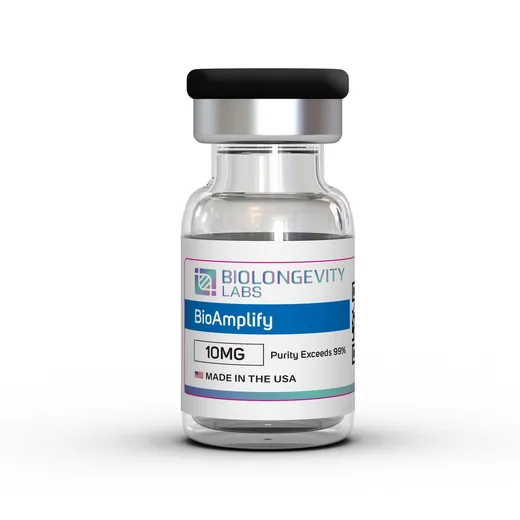
Research use only. Not for human consumption.
$88.97 as of Nov 22, 2026. Price at merchant may differ.
View research listingEducational content from an executive health coach, written as "what I would do if I were you" guidance — not medical advice, diagnosis or treatment. Injectable products sold on this site are for research use only and are not for human consumption. Talk with your licensed clinician before changing any protocol. Last reviewed November 2026.
