NAD+
Also known as: Nicotinamide adenine dinucleotide · NAD+ injection
A central cellular coenzyme involved in redox metabolism and enzyme signaling, with injectable NAD+ and oral precursors studied for distinct uses.
Nicotinamide adenine dinucleotide (NAD+) is a coenzyme present in every cell, not a peptide. It cycles between oxidized NAD+ and reduced NADH in redox reactions and also serves as a substrate for enzymes including sirtuins, PARPs, and CD38. Cells maintain NAD+ through salvage and synthesis pathways, and levels are influenced by age, tissue demands, and metabolic state. The Handbook describes NAD+ as important for cellular energy and repair, lists injectable NAD+ in its peptide guide, and distinguishes oral precursors such as NMN and NR.
Human evidence differs by form. Oral nicotinamide riboside (NR) and nicotinamide mononucleotide (NMN) have been studied in randomized trials, commonly at hundreds of milligrams daily, with reliable increases in NAD-related blood metabolites but variable effects on clinical outcomes. In a randomized trial of 25 postmenopausal women with prediabetes, NMN at 250 mg daily for 10 weeks improved skeletal-muscle insulin sensitivity. By contrast, evidence for injected or intravenous NAD+ as a general energy or longevity intervention is much thinner, with small clinical and observational reports that do not establish broad benefit.
In practice, NAD+ may be administered intravenously in clinics or subcutaneously in practitioner protocols; oral NR and NMN are separate precursor strategies with their own study evidence. JayCampbell.com describes low-start injectable schedules because flushing and nausea can occur, and notes slow administration for IV use. The Handbook includes injectable NAD+ in its peptide guide and oral precursors in its supplement framework. Choice of route, product, and monitoring should be clinician-led, especially for people with chronic illness or ongoing medicines.
@SupplementGraveyard review
Subscribe to @SupplementGraveyard to catch it on release.
What it is studied for
Randomized trials of oral NR and NMN show increases in NAD-related blood metabolites, though biomarker changes do not consistently correspond to clinical improvement.
A trial of 25 postmenopausal women with prediabetes found that NMN 250 mg daily for 10 weeks improved skeletal-muscle insulin sensitivity; the small, specific study population matters when interpreting the result.
Trials of NR, including doses around 1,000 mg daily over several weeks, have generally shown increased NAD metabolites with variable effects on insulin sensitivity and other metabolic measures.
Small clinical reports and clinic-based use have examined IV NAD+, including in substance-use settings, but they do not establish a general anti-aging, energy, or performance benefit.
How it works
NAD+ accepts and donates electrons as part of glycolysis, the tricarboxylic-acid cycle, and oxidative phosphorylation, interconverting with NADH to support ATP production. It is also consumed by sirtuins, which regulate protein deacetylation and stress responses; PARP enzymes involved in DNA-damage responses; and CD38, which participates in calcium signaling and NAD+ breakdown. Cells regenerate NAD+ through the nicotinamide salvage pathway, including NAMPT. NR and NMN enter precursor pathways that can raise NAD-related metabolites, but changes in a blood biomarker do not automatically translate into improved clinical outcomes.
Protocols used in studies & practitioner literature
Informational only. These are protocols reported in published studies, product labels and practitioner references, listed so you can read the research intelligently. They are not dosing instructions. Injectable products on this site are research-use-only.
- Dose
- 50–100 mg
- Frequency
- Daily
- Timing
- Start at the low end; inject slowly
- Cycle
- Practitioner schedules vary; no standardized cycle
- Route
- Subcutaneous injection
- Dose
- 100–200 mg
- Frequency
- 2–3 times weekly
- Timing
- Inject slowly; lower starting amounts are commonly used to assess tolerance
- Cycle
- Practitioner schedules vary; no standardized cycle
- Route
- Subcutaneous injection
- Dose
- 250–1,000 mg
- Frequency
- Given as a clinic infusion
- Timing
- Infused slowly over several hours
- Cycle
- Clinic schedules vary
- Route
- Intravenous infusion
- Dose
- 250 mg
- Frequency
- Once daily
- Timing
- Daily for the study period
- Cycle
- 10 weeks
- Route
- Oral
- Dose
- 1,000 mg
- Frequency
- Once daily
- Timing
- Daily for the study period
- Cycle
- 6 weeks
- Route
- Oral
When and how it is used
- Injectable NAD+ and oral NR or NMN are different protocols; a study of an oral precursor should not be used to infer an injectable NAD+ dose.
- Clinic IV protocols use slow infusion because rapid administration can provoke unpleasant reactions. IV administration belongs in a monitored clinical setting, not a home-infusion setup.
- For oral precursors, take the product according to its label or the study protocol being followed; the NMN trial cited here used 250 mg daily for 10 weeks.
- Track the intended outcomes and relevant clinical markers with a clinician. Depending on context, these may include symptoms, blood pressure, glucose measures, medication tolerance, and relevant metabolic laboratory results.
- No universal reconstitution math or storage instruction applies to NAD+ injectables; formulation, concentration, and sterility differ. Use only pharmacy-specific handling instructions.
- Flushing, nausea, or other discomfort can occur during injectable use. If symptoms develop during an infusion, the supervising clinician can adjust or stop administration.
Synergies and stacks
Considerations and cautions
- Injectable NAD+ products on this site are sold for research use only; clinic protocols and practitioner schedules are not equivalent to an approved general wellness indication. Oral NR and NMN are distinct products with their own regulatory and evidence context.
- IV or subcutaneous NAD+ can cause flushing, nausea, abdominal discomfort, chest tightness, cramping, or infusion-related symptoms. IV administration should be performed by trained clinical staff with appropriate monitoring.
- NAD+ metabolism intersects with glucose regulation and cellular enzymes; people taking chronic medicines or managing cancer, liver disease, kidney disease, diabetes, or other complex conditions should consult a clinician before using NAD+ products or high-dose precursors.
- Research-vendor injectable products carry risks of incorrect concentration, impurities, contamination, and nonsterile handling. Do not infer injectable safety or efficacy from oral NR or NMN studies.
The Handbook take
The Handbook describes NAD+ as a central molecule for cellular energy and repair and lists injectable NAD+ in its peptide guide, while placing NMN and NR among oral precursors. It also mentions NAD+ in an “as needed” routine context and pairs mitochondrial discussions with compounds such as MOTS-c and SS-31. Its distinction between injectable NAD+ and oral precursors is a guide-level framing, not proof that injection is necessary for every person.
Frequently asked questions
What dose of NAD+ is commonly used?
The reference practitioner protocols cite 50–100 mg subcutaneously daily or 100–200 mg two or three times weekly, while clinic IV protocols cite 250–1,000 mg infused over several hours. These are reported protocols, not a universal medical dose.
How long does NAD+ take to work?
There is no dependable timeline for subjective effects from injectable NAD+. Oral precursor trials typically assess blood metabolites and clinical measures over several weeks, and increases in a biomarker do not guarantee a noticeable benefit.
What side effects can injectable NAD+ cause?
Flushing and nausea are commonly cited, and infusion-related discomfort can include abdominal symptoms, cramping, or chest tightness. Slow administration and clinical monitoring are important for IV use.
Is NAD+ better taken orally or by injection?
NAD+ injectables and oral precursors such as NR and NMN are different approaches, and direct comparisons are limited. Human randomized trials provide more structured evidence for oral precursors than for injectable NAD+ used for general wellness.
Can NAD+ be combined with MOTS-c or SS-31?
Practitioner mitochondrial protocols sometimes pair NAD+ with MOTS-c or SS-31 because they address different aspects of cellular energy and mitochondrial function. Controlled trials have not established that these combinations improve outcomes.
Is injectable NAD+ legal or approved?
Regulatory status varies by product and jurisdiction; injectable NAD+ products sold on this site are research-use-only. A clinic's availability of an infusion does not by itself establish an approved general wellness indication.
Sourcing
Related entries
Research supply
BioLongevity Labs products for laboratory research, available to buy now. BioLongevity Labs takes the order and ships it; these listings are separate from the educational material. Affiliate disclosure: BioLongevity Labs links and code JASONJOHNS (15% off eligible orders) are affiliate links and a paid code; NexGen may earn a commission at no extra cost to you if you buy through them.
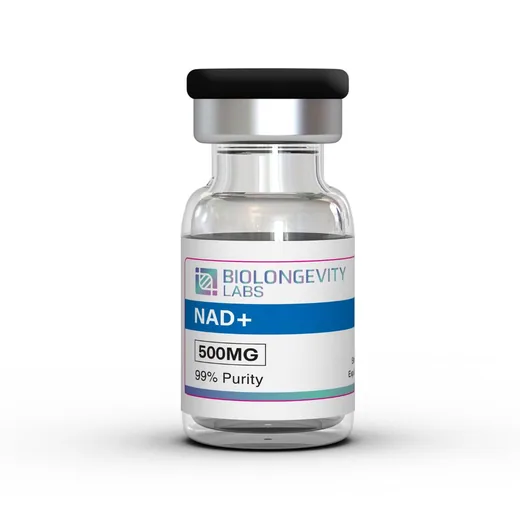
Research use only. Not for human consumption.
$68.97 as of Nov 22, 2026. Price at merchant may differ.
View research listingEducational content from an executive health coach, written as "what I would do if I were you" guidance — not medical advice, diagnosis or treatment. Injectable products sold on this site are for research use only and are not for human consumption. Talk with your licensed clinician before changing any protocol. Last reviewed November 2026.