
5-Amino-1MQ
Also known as: 5-amino-1-methylquinolinium · NNMT inhibitor
An investigational small-molecule NNMT inhibitor studied mainly in cells and animals for effects on fat metabolism and body composition.
5-Amino-1MQ is a synthetic small molecule, not a peptide. Its chemical name is 5-amino-1-methylquinolinium, and it is studied as an inhibitor of nicotinamide N-methyltransferase (NNMT). NNMT is an enzyme that methylates nicotinamide using S-adenosylmethionine (SAM) and is expressed in adipose tissue and other organs. The Handbook describes 5-Amino-1MQ as an oral peptide, but chemically it is a small-molecule research compound. It is included in the Handbook’s peptide guide and in a listed LVLUP Health longevity blend alongside JBSNF, as well as being mentioned among as-needed compounds.
The main mechanistic and efficacy evidence comes from cellular experiments and animal models, particularly studies of adipose tissue and diet-induced obesity. In those models, NNMT inhibition has been associated with changes in nicotinamide-related metabolism, energy expenditure and adiposity. These findings prompted interest in body composition and metabolic signaling, but they do not establish comparable weight or fat-loss outcomes in people. Human clinical outcome data are limited, and reports of oral use in practitioner settings should be distinguished from controlled human trials. The Handbook characterizes the compound as supporting fat utilization and muscle preservation and discusses its use alongside NAD+; those statements reflect its framework rather than a demonstrated human anti-aging or body-composition result.
In practice, 5-Amino-1MQ is discussed in the research-compound and practitioner supplement space, usually as an oral capsule or blend. JayCampbell.com reports 50–150 mg daily, commonly 50 mg one to three times daily, for 8–12 weeks; this is a practitioner protocol, not a clinical-label dose. The Handbook places it in a longevity blend and describes it in relation to NAD+ and body composition. Given the limited human evidence and absence of an approved medical dose, any consideration belongs in a clinician-led discussion, especially when combined with weight-loss medicines or other metabolic agents. Objective measures such as body weight, waist, blood pressure and routine metabolic labs are more informative than subjective claims of “fat burning.”
@SupplementGraveyard review
Subscribe to @SupplementGraveyard to catch it on release.
What it is studied for
NNMT inhibition with 5-Amino-1MQ has been studied in diet-induced-obesity models, with reported changes in adiposity and metabolic measures; these are preclinical findings, not human weight-loss results.
Cell studies examine NNMT activity, nicotinamide methylation and SAM-related metabolic changes after inhibitor exposure.
The Handbook describes the compound as supporting fat use while protecting muscle and lists it alongside NAD+; these are handbook claims rather than established clinical outcomes.
Practitioner-use reports include oral protocols, but controlled human outcome data sufficient to quantify changes in fat mass, muscle or metabolic markers are limited.
How it works
NNMT catalyzes methylation of nicotinamide to 1-methylnicotinamide, consuming SAM and affecting methyl-donor balance as well as nicotinamide metabolism. 5-Amino-1MQ inhibits NNMT in experimental systems. In adipose-tissue models, NNMT inhibition has been linked to altered NAD-related pathways, changes in methyl-donor availability and increased energy expenditure or reduced lipid accumulation. The Handbook’s description that NNMT blockade keeps NAD+ in circulation longer is a simplified interpretation; the direct biochemical reaction concerns nicotinamide methylation, and downstream NAD+ effects depend on tissue and metabolic context. No validated human pharmacodynamic pathway has been shown to translate these models into predictable clinical outcomes.
Protocols used in studies & practitioner literature
Informational only. These are protocols reported in published studies, product labels and practitioner references, listed so you can read the research intelligently. They are not dosing instructions. Injectable products on this site are research-use-only.
- Dose
- 50–150 mg total daily; commonly 50 mg one to three times daily
- Frequency
- Daily
- Timing
- Split doses across the day when using 50 mg multiple times daily
- Cycle
- 8–12 weeks
- Route
- Oral
- Dose
- Follow the specific product label; the Handbook does not give a separate amount for the blend
- Frequency
- As listed in the routine
- Timing
- Routine timing is product-dependent
- Cycle
- As needed or cycled, as described in the routine
- Route
- Oral
When and how it is used
- The practitioner protocol cited is 50–150 mg daily for 8–12 weeks; product concentration and formulation can vary, so do not infer capsule count from the compound name alone.
- If a clinician is supervising use, record baseline and follow-up weight, waist circumference, blood pressure, fasting glucose or HbA1c, and lipid markers as clinically appropriate.
- Avoid stacking with a GLP-1 medicine or other metabolic drug without prescriber review; overlapping weight and glucose effects can complicate tolerability and interpretation.
- Store according to the product label and protect from moisture and heat when directed; no standardized reconstitution method applies to oral capsules.
- Human effects and time-to-effect have not been characterized in controlled clinical studies; animal findings should not be used to predict an individual response.
Synergies and stacks
Considerations and cautions
- 5-Amino-1MQ is an investigational research compound, not an FDA-approved medicine or established dietary supplement ingredient for weight loss. Products sold online may vary in identity, purity and dose.
- Human safety, pharmacokinetics, drug interactions and long-term effects are not well characterized. Potential effects on nicotinamide metabolism and methyl-donor pathways warrant caution, particularly with liver disease or medicines affecting metabolism.
- Do not combine with GLP-1 drugs, diabetes medicines or other weight-loss agents without a licensed prescriber; changes in appetite, glucose or body weight can require medication adjustment.
- The Handbook calls it a peptide, but 5-Amino-1MQ is a small molecule. Research-use products are not equivalent to regulated pharmaceuticals, and third-party testing does not establish clinical safety.
The Handbook take
The Handbook’s peptide guide describes 5-Amino-1MQ as an NNMT blocker associated with NAD+ utilization, fat use and muscle preservation, and discusses it alongside NAD+. Its personal routine lists an LVLUP Health Longevity blend containing 5-Amino-1MQ and JBSNF, while another routine section mentions it as an as-needed compound.
Frequently asked questions
What is the reported 5-Amino-1MQ dose?
JayCampbell.com reports 50–150 mg orally per day, commonly 50 mg one to three times daily, for 8–12 weeks. This is a practitioner protocol, not an approved medical dose.
How long does 5-Amino-1MQ take to work?
Controlled human studies have not established a reliable timeline for body-composition effects. Animal and cell findings do not predict when or whether an individual will notice a change.
Is 5-Amino-1MQ a peptide?
No. It is a synthetic small molecule that inhibits NNMT, despite being grouped with peptides in some guides and product marketing.
Can 5-Amino-1MQ be stacked with NAD+ or a GLP-1 drug?
The Handbook discusses it alongside NAD+, and some practitioner protocols mention GLP-1 combinations, but these stacks lack controlled clinical validation. A prescriber should review any combination with metabolic or diabetes medicines.
What are the side effects of 5-Amino-1MQ?
Human safety data are limited, so a dependable side-effect profile is unavailable. Product quality, unknown interactions and effects on nicotinamide and methyl-donor metabolism are important concerns.
Is 5-Amino-1MQ legal or approved for weight loss?
It is not an FDA-approved weight-loss medicine. Online products may be sold as research compounds or supplements, but the label and sales channel do not establish drug approval or safety.
Sourcing
Related entries
Research supply
BioLongevity Labs products for laboratory research, available to buy now. BioLongevity Labs takes the order and ships it; these listings are separate from the educational material. Affiliate disclosure: BioLongevity Labs links and code JASONJOHNS (15% off eligible orders) are affiliate links and a paid code; NexGen may earn a commission at no extra cost to you if you buy through them.
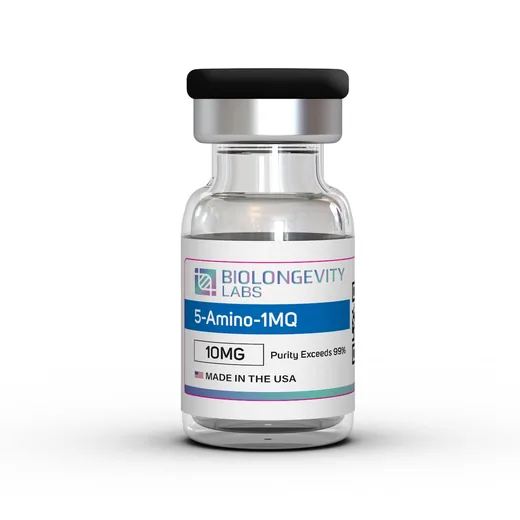
Research use only. Not for human consumption.
$57.97 as of Nov 22, 2026. Price at merchant may differ.
View research listingEducational content from an executive health coach, written as "what I would do if I were you" guidance — not medical advice, diagnosis or treatment. Injectable products sold on this site are for research use only and are not for human consumption. Talk with your licensed clinician before changing any protocol. Last reviewed November 2026.
