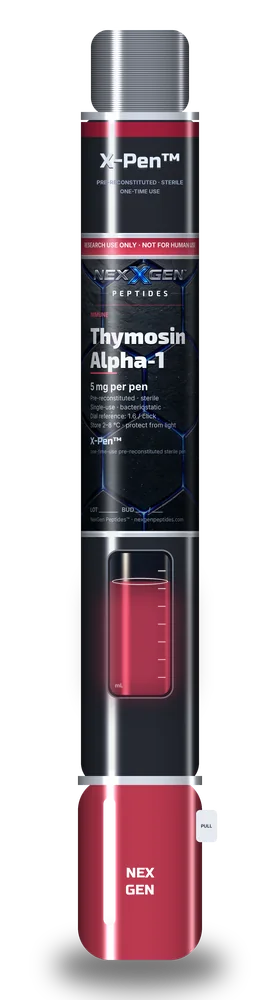
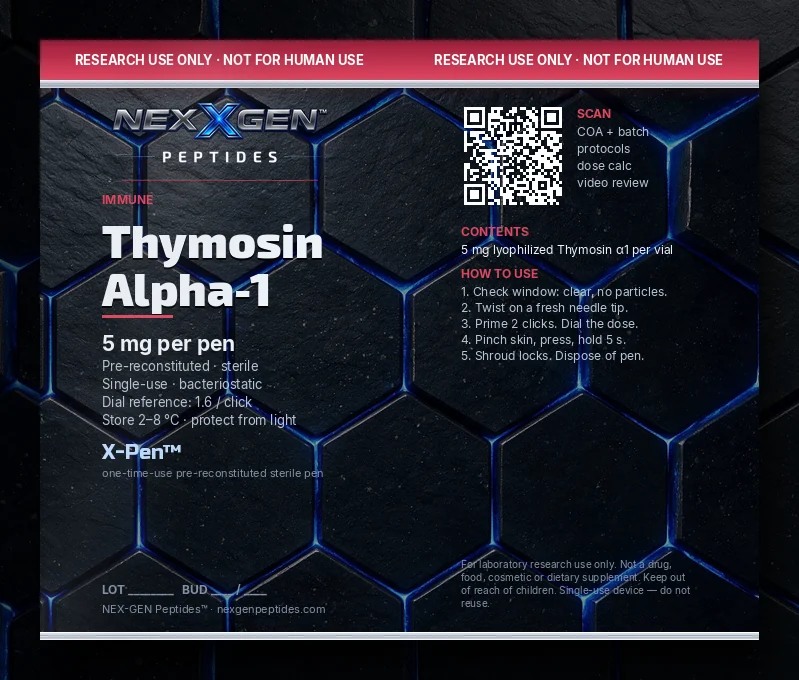
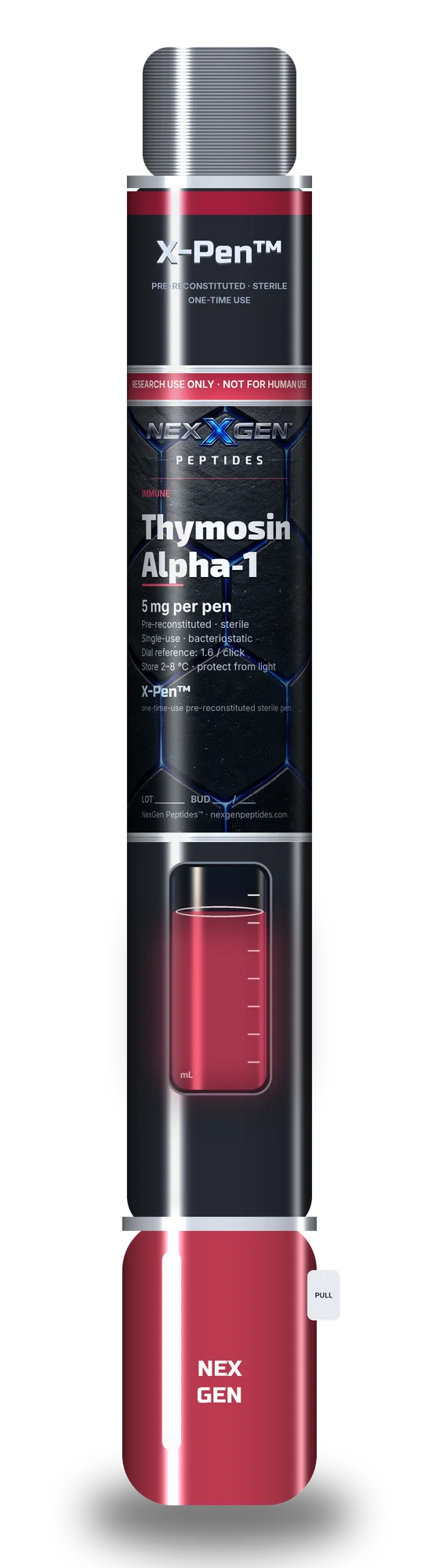
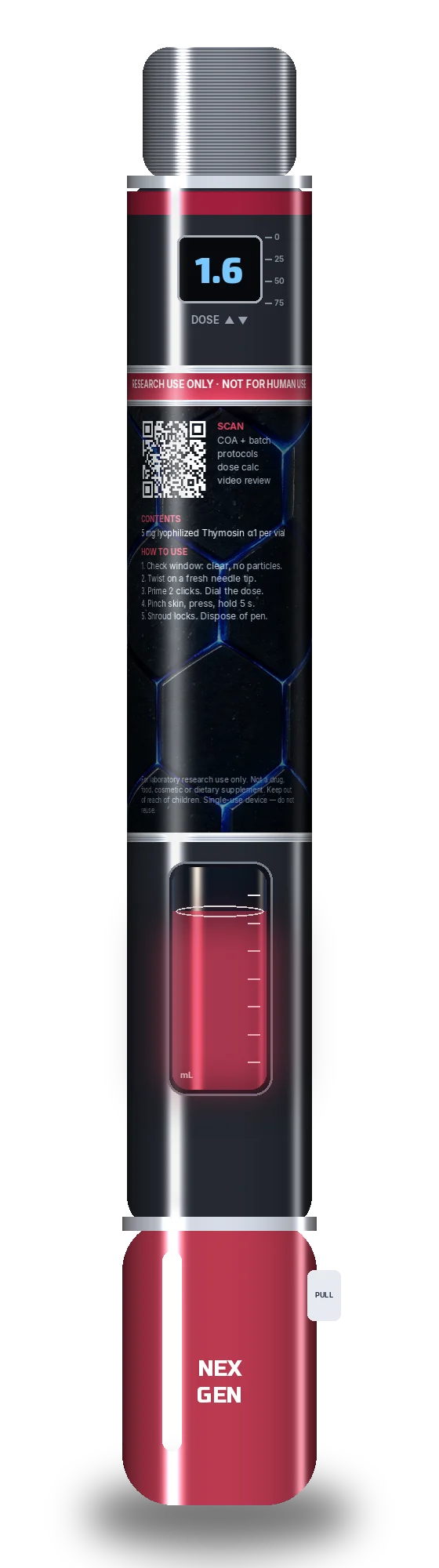
Thymosin Alpha-1
Also known as: Tα1 · Thymalfasin · Zadaxin · Thymogen Alpha-1 (oral)
Thymosin alpha-1 is a thymus-derived immune-modulating peptide studied in viral infections, immune function, and as an adjunct in cancer care.
Thymosin alpha-1 (Tα1; thymalfasin) is a 28-amino-acid peptide originally isolated from thymosin fraction 5, an extract of thymus tissue. Thymalfasin is the synthetic form used in clinical research and in some countries as a medicine. It is distinct from Thymalin, a thymus peptide extract, and from Thymogen, an oral synthetic dipeptide sometimes grouped with immune bioregulators. Tα1 has been studied as an immune-modulating signal rather than as a conventional antimicrobial drug.
Human research has examined Tα1 in chronic viral infections, sepsis, cancer-treatment settings, and vaccine-response studies. In hepatitis B research, randomized trials have assessed courses lasting several months and measured virologic or serologic response. In oncology, trials have studied Tα1 as an adjunct to standard treatment in defined patient groups. COVID-era studies also evaluated it in hospitalized patients, with outcomes varying by disease severity and study design. Across these areas, the clinical question is whether immune modulation can improve a specific treatment or infection outcome, not whether Tα1 acts as a general immune stimulant for everyone.
In practitioner protocols, subcutaneous Tα1 is used in defined courses, commonly 1.6 mg twice weekly for several weeks. Jay Campbell’s references also describes short daily courses during an acute immune challenge and an eight-week optimization schedule. The Handbook groups Tα1 with Thymalin, Thymulin, and oral Thymogen in a seasonal immune-bioregulator rotation, paired with zinc. Medical use and dosing depend on the indication, jurisdiction, and clinician oversight.
@SupplementGraveyard review
Subscribe to @SupplementGraveyard to catch it on release.
What it is studied for
Randomized clinical studies have evaluated thymalfasin in chronic hepatitis B and other viral infections, typically over multiweek or multimonth courses with virologic and serologic endpoints. Response has varied by population and accompanying therapy.
Clinical studies have measured immune-cell and cytokine changes during Tα1 use, including in patients with chronic infection or impaired immune responses. Findings support immune-modulating activity rather than a universal increase in immune function.
Trials have examined Tα1 alongside standard cancer therapies in selected populations, including immune-response and treatment outcomes. Results are indication-specific and do not make it a replacement for oncology treatment.
Clinical studies and comparative hospital cohorts evaluated Tα1 in severe infection, including COVID-19, with outcomes such as mortality, disease progression, and immune markers. Results have varied across designs and patient groups.
How it works
Tα1 is thought to act through innate and adaptive immune pathways, including Toll-like receptor 9 signaling in dendritic cells and other antigen-presenting cells. Reported downstream effects include improved antigen presentation, increased production of cytokines such as IL-2 and interferon-γ, and support for T-cell maturation and activity. It may help coordinate immune responses rather than directly kill pathogens. These pathways are context-dependent: a response useful in one infection or treatment setting may be inappropriate in autoimmune disease or other immune-sensitive conditions, so clinical context matters.
Protocols used in studies & practitioner literature
Informational only. These are protocols reported in published studies, product labels and practitioner references, listed so you can read the research intelligently. They are not dosing instructions. Injectable products on this site are research-use-only.
- Dose
- 1.6 mg
- Frequency
- Twice weekly
- Timing
- No specific time of day stated
- Cycle
- 4–12 weeks
- Route
- Subcutaneous injection
- Dose
- 1.6 mg
- Frequency
- Twice weekly
- Timing
- No specific time of day stated
- Cycle
- 8–12 weeks; repeated 2–3 times per year
- Route
- Subcutaneous injection
- Dose
- 1.6–3.2 mg daily, then taper to 1.6 mg twice weekly
- Frequency
- Daily for the initial course, then twice weekly
- Timing
- No specific time of day stated
- Cycle
- 5–7 days daily, followed by twice-weekly dosing; taper duration not stated
- Route
- Subcutaneous injection
- Dose
- 1.5 mg
- Frequency
- Five days on, two days off
- Timing
- Morning
- Cycle
- 8 weeks on, 8 weeks off; the reference lists a 4-week break for women
- Route
- Subcutaneous injection
When and how it is used
- The reported schedules use subcutaneous administration; the specific indication, product, and course should be determined with a licensed clinician.
- Jay Campbell’s reference includes distinct schedules: 1.6 mg twice weekly for 4–12 weeks, a five-days-on/two-days-off schedule, and a short daily course for acute immune challenge. These are alternative reported protocols, not doses to combine.
- The Handbook places Tα1 in a broader immune-bioregulator rotation with Thymalin, Thymulin, and Thymogen Alpha-1, paired with zinc; it does not specify a zinc dose.
- Track the clinical purpose with appropriate measures, such as infection symptoms, blood counts, viral markers, vaccine response, or oncology endpoints as determined by the treating team.
- Avoid changing immunomodulatory medicines or starting an immune peptide during an acute illness without clinician input. Product-specific preparation and storage instructions should come from the dispensing pharmacy or clinician.
Synergies and stacks
Considerations and cautions
- Injectable peptide products marketed through research channels are research-use-only; product identity, concentration, sterility, and endotoxin control can vary. Thymalfasin has medicine status in some countries, but it is not an FDA-approved US drug.
- Immune modulation can be inappropriate in autoimmune disease, active malignancy, transplantation, or immunosuppression without specialist direction. Jay Campbell’s reference specifically calls for medical supervision in autoimmune disease, active malignancy, or immunocompromised states.
- Injection reactions can include pain, redness, or swelling. Clinical studies have also reported flu-like symptoms and other adverse events depending on population and co-treatment.
- Do not substitute Tα1 for antiviral, oncology, or other prescribed care. The Handbook’s statements about cancer-treatment outcomes and vaccine effectiveness should be interpreted in light of indication-specific clinical research.
- Check current anti-doping rules and local medicine regulations before use; status can depend on jurisdiction and product.
The Handbook take
The Ultimate Handbook of Health describes Thymogen Alpha-1 as an oral form related to thymosin alpha-1 and says the injected form is more effective in its framing. Its routine groups Thymosin α-1, Thymalin, Thymulin, and Thymogen Alpha-1 in a cycled immune-bioregulator rotation, always with zinc. In the Handbook’s wider bioregulator framework, cycles are organized in roughly 30-day blocks, with three bioregulators used at a time and rotation across organ systems; that framework is distinct from clinical Tα1 trial schedules.
Frequently asked questions
What is a common thymosin alpha-1 dose?
A reported practitioner schedule is 1.6 mg subcutaneously twice weekly for 4–12 weeks. Other practitioner protocols use different schedules, including short daily courses, so they should not be merged or self-selected.
How long does thymosin alpha-1 take to work?
Clinical studies assess outcomes over weeks to months, depending on the condition and endpoint. There is no single expected onset that applies across infection, immune-function, and cancer-care settings.
What side effects can thymosin alpha-1 cause?
Injection-site discomfort and flu-like symptoms are among reported effects. Because it modulates immune pathways, people with autoimmune disease, active malignancy, or immunosuppression need specialist oversight.
Is oral thymogen the same as injected thymosin alpha-1?
No. Thymogen Alpha-1 is an oral synthetic dipeptide discussed as a related thymus peptide, while thymosin alpha-1 is a 28-amino-acid peptide used in clinical research and some countries as thymalfasin.
Can thymosin alpha-1 be stacked with Thymalin or zinc?
The Handbook groups Tα1, Thymalin, Thymulin, and Thymogen in a cycled immune-bioregulator routine with zinc. They are not interchangeable, and combination use should be reviewed by a clinician.
Is thymosin alpha-1 approved or allowed in tested sport?
Thymalfasin is used as a medicine in some countries but is not an FDA-approved US drug. Legal status and anti-doping treatment depend on jurisdiction and current rules; verify before use.
Sourcing
Related entries
Research supply
BioLongevity Labs products for laboratory research, available to buy now. BioLongevity Labs takes the order and ships it; these listings are separate from the educational material. Affiliate disclosure: BioLongevity Labs links and code JASONJOHNS (15% off eligible orders) are affiliate links and a paid code; NexGen may earn a commission at no extra cost to you if you buy through them.
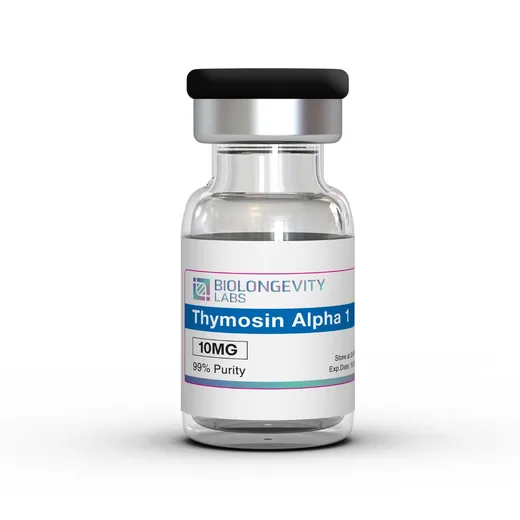
Research use only. Not for human consumption.
$74.97 as of Nov 22, 2026. Price at merchant may differ.
View research listingEducational content from an executive health coach, written as "what I would do if I were you" guidance — not medical advice, diagnosis or treatment. Injectable products sold on this site are for research use only and are not for human consumption. Talk with your licensed clinician before changing any protocol. Last reviewed November 2026.