
Vladonix (thymus)
Also known as: Khavinson peptide bioregulator
A thymus-focused Khavinson peptide bioregulator used in practitioner protocols for immune-aging support.
Vladonix is a Khavinson peptide bioregulator associated with the thymus, an organ involved in T-cell development and immune function. In the bioregulator terminology, a cytomax is a natural tissue-derived peptide preparation, whereas a cytogen is a synthetic short-peptide form. Commercial products do not consistently disclose a complete sequence, peptide profile, or manufacturing specification, so the name alone does not guarantee a chemically identical preparation. The product’s thymus association should not be confused with thymosin alpha-1, thymulin, or a defined immune-active drug; these are distinct materials.
The broader Khavinson research program proposes that tissue-associated short peptides regulate gene expression and support organ-specific function. Long-running reports from that program describe use in older adults and favorable longevity or functional-aging outcomes, but those findings are not Vladonix-specific and do not demonstrate a clinical immune benefit for this product. Practitioner material describes the thymus cytomax in relation to immune aging. The references do not identify a controlled human Vladonix trial with a defined population, immune endpoint, comparator, or effect size, nor do they show that it restores thymic output.
The Ultimate Handbook of Health includes Vladonix in its cytomax reference as the thymus bioregulator. The general Handbook approach uses about 30-day cycles, three bioregulators at a time, and rotation across organ systems; practitioner protocols give 1–2 capsules daily with food for 10–30 days and repeat two to three times yearly. Other practitioner descriptions pair bioregulator cycles with Endoluten or Epitalon and Ventfort. Immune symptoms, recurrent infections, or abnormal immune testing warrant clinical evaluation rather than a supplement-only approach.
@SupplementGraveyard review
Subscribe to @SupplementGraveyard to catch it on release.
What it is studied for
Practitioner descriptions associate the thymus cytomax with immune aging. The references do not provide a controlled Vladonix study or a quantified immune outcome.
The general tissue-regulatory hypothesis appears in the wider bioregulator literature; a Vladonix-specific target, assay, and reproducible result are not identified.
Preclinical research on tissue-derived peptide preparations informs the broader bioregulator concept, but the references do not identify a Vladonix-specific animal model with a quantified immune endpoint.
Long-running outcomes have been reported for the wider Khavinson research program in older adults. Those findings are not specific to Vladonix and do not establish a reduction in infection or immune-aging outcomes.
How it works
Vladonix is proposed to act through tissue-associated peptide signaling that influences gene-expression regulation in thymus-related cells. The Khavinson framework is often described in terms of chromatin or transcriptional regulation, but Vladonix does not have a validated receptor, defined downstream immune pathway, or human pharmacokinetic profile in the referenced material. It should not be equated mechanistically with thymosin alpha-1 or thymulin, which are separately characterized peptide products. Any claim that Vladonix increases T-cell output or reverses thymic involution remains a proposed interpretation of its tissue designation, not a demonstrated product-specific mechanism.
Protocols used in studies & practitioner literature
Informational only. These are protocols reported in published studies, product labels and practitioner references, listed so you can read the research intelligently. They are not dosing instructions. Injectable products on this site are research-use-only.
- Dose
- 1–2 capsules (10–20 mg total)
- Frequency
- Once daily
- Timing
- With food
- Cycle
- 10–30 days; general Handbook approach is about 30 days and repeats 2–3 times per year
- Route
- Oral capsule
- Dose
- Three bioregulators used at a time
- Frequency
- During a cycle
- Timing
- No specific time of day stated
- Cycle
- About 30 days, then rotate organ systems
- Route
- Oral bioregulators
When and how it is used
- The reported capsule protocol is once daily with food. No evidence-based time of day is given.
- The Handbook’s general framework uses about 30-day cycles, with three bioregulators at a time followed by rotation across organ systems; practitioner notes describe repeating two to three times yearly.
- Track clinically relevant measures with a healthcare professional if immune function is a concern; the product’s thymus association is not a substitute for immune evaluation.
- The protocol applies to oral capsules. No reconstitution math applies; follow the specific product label for storage and handling.
- Do not delay assessment of recurrent or severe infections, unexplained fever, or abnormal immune tests while trying a bioregulator.
Synergies and stacks
Considerations and cautions
- Vladonix is not interchangeable with thymosin alpha-1, thymulin, or prescribed immune therapies and is not an established treatment for immunodeficiency, infection, or cancer.
- Regulatory status varies by manufacturer and jurisdiction; Vladonix is not an FDA-approved drug for immune-aging indications. Product identity, purity, and oral bioavailability may differ among products using this name.
- Consult a clinician before use if taking immunosuppressive or immune-modulating medication, living with an immune disorder, pregnant, or breastfeeding. Do not change prescribed therapy based on a supplement protocol.
- The broader Khavinson longevity-cohort reports do not establish Vladonix-specific efficacy, and robust controlled human trials of this named product have not been identified.
The Handbook take
The Handbook’s cytomax reference lists Vladonix as the thymus bioregulator and places it within a 21-organ-system overview. Its general framework describes roughly 30-day cycles, stacking three bioregulators at a time, and rotating organ systems.
Frequently asked questions
What is a typical Vladonix dose?
A practitioner-reported oral protocol is 1–2 capsules, totaling 10–20 mg, once daily with food for 10–30 days. The Handbook’s general cycle is approximately 30 days, with organ-system rotation.
How long does Vladonix take to affect immunity?
A reliable onset time has not been established in controlled Vladonix trials. The 10–30-day reported protocol is a cycle length, not a proven timeline for immune changes.
What side effects can Vladonix cause?
Product-specific adverse-event rates are not established. Review the ingredients with a clinician, especially if you have an immune disorder or take immunosuppressive or immune-modulating medication.
Is Vladonix the same as thymosin alpha-1 or thymulin?
No. Vladonix is marketed as a thymus-associated Khavinson bioregulator, while thymosin alpha-1 and thymulin are distinct peptides. Their mechanisms, evidence, and dosing should not be treated as interchangeable.
Can Vladonix be stacked with other bioregulators?
The Handbook’s general framework describes about three bioregulators at a time during an approximately 30-day cycle, followed by organ-system rotation. A combination protocol does not establish added immune benefit.
Is Vladonix legal or prohibited for athletes?
Regulatory status depends on the product and jurisdiction; Vladonix is not an FDA-approved drug for immune-aging use. No specific anti-doping classification is established here, so athletes should check current rules and product ingredients.
Sourcing
Related entries
Research supply
BioLongevity Labs products for laboratory research, available to buy now. BioLongevity Labs takes the order and ships it; these listings are separate from the educational material. Affiliate disclosure: BioLongevity Labs links and code JASONJOHNS (15% off eligible orders) are affiliate links and a paid code; NexGen may earn a commission at no extra cost to you if you buy through them.
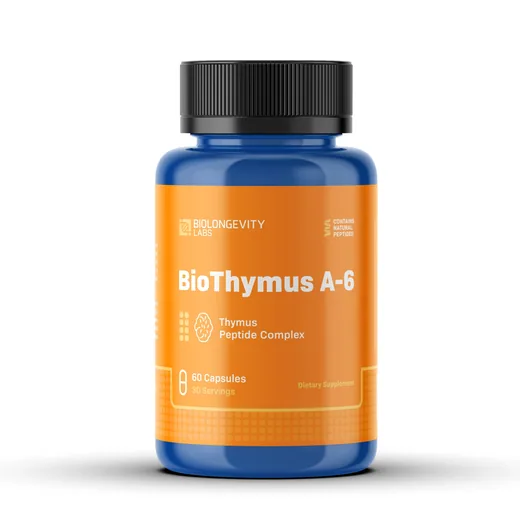
Research use only. Not for human consumption.
From $62.97 as of Nov 22, 2026. Price at merchant may differ.
View research listingEducational content from an executive health coach, written as "what I would do if I were you" guidance — not medical advice, diagnosis or treatment. Injectable products sold on this site are for research use only and are not for human consumption. Talk with your licensed clinician before changing any protocol. Last reviewed November 2026.
