
Taxorest (lungs)
Also known as: Khavinson peptide bioregulator
Taxorest is a Khavinson respiratory bioregulator associated with bronchial-mucosa support and respiratory function.
Taxorest is a lung- and bronchial-mucosa-focused Khavinson bioregulator, generally grouped with cytomaxes—organ-derived peptide preparations intended to act on a named tissue. The reference description specifically identifies it as a bronchial-mucosa cytomax associated with respiratory function. Khavinson bioregulators are also sold as synthetic cytogens, short peptides modeled on proposed active sequences; these differ from natural tissue-derived mixtures. Commercial products do not share a single universally standardized Taxorest sequence or composition. The listed product format is an oral capsule, while sublingual administration is associated with synthetic cytogens in the broader category.
The wider Khavinson literature includes laboratory and animal work on short peptides and Russian clinical and gerontology publications. Longevity reports describe more than 20 years of work with older adults, but this is broader peptide-biotherapy experience and does not establish a Taxorest-specific respiratory benefit. Practitioner descriptions focus on bronchial mucosa and respiratory function; the common protocol references do not provide controlled human trial data with a defined respiratory diagnosis, comparator, lung-function result, or quantified symptom change. There is no dependable product-specific effect estimate for spirometry, exacerbations, cough, or oxygenation to report.
In practitioner protocols, Taxorest is taken orally in short cycles when the intended focus is respiratory tissue. The Handbook framework uses roughly 30-day cycles, up to three bioregulators at a time, followed by rotation across organ systems; the reference protocol gives a 10–30-day range and repeats 2–3 courses per year. The capsule protocol is taken with food. Persistent shortness of breath, chest pain, fever, low oxygen readings, or worsening respiratory symptoms require medical evaluation. Product composition and capsule strength can vary, so follow the actual package directions.
@SupplementGraveyard review
Subscribe to @SupplementGraveyard to catch it on release.
What it is studied for
Practitioner published references describes Taxorest as a bronchial-mucosa cytomax. It does not provide a quantified human outcome for mucosal integrity or respiratory symptoms.
The stated intended focus is respiratory function, but no product-specific controlled spirometry result or exacerbation-rate estimate is reported in the common protocol material.
Preclinical work on the broader Khavinson peptide class examines regulatory effects of short peptides; evidence for other preparations does not demonstrate a Taxorest-specific respiratory effect.
Khavinson-related Russian gerontology reports describe more than 20 years of work with older adults, but do not isolate Taxorest or respiratory outcomes.
How it works
The proposed Khavinson bioregulator model is that short peptides can influence gene expression and cell regulation in tissue-linked ways. Taxorest is assigned to lung and bronchial-mucosal tissue, where epithelial barrier maintenance, mucus production, ciliary clearance, and local immune activity contribute to respiratory function. A validated Taxorest-specific receptor, active sequence, or oral dose-to-pathway relationship has not been established. Its proposed action is distinct from proven bronchodilator, anti-inflammatory, antimicrobial, or mucolytic drug mechanisms, and should not be equated with established therapies for asthma, COPD, or respiratory infection.
Protocols used in studies & practitioner literature
Informational only. These are protocols reported in published studies, product labels and practitioner references, listed so you can read the research intelligently. They are not dosing instructions. Injectable products on this site are research-use-only.
- Dose
- 1–2 capsules (10–20 mg) daily
- Frequency
- Once daily
- Timing
- With food
- Cycle
- 10–30 days; practitioner guidance describes about 30-day cycles and repeats 2–3 times per year
- Route
- Oral capsule
- Dose
- Use the product-label serving within the reported 10–20 mg daily range
- Frequency
- Daily during the cycle
- Timing
- With food
- Cycle
- About 30 days; up to three bioregulators at a time, then rotate organ systems
- Route
- Oral capsule
When and how it is used
- Take the capsule with food and confirm the capsule strength and serving size on the specific product label.
- The reported practitioner range is 10–20 mg daily for 10–30 days. The Handbook framework uses about 30-day cycles, up to three bioregulators at a time, then rotates organ systems; the reference protocol describes repeating 2–3 times yearly.
- The general reference framework names Endoluten or Epitalon and Ventfort as base pairings for organ-specific bioregulators. This is not a clinically tested Taxorest respiratory combination.
- If tracking respiratory response, use consistent measures such as symptom frequency, rescue-inhaler use where relevant, or clinician-directed spirometry; do not delay evaluation of new or worsening symptoms.
- Oral capsules do not require reconstitution. Follow package storage directions and protect the product from moisture and excess heat.
- No validated time-to-effect is defined for Taxorest. The practitioner cycle runs for weeks, but changes in symptoms do not establish a change in lung function or disease status.
Synergies and stacks
Considerations and cautions
- There is no robust product-specific controlled-trial estimate for Taxorest’s effects on lung function, bronchial symptoms, respiratory infections, or chronic lung disease.
- Do not substitute Taxorest for prescribed inhalers, oxygen, antibiotics, or other respiratory care. Seek urgent care for severe breathlessness, blue lips, chest pain, confusion, or low oxygen readings.
- People with asthma, COPD, interstitial lung disease, recurrent infections, or other significant respiratory conditions should discuss use with a clinician and continue prescribed monitoring and treatment.
- Cytomax extracts and synthetic cytogens differ in composition and route. Claims that natural cytomaxes have deeper effects and synthetic cytogens act faster or build tolerance are practitioner descriptions, not validated comparative clinical findings.
- Product composition and quality control may vary, and regulatory classification differs by location. Review the product labeling and available quality documentation.
The Handbook take
The Handbook lists Taxorest in its cytomax reference as the lungs/bronchial-mucosa option. Its broader protocol uses about 30-day cycles, up to three bioregulators at a time, then rotation across organ systems; Endoluten or Epitalon and Ventfort are named as base pairings.
Frequently asked questions
What is the reported Taxorest dosage?
The practitioner protocol is 1–2 capsules, totaling 10–20 mg, once daily with food for 10–30 days. Follow the specific label because capsule strength and formulation may differ.
What is Taxorest used for?
Practitioner descriptions focus on bronchial mucosa and respiratory function. This intended use does not replace evaluation or treatment of asthma, COPD, infection, or other lung conditions.
How long does Taxorest take to work?
There is no validated product-specific onset timeline. Practitioner protocols run for several weeks; track symptoms or clinician-directed lung measures consistently rather than relying on a subjective impression alone.
What side effects can Taxorest cause?
A reliable product-specific side-effect rate is not available. Stop and seek medical advice for an unexpected reaction, and consult a clinician before use if you have a significant respiratory condition.
Can Taxorest be stacked with other bioregulators?
The Handbook framework uses up to three bioregulators at a time and names Endoluten or Epitalon plus Ventfort as base pairings. This is a practitioner framework, not a tested Taxorest combination trial.
Is Taxorest oral, and is it legal?
The listed form is an oral capsule taken with food; sublingual use refers to some synthetic cytogens in the category. Product classification and legal requirements vary by location, so check the label and local rules.
Sourcing
Related entries
Research supply
BioLongevity Labs products for laboratory research, available to buy now. BioLongevity Labs takes the order and ships it; these listings are separate from the educational material. Affiliate disclosure: BioLongevity Labs links and code JASONJOHNS (15% off eligible orders) are affiliate links and a paid code; NexGen may earn a commission at no extra cost to you if you buy through them.
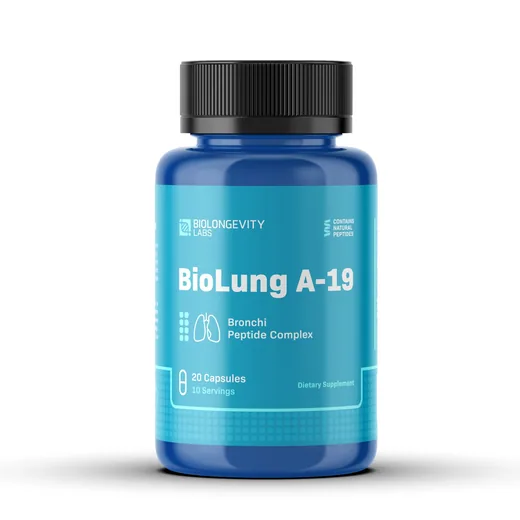
Research use only. Not for human consumption.
From $74.97 as of Nov 22, 2026. Price at merchant may differ.
View research listingEducational content from an executive health coach, written as "what I would do if I were you" guidance — not medical advice, diagnosis or treatment. Injectable products sold on this site are for research use only and are not for human consumption. Talk with your licensed clinician before changing any protocol. Last reviewed November 2026.
