
Visoluten (retina)
Also known as: Khavinson peptide bioregulator
Visoluten is a Khavinson retina-directed bioregulator discussed for retinal function and recovery after eye injury.
Visoluten is a retina-directed product in the Khavinson peptide-bioregulator family. The Handbook describes it as a retinal bioregulator intended to normalize retinal function, particularly following injury, disease, or stroke. Cytomaxes are described as tissue-derived, low-molecular-weight peptide preparations, while cytogens are synthetic short peptides; these product classes may differ in composition. A universal Visoluten amino-acid sequence, receptor, or standardized molecular profile is not identified in the Handbook material, and products from different manufacturers should not be assumed to be identical.
The Handbook’s personal account describes marked visual-field improvement after a health incident that damaged the retina, with the change reported as confirmed by a field-of-vision test. This is an individual report rather than a controlled study and does not quantify the size, timing, or durability of the change. The Handbook also describes Russian research involving long-term cycles of 21 bioregulators among Siberian oil-field workers and Russian Navy personnel, reporting widening mortality differences through follow-up intervals up to 30 years. Those combined-program findings do not demonstrate a Visoluten-specific retinal effect.
Current practitioner use is oral, generally in cycles with other organ-directed bioregulators. A reported cytomax schedule is one to two capsules (10–20 mg) daily with food for 10–30 days; the Handbook’s general approach is about 30 days, three bioregulators at a time, and rotation between organ systems. Retinal injury or visual changes require prompt ophthalmic assessment; Visoluten protocols are not a substitute for eye examination, imaging, or established retinal care.
@SupplementGraveyard review
Subscribe to @SupplementGraveyard to catch it on release.
What it is studied for
The Handbook describes a personal report of marked field-of-vision improvement after retinal damage and says the change was confirmed by a field-of-vision test; no controlled comparison or numeric change is reported.
The Handbook positions Visoluten for retinal function after trauma, disease, or stroke, but provides no trial size, comparator, or quantified Visoluten-specific outcome.
The Handbook reports Russian long-term observations of cycles involving 21 bioregulators, with a widening mortality difference versus placebo-pill controls up to 30 years; this does not establish a retinal or Visoluten-specific effect.
Visoluten is used in practitioner bioregulator protocols as a retina-directed product; controlled evidence for visual acuity or field outcomes is not described.
How it works
Visoluten is presented as a retina-directed peptide preparation, but a defined human receptor, sequence, or signaling pathway has not been established in the accessible product literature. The proposed rationale is tissue-specific regulation of retinal function, which might involve neuronal support, cellular stress responses, or local tissue maintenance. These remain broad biological hypotheses rather than confirmed Visoluten mechanisms. The reported product category does not establish that orally administered peptides reach retinal tissue intact or at a known concentration, and pharmacokinetic data specific to Visoluten are not provided.
Protocols used in studies & practitioner literature
Informational only. These are protocols reported in published studies, product labels and practitioner references, listed so you can read the research intelligently. They are not dosing instructions. Injectable products on this site are research-use-only.
- Dose
- 1–2 capsules (10–20 mg) daily
- Frequency
- Once daily
- Timing
- With food
- Cycle
- 10–30 days; the Handbook describes approximately 30-day cycles
- Route
- Oral capsule
- Dose
- 1–2 capsules (10–20 mg) daily
- Frequency
- Once daily during each cycle
- Timing
- With food
- Cycle
- Repeat 2–3 times per year
- Route
- Oral capsule
- Dose
- Product-specific dose varies
- Frequency
- Product-specific
- Timing
- Sublingual use is described for synthetic cytogens
- Cycle
- Practitioner notes favor shorter cycles because tolerance may build
- Route
- Sublingual
When and how it is used
- The reported oral capsule schedule is taken with food; follow the specific product label because cytomax and cytogen formulations may differ.
- Record visual symptoms and use ophthalmologist-selected measures such as visual acuity or visual-field testing; home impressions alone cannot establish retinal change.
- The Handbook’s general cycling framework is about 30 days, typically with three bioregulators at a time and rotation between organ systems.
- New flashes, a sudden increase in floaters, a curtain-like shadow, sudden vision loss, or eye pain warrant urgent ophthalmic evaluation rather than waiting to assess a supplement cycle.
- Store the product according to manufacturer instructions and confirm its source, formulation, and quality controls.
Synergies and stacks
Considerations and cautions
- Visoluten is not an FDA-approved retinal medicine, and product composition and quality may vary. Injectable peptide products sold on the site are research-use-only; Visoluten is generally described as an oral product.
- The Handbook’s field-of-vision account is a single personal report, not a controlled clinical trial. The broader mortality observations involve multiple bioregulators and cannot establish a Visoluten-specific effect.
- Do not delay urgent eye care or replace prescribed retinal treatment with a supplement. Retinal disease and sudden visual changes require evaluation by an ophthalmologist.
- Human safety, drug-interaction, absorption, and retinal-tissue exposure data are limited; discuss use with an eye-care clinician, particularly after eye surgery or during active treatment.
The Handbook take
The Handbook lists Visoluten among its top peptide bioregulators as a retina product for normalizing function after trauma, disease, or stroke. It also recounts a personal field-of-vision improvement following retinal damage. Its broader peptide framework uses approximately 30-day cycles, usually with three bioregulators at a time and rotation across organ systems.
Frequently asked questions
What is a common Visoluten dose?
A reported oral cytomax protocol is 1–2 capsules, totaling 10–20 mg, daily with food for 10–30 days. The Handbook’s general bioregulator cycle is approximately 30 days.
What is Visoluten used for?
Visoluten is marketed as a retina-directed bioregulator for retinal function, especially after injury or damage. The Handbook describes a personal field-of-vision improvement, not a controlled trial result.
How long before Visoluten affects vision?
There is no established onset time or expected size of visual change in the described clinical material. Track eye-health outcomes with an ophthalmologist rather than relying only on subjective impressions.
Can Visoluten treat retinal disease or replace eye care?
No. It is not a substitute for ophthalmic diagnosis or established retinal treatment, and sudden vision changes need prompt medical assessment.
Is Visoluten oral or sublingual?
The reported cytomax protocol uses oral capsules with food. Sublingual use is described for synthetic cytogen products, which may have different composition and dosing.
Can Visoluten be stacked with other bioregulators?
The Handbook framework commonly uses three bioregulators per cycle and rotates organ systems; practitioner protocols pair retina-directed products with other bioregulators. That framework does not establish additive clinical benefit.
Sourcing
Related entries
Research supply
BioLongevity Labs products for laboratory research, available to buy now. BioLongevity Labs takes the order and ships it; these listings are separate from the educational material. Affiliate disclosure: BioLongevity Labs links and code JASONJOHNS (15% off eligible orders) are affiliate links and a paid code; NexGen may earn a commission at no extra cost to you if you buy through them.
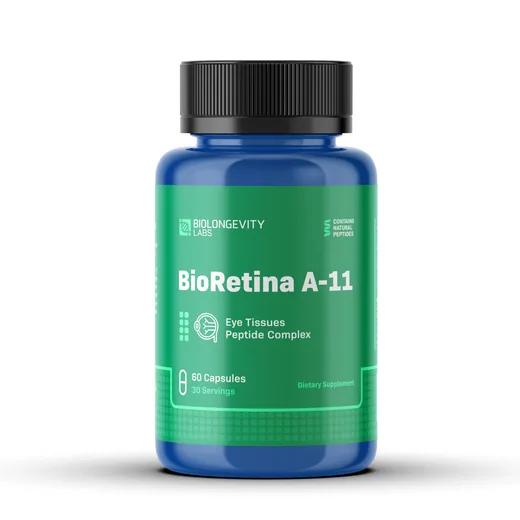
Research use only. Not for human consumption.
From $62.97 as of Nov 22, 2026. Price at merchant may differ.
View research listingEducational content from an executive health coach, written as "what I would do if I were you" guidance — not medical advice, diagnosis or treatment. Injectable products sold on this site are for research use only and are not for human consumption. Talk with your licensed clinician before changing any protocol. Last reviewed November 2026.
