
Suprefort (pancreas)
Also known as: Khavinson peptide bioregulator
Suprefort is a Khavinson pancreas bioregulator studied in practitioner protocols for glucose metabolism and digestive function.
Suprefort is a pancreas-focused Khavinson bioregulator, generally described as a cytomax: an organ-derived peptide preparation intended to target the tissue named in the product. Its stated areas of interest are glucose metabolism and digestion. Khavinson products are commonly divided into natural cytomaxes, which are tissue-derived peptide mixtures, and synthetic cytogens, which are short peptides modeled on proposed active sequences. Commercial Suprefort products do not share a universally standardized molecular sequence. The listed route is an oral capsule; sublingual use is associated with synthetic cytogens in this broader product category.
The Khavinson research tradition includes preclinical peptide studies and Russian clinical and gerontology publications. Reports of more than 20 years of work in older adults describe broader peptide-biotherapy programs; they do not establish a Suprefort-specific effect on glucose, insulin, pancreatic function, or digestion. The practitioner rationale links the pancreas to metabolic and digestive roles, but the common protocol material does not provide a controlled human trial with a defined diabetic or healthy population, comparator, and quantified outcome. There is therefore no dependable product-specific estimate for changes in fasting glucose, HbA1c, insulin, or digestive symptoms.
In practitioner use, Suprefort is taken in a short oral cycle when the intended focus is pancreatic function or digestion. The Handbook’s general framework uses about 30-day cycles, up to three bioregulators at a time, followed by rotation across organ systems; the reference protocol allows 10–30 days and repeats 2–3 courses per year. It is taken with food in the reported capsule protocol. People tracking metabolic outcomes should use standard measures such as fasting glucose and HbA1c with clinical guidance, and should not change diabetes medication based on supplement use. Product labels and strengths may vary.
@SupplementGraveyard review
Subscribe to @SupplementGraveyard to catch it on release.
What it is studied for
Suprefort is described in practitioner protocols as a pancreas-focused bioregulator associated with glucose metabolism. A product-specific controlled-trial change in fasting glucose or HbA1c is not reported in the common published references.
Its stated organ-system focus includes pancreatic digestion, but the protocol literature does not provide a quantified effect on digestive symptoms or pancreatic enzyme output.
Preclinical research on the broader Khavinson peptide class investigates regulatory effects of short peptides; findings for other preparations do not demonstrate a Suprefort-specific outcome.
Khavinson-related Russian gerontology reports describe more than 20 years of work with older adults, but evaluate broader peptide programs rather than isolated Suprefort use.
How it works
The proposed Khavinson model is that short peptides regulate gene expression and cellular activity in a tissue-linked manner. Suprefort is assigned to pancreatic tissue, which includes endocrine islet cells involved in insulin and glucagon signaling and exocrine cells that produce digestive enzymes. No validated Suprefort receptor, active sequence, or pathway linking an oral capsule to a measurable pancreatic effect has been established. Its proposed action should not be conflated with established incretin, insulin, or digestive-enzyme pharmacology, and it is not equivalent to therapies that have defined effects on blood glucose or pancreatic enzyme replacement.
Protocols used in studies & practitioner literature
Informational only. These are protocols reported in published studies, product labels and practitioner references, listed so you can read the research intelligently. They are not dosing instructions. Injectable products on this site are research-use-only.
- Dose
- 1–2 capsules (10–20 mg) daily
- Frequency
- Once daily
- Timing
- With food
- Cycle
- 10–30 days; practitioner guidance describes about 30-day cycles and repeats 2–3 times per year
- Route
- Oral capsule
- Dose
- Use the product-label serving within the reported 10–20 mg daily range
- Frequency
- Daily during the cycle
- Timing
- With food
- Cycle
- About 30 days; up to three bioregulators at a time, then rotate organ systems
- Route
- Oral capsule
When and how it is used
- Take the capsule with food and verify the amount per serving on the specific product label.
- The reported range is 10–20 mg once daily for 10–30 days. The Handbook approach favors about 30-day cycles, up to three bioregulators at once, followed by organ-system rotation; the reference protocol describes repeating 2–3 times yearly.
- The reference framework names Endoluten or Epitalon and Ventfort as base pairings for organ-specific cytomaxes. This is a practitioner protocol, not a controlled Suprefort combination study.
- For metabolic monitoring, use fasting glucose and HbA1c at clinician-directed intervals; do not reduce or stop prescribed diabetes medicines based on a supplement cycle.
- Oral capsules do not require reconstitution. Store according to the package directions, protected from moisture and heat.
- No validated time to effect is established for Suprefort. If tracking glucose or digestive symptoms, compare consistent baseline and follow-up measures with a clinician.
Synergies and stacks
Considerations and cautions
- There is no robust product-specific controlled-trial estimate for Suprefort’s effects on glucose regulation, diabetes outcomes, or pancreatic digestion.
- Do not substitute Suprefort for diabetes medicines, insulin, or prescribed pancreatic enzyme replacement, and do not alter medication doses based on its use. Monitor glucose as directed by a clinician.
- People with diabetes, pancreatitis, pancreatic insufficiency, or other pancreatic disease should consult a clinician before use; changes in glucose or digestion can have clinically important causes.
- Cytomax extracts and synthetic cytogens differ in composition and route. Claims that natural cytomaxes have deeper effects and synthetic cytogens act faster or build tolerance are practitioner descriptions, not validated comparative clinical findings.
- Commercial product composition and quality can vary. Check labeling and available quality documentation; regulatory classification varies by jurisdiction.
The Handbook take
The Handbook’s cytomax reference lists Suprefort as the pancreas option, associated with glucose metabolism and digestion. Its broader protocol framework uses approximately 30-day cycles, up to three bioregulators at a time, then rotates organ systems, with Endoluten or Epitalon and Ventfort named as base pairings.
Frequently asked questions
What is the reported Suprefort dose?
The practitioner protocol is 1–2 capsules, totaling 10–20 mg, once daily with food for 10–30 days. Confirm the serving on the product label because formulations can vary.
Can Suprefort lower blood sugar?
The practitioner rationale names glucose metabolism, but a dependable Suprefort-specific glucose-lowering effect has not been quantified in a controlled trial. Continue prescribed treatment and monitor glucose with your clinician.
How long does Suprefort take to work?
There is no validated product-specific onset timeline. The practitioner framework uses short cycles of up to about 30 days, with clinical measures such as glucose tracked consistently.
What side effects or interactions should I consider?
A reliable product-specific side-effect and interaction profile is not available. If you use glucose-lowering medicines or have pancreatic disease, discuss the product with a clinician and monitor for changes in glucose or digestion.
Can Suprefort be stacked with other bioregulators?
The Handbook framework uses up to three products at a time and names Endoluten or Epitalon plus Ventfort as base pairings. This is a practitioner approach, not a tested Suprefort combination trial.
Is Suprefort oral, and how should it be stored?
The listed form is an oral capsule taken with food, not an injectable product. Store it as directed on the label and check local product rules, which vary by jurisdiction.
Sourcing
Related entries
Research supply
BioLongevity Labs products for laboratory research, available to buy now. BioLongevity Labs takes the order and ships it; these listings are separate from the educational material. Affiliate disclosure: BioLongevity Labs links and code JASONJOHNS (15% off eligible orders) are affiliate links and a paid code; NexGen may earn a commission at no extra cost to you if you buy through them.
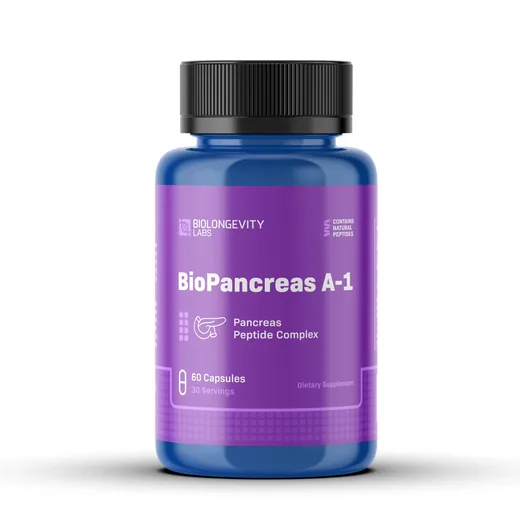
Research use only. Not for human consumption.
From $62.97 as of Nov 22, 2026. Price at merchant may differ.
View research listingEducational content from an executive health coach, written as "what I would do if I were you" guidance — not medical advice, diagnosis or treatment. Injectable products sold on this site are for research use only and are not for human consumption. Talk with your licensed clinician before changing any protocol. Last reviewed November 2026.
