
Sigumir (cartilage & bone)
Also known as: Khavinson peptide bioregulator
A cartilage- and bone-focused Khavinson bioregulator used in practitioner protocols for joint and bone-support goals.
Sigumir is a Khavinson peptide bioregulator associated with cartilage and bone. The naming varies in secondary material, where “Sigumir” and “Sigmuir” both appear. Like other products in this family, a cytomax is described as a natural tissue-derived peptide preparation, while a cytogen is a synthetic short-peptide form. Publicly available product descriptions do not consistently disclose a complete amino-acid sequence, peptide proportions, or manufacturing specification, so the name alone does not identify a single analytically defined compound.
Khavinson’s bioregulator model proposes that short tissue-associated peptides help regulate gene expression and support organ- or tissue-specific function. Reports from the wider research program describe long-term use in older populations and favorable longevity or functional-aging findings, but those reports do not establish a Sigumir-specific effect on bone density, cartilage structure, pain, or fracture risk. The supplied product references identify joints and bone density as intended areas of interest, without a controlled human study, defined participant population, or numerical outcome for Sigumir itself.
The Ultimate Handbook of Health includes Sigumir in its “Best for Women” grouping alongside Ovagen and Glandokort, while the practitioner protocol frames it as the cartilage/bone cytomax for joints and bone density. The Handbook’s general approach uses roughly 30-day cycles, stacks three bioregulators at a time, and rotates organ systems; other practitioner instructions describe 1–2 capsules daily for 10–30 days, repeated two to three times yearly. Bone-health decisions should still be guided by established assessment, including fracture history and clinician-directed bone-density testing.
@SupplementGraveyard review
Subscribe to @SupplementGraveyard to catch it on release.
What it is studied for
Practitioner descriptions identify Sigumir as the cartilage/bone bioregulator for joint goals. No defined clinical population, validated pain scale result, or effect magnitude is provided for the named product.
The product is associated with bone-density goals in practitioner material, but no Sigumir-specific controlled bone-density outcome is identified.
The tissue-regulation concept belongs to the broader Khavinson bioregulator literature. A reproducible Sigumir-specific cellular target or quantified result is not identified in the available references.
Preclinical work on tissue-derived peptide preparations informs the broader bioregulator concept, but the references do not identify a Sigumir-specific animal model and measurable skeletal outcome.
How it works
The proposed mechanism is tissue-associated peptide signaling that may influence gene-expression regulation in cartilage or bone-related cells. Khavinson bioregulators are often described as chromatin- or gene-regulatory signals, but a validated Sigumir receptor, molecular target, signaling cascade, or human pharmacokinetic profile has not been established. It is not a structural collagen supplement and should not be portrayed as directly supplying calcium, rebuilding cartilage, or stimulating a specific bone-growth pathway. Any claimed effect on bone density or joint function remains distinct from a demonstrated mechanism for the marketed preparation.
Protocols used in studies & practitioner literature
Informational only. These are protocols reported in published studies, product labels and practitioner references, listed so you can read the research intelligently. They are not dosing instructions. Injectable products on this site are research-use-only.
- Dose
- 1–2 capsules (10–20 mg total)
- Frequency
- Once daily
- Timing
- With food
- Cycle
- 10–30 days; general Handbook approach is about 30 days and repeats 2–3 times per year
- Route
- Oral capsule
- Dose
- Three bioregulators used at a time
- Frequency
- During a cycle
- Timing
- No specific time of day stated
- Cycle
- About 30 days, then rotate organ systems
- Route
- Oral bioregulators
When and how it is used
- The reported capsule protocol is taken once daily with food; no specific morning or evening timing is established in the referenced protocol.
- The Handbook’s general cycle is about 30 days, followed by rotation to other organ systems. Practitioner notes describe two to three cycles per year.
- For bone-health goals, track clinician-directed DXA results at appropriate intervals, fracture history, and relevant dietary or medication factors rather than relying on short-term symptom changes.
- The Handbook includes Sigumir with Ovagen and Glandokort in its “Best for Women” grouping; this is a practitioner grouping, not a validated treatment combination.
- No reconstitution math applies to oral capsules. Store according to the product label; do not assume different brands or cytomax/cytogen forms are interchangeable.
Synergies and stacks
Considerations and cautions
- Sigumir is not an established treatment for osteoporosis, fractures, osteoarthritis, or other skeletal conditions; do not substitute it for clinician-directed diagnosis or care.
- Product-specific regulatory status varies by manufacturer and jurisdiction. Sigumir is not an FDA-approved drug for bone or joint conditions, and public descriptions do not consistently establish its exact peptide identity, purity, or oral bioavailability.
- Discuss use with a clinician if pregnant or breastfeeding, taking medication, or being evaluated for low bone density. Do not delay standard fracture-risk assessment or prescribed therapy.
- Long-running Khavinson program reports are not equivalent to Sigumir-specific controlled trials; robust human outcome data for this named product have not been identified.
The Handbook take
The Handbook names Sigumir as the bone/cartilage bioregulator and groups it with Ovagen and Glandokort in its “Best for Women” list. Its general protocol uses roughly 30-day cycles, multiple bioregulators at a time, and rotation across organ systems.
Frequently asked questions
What is a typical Sigumir dosage?
A practitioner-reported capsule protocol is 1–2 capsules, totaling 10–20 mg, once daily with food for 10–30 days. The Handbook’s broader approach uses about 30-day cycles, with organ-system rotation.
How soon might Sigumir affect joints or bone density?
A reliable onset time has not been established in controlled Sigumir trials. Bone density changes require appropriate clinical measurement over time; a short cycle should not be treated as evidence of a skeletal change.
What side effects can Sigumir cause?
Product-specific side-effect rates are not established. Review the full ingredient list, stop if a suspected reaction occurs, and consult a clinician if you have a bone or joint condition or take medication.
Is Sigumir oral or injectable?
The listed product route is an oral capsule; some synthetic cytogen products are marketed for sublingual use. The oral capsule protocol does not provide dosing instructions for other formulations.
Can Sigumir be stacked with Glandokort or other peptides?
The Handbook groups Sigumir with Glandokort and Ovagen and describes a general practice of using about three bioregulators during a cycle. That framework is not proof that stacking improves bone or joint outcomes.
Is Sigumir legal or prohibited in sport?
Regulatory status varies by country and manufacturer, and Sigumir is not an FDA-approved drug for bone or joint conditions. No specific anti-doping classification is established here; athletes should verify the current rules and product contents.
Sourcing
Related entries
Research supply
BioLongevity Labs products for laboratory research, available to buy now. BioLongevity Labs takes the order and ships it; these listings are separate from the educational material. Affiliate disclosure: BioLongevity Labs links and code JASONJOHNS (15% off eligible orders) are affiliate links and a paid code; NexGen may earn a commission at no extra cost to you if you buy through them.
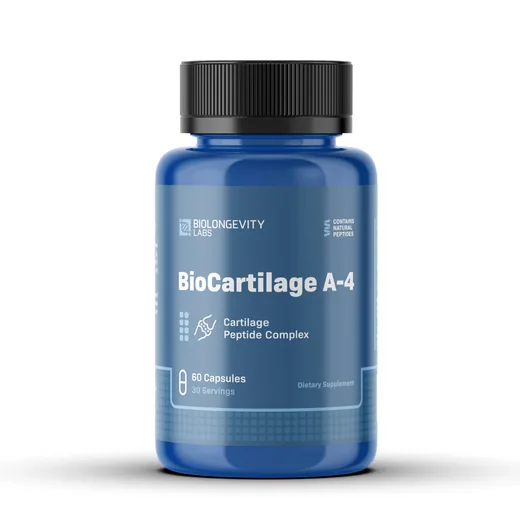
Research use only. Not for human consumption.
From $74.97 as of Nov 22, 2026. Price at merchant may differ.
View research listingEducational content from an executive health coach, written as "what I would do if I were you" guidance — not medical advice, diagnosis or treatment. Injectable products sold on this site are for research use only and are not for human consumption. Talk with your licensed clinician before changing any protocol. Last reviewed November 2026.
