
Zhenoluten (ovaries)
Also known as: Khavinson peptide bioregulator
An ovary-targeted Khavinson-style bioregulator marketed for ovarian and hormonal support.
Zhenoluten is described in Practitioner references as an ovary-targeted bioregulator in the Khavinson tradition. The Handbook’s organ-system list names Zhenoluten for ovaries, although another Handbook uses “Ovagen” in its women’s grouping; the names should not be assumed interchangeable. In this product family, cytomax generally refers to a natural tissue extract containing mixed short peptides, whereas cytogen generally refers to a synthetic short peptide intended to represent a signaling fragment. These labels do not define a uniform sequence or composition. Products are listed as oral capsules, with sublingual use associated with some synthetic cytogens.
Practitioner descriptions position ovary bioregulators for ovarian and hormonal function. Khavinson-associated publications discuss tissue bioregulation and report Russian longevity observations extending beyond 20 years, but those broad accounts do not establish a controlled Zhenoluten-specific clinical result. The available material does not give a defined product sequence, trial population, ovarian reserve measure, menstrual outcome, fertility endpoint, or quantified hormone change. It is therefore not possible to assign a product-specific effect size for cycle regularity, ovarian reserve, fertility, or menopause-related symptoms from these descriptions. The distinction between Zhenoluten and Ovagen matters when checking product identity and labeling.
The Handbook’s general model uses around 30-day cycles, three bioregulators at a time, and rotation across organ-system targets. The reported oral protocol is 1–2 capsules (10–20 mg) daily with food for 10–30 days; practitioner guidance describes repeating 2–3 times yearly, while synthetic cytogens are described as requiring shorter cycles because of a proposed tolerance effect. Zhenoluten is an adjunct within a practitioner bioregulator framework, not a replacement for gynecologic or fertility assessment. For menstrual changes, fertility planning, pelvic pain, or menopausal symptoms, clinical context and appropriate evaluation should guide decisions.
@SupplementGraveyard review
Subscribe to @SupplementGraveyard to catch it on release.
What it is studied for
Practitioner descriptions position Zhenoluten for ovarian function. The available material provides no controlled human outcome data for ovarian reserve, menstrual regularity, hormone levels, or fertility.
Practitioner references associates ovary, adrenal, and bone bioregulators in a women’s grouping, but the Handbook uses Ovagen while its organ list identifies Zhenoluten for ovaries; product identity should be checked.
Khavinson-associated accounts describe Russian longevity observations beyond 20 years. The available descriptions do not isolate Zhenoluten or report a product-specific ovarian outcome.
The broader bioregulator concept proposes tissue-directed peptide signaling; a reproducible Zhenoluten-specific sequence, cell model, and quantitative result are not identified in Practitioner references.
How it works
The proposed mechanism is short-peptide signaling in ovarian tissue, potentially influencing gene expression and cellular protein synthesis. Khavinson-style explanations describe tissue-directed regulation of transcription and chromatin activity. For Zhenoluten specifically, a validated receptor, sequence-to-pathway relationship, pharmacokinetic profile, or clinically demonstrated hormonal mechanism has not been defined in standard human pharmacology. It should not be characterized as estrogen, progesterone, a gonadotropin, or a direct substitute for fertility or menopausal medication. Product composition and oral bioavailability may vary between tissue extracts and synthetic cytogens.
Protocols used in studies & practitioner literature
Informational only. These are protocols reported in published studies, product labels and practitioner references, listed so you can read the research intelligently. They are not dosing instructions. Injectable products on this site are research-use-only.
- Dose
- 1–2 capsules (10–20 mg)
- Frequency
- Once daily
- Timing
- With food
- Cycle
- 10–30 days; practitioner guidance commonly uses about 30 days and repeats 2–3 times per year
- Route
- Oral capsule
- Dose
- Three bioregulators total; select the ovarian product by checking its exact name and formulation
- Frequency
- Daily during the cycle, following each product’s reported capsule protocol
- Timing
- With food for oral capsules
- Cycle
- About 30 days, then rotate organ-system focus
- Route
- Oral capsule
When and how it is used
- Take the reported oral capsule dose with food; no cycle-day, meal-specific, or time-of-day schedule is defined.
- The practitioner protocol describes 10–30-day cycles and repetition 2–3 times yearly; the Handbook’s general approach uses roughly 30-day cycles and organ-system rotation.
- Confirm the exact product name and ingredients: the reference identifies Zhenoluten as ovary-targeted but also names Ovagen in a women’s grouping, so the labels should not be treated as equivalent without verification.
- Do not use injectable reconstitution math for an oral capsule. No validated injectable Zhenoluten preparation protocol is described.
- For relevant health goals, track menstrual patterns and clinician-directed measures. Fertility and ovarian reserve assessment require appropriate clinical testing; no validated timeline for supplement effects is defined.
Synergies and stacks
Considerations and cautions
- Zhenoluten-specific human efficacy and safety data are limited; broad Khavinson longevity observations do not establish ovarian, fertility, or hormonal benefits from this product.
- The source material uses both Zhenoluten and Ovagen in ovarian contexts. Verify the actual label, manufacturer, and ingredients rather than assuming these names refer to the same product.
- People who are pregnant, trying to conceive, breastfeeding, using fertility or hormone treatment, or managing a hormone-sensitive condition should consult a qualified clinician before use; safety data in these groups are lacking.
- Do not delay evaluation of missed or irregular periods, pelvic pain, infertility, or abnormal bleeding. These symptoms can have causes requiring diagnosis and established care.
- Regulatory classification varies by location, and commercial products may not have standardized peptide identity or dose. Check quality controls and local rules.
The Handbook take
The Handbook’s organ-system reference lists Zhenoluten for ovaries, while a separate women’s grouping names Ovagen; those names should be checked against the specific product label. The Handbook’s general approach uses about 30-day cycles, three bioregulators at a time, and rotation between organ systems. Its women’s grouping includes ovarian, adrenal, and bone-related targets, but this is a practitioner framework rather than a demonstrated fertility protocol.
Frequently asked questions
What is a typical Zhenoluten dose?
The reported oral protocol is 1–2 capsules, totaling 10–20 mg, once daily with food for 10–30 days. Practitioner guidance commonly uses a cycle near 30 days; confirm that the product is actually labeled Zhenoluten.
How long does Zhenoluten take to affect hormones or cycles?
No reliable onset timeline or validated product-specific hormonal effect is established. Track menstrual changes and seek clinical assessment for persistent irregularity, missed periods, or fertility concerns.
What side effects can Zhenoluten cause?
A Zhenoluten-specific side-effect profile has not been adequately characterized. Consult a clinician before use if pregnant, trying to conceive, breastfeeding, taking hormones or fertility medicines, or managing a hormone-sensitive condition.
Is Zhenoluten the same as Ovagen?
The reference identifies Zhenoluten as the ovary bioregulator but also uses Ovagen in a women’s grouping. Do not assume they are interchangeable; check the exact product label and manufacturer information.
Can Zhenoluten be stacked with other bioregulators?
The Handbook describes three bioregulators per cycle and lists ovarian, adrenal, and bone-related targets in its women’s grouping. This is a practitioner approach, not a clinically established fertility combination.
Is Zhenoluten appropriate during fertility treatment or pregnancy?
Discuss it with a qualified clinician before use during fertility treatment, pregnancy planning, pregnancy, or breastfeeding. Safety and interaction information for these situations is limited, and it should not replace prescribed care.
Sourcing
Related entries
Research supply
BioLongevity Labs products for laboratory research, available to buy now. BioLongevity Labs takes the order and ships it; these listings are separate from the educational material. Affiliate disclosure: BioLongevity Labs links and code JASONJOHNS (15% off eligible orders) are affiliate links and a paid code; NexGen may earn a commission at no extra cost to you if you buy through them.
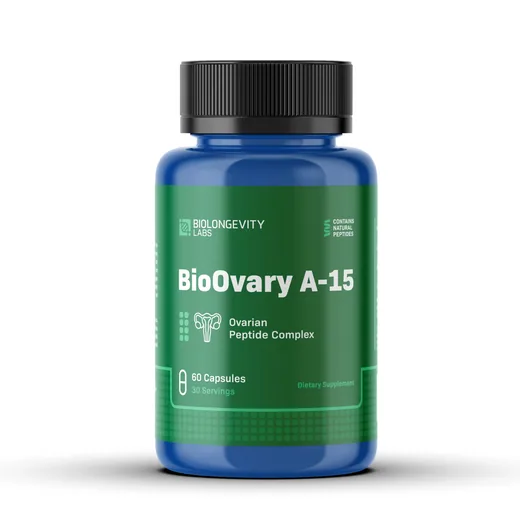
Research use only. Not for human consumption.
From $62.97 as of Nov 22, 2026. Price at merchant may differ.
View research listingEducational content from an executive health coach, written as "what I would do if I were you" guidance — not medical advice, diagnosis or treatment. Injectable products sold on this site are for research use only and are not for human consumption. Talk with your licensed clinician before changing any protocol. Last reviewed November 2026.
