
Thyreogen (thyroid)
Also known as: Khavinson peptide bioregulator
A Khavinson-style thyroid peptide bioregulator studied and marketed for supporting thyroid function; available as oral cytomax capsules and synthetic cytogen products.
Thyreogen is marketed as a thyroid-directed Khavinson peptide bioregulator. In this product family, a cytomax is described as a natural, low-molecular-weight peptide preparation derived from an organ, while a cytogen is a synthetic short peptide associated with the same target tissue. The exact peptide sequence and composition can differ by manufacturer and formulation. Thyreogen is supplied as an oral capsule in the product category described here; synthetic cytogens may be sold for sublingual use. The name identifies its intended tissue target, not a standardized pharmaceutical ingredient.
Khavinson’s broader research program proposed that short tissue-associated peptides regulate gene expression and support age-related tissue function. Russian publications and practitioner summaries describe peptide bioregulators across multiple organ systems, alongside long-running longevity research involving older populations. Thyreogen-specific clinical findings are not characterized here by a modern, independently replicated trial with a defined sample size, comparator, and thyroid outcomes such as TSH, free T4, or free T3. The Handbook describes Thyreogen as normalizing thyroid function and addressing both hypo- and hyperthyroid patterns; that is its stated use, rather than a quantified clinical-trial result.
In the Handbook’s approach, organ-specific bioregulators are used in roughly 30-day cycles, commonly with three bioregulators at a time, followed by rotation to another organ-system group when another cycle is undertaken. Thyreogen is the thyroid-focused option in that framework. Other practitioner protocols describe 10–30 days of use and repeat cycles two or three times yearly. A thyroid concern belongs alongside a clinician-led assessment with thyroid labs; Thyreogen should not replace prescribed thyroid medication or the work-up of abnormal results.
@SupplementGraveyard review
Subscribe to @SupplementGraveyard to catch it on release.
What it is studied for
The Handbook identifies Thyreogen as a thyroid bioregulator and describes it as supporting normalization across hypo- and hyperthyroid patterns; it does not provide measured TSH, free T4, or free T3 outcomes.
Khavinson’s wider peptide-bioregulator program is discussed in connection with long-running Russian research and older-population longevity cohorts; those observations do not isolate Thyreogen’s effect on thyroid function.
The proposed basis for organ-specific short peptides is modulation of cellular regulatory and gene-expression processes; a Thyreogen-specific human effect size or validated thyroid-cell pathway is not available in the cited product descriptions.
Organ-targeted peptide bioregulators have been investigated within the broader preclinical peptide-regulation tradition; a Thyreogen-specific animal model, dose, and thyroid outcome are not identified in the product material.
How it works
Khavinson bioregulators are proposed to act through short peptides that interact with cellular regulatory systems, including chromatin and gene-transcription machinery, in tissues corresponding to their source or target. For Thyreogen, the proposed target is thyroid tissue and the intended effect is modulation of thyroid-cell function. No specific thyroid receptor, binding affinity, active sequence, or validated human pharmacodynamic pathway is established for commercial Thyreogen formulations. It is therefore more accurate to describe its mechanism as a peptide-biotranscription hypothesis than as a known receptor-mediated thyroid drug mechanism.
Protocols used in studies & practitioner literature
Informational only. These are protocols reported in published studies, product labels and practitioner references, listed so you can read the research intelligently. They are not dosing instructions. Injectable products on this site are research-use-only.
- Dose
- 1–2 capsules (10–20 mg total)
- Frequency
- Daily
- Timing
- With food
- Cycle
- 10–30 days; Handbook cycles are typically about 30 days. Other practitioner protocols repeat 2–3 times per year.
- Route
- Oral capsule
- Dose
- 1–2 capsules (10–20 mg total), using the reported cytomax dose
- Frequency
- Daily
- Timing
- With food
- Cycle
- About 30 days; typically stack three bioregulators, then rotate organ-system peptides before another cycle if needed.
- Route
- Oral capsule
When and how it is used
- The reported capsule protocol is taken daily with food; follow the specific product label if its capsule strength or formulation differs.
- Track TSH, free T4, and—when clinically indicated—free T3 before and during any thyroid-focused program. Record symptoms and medication changes with a clinician.
- The Handbook places bioregulators in approximately 30-day cycles, commonly stacking three at a time and rotating organ systems between cycles.
- The reference protocol gives a 10–30-day course and 2–3 cycles per year as an other-practitioner schedule; it does not give a validated onset time for thyroid-lab changes.
- Capsule products do not require reconstitution. Store according to the manufacturer’s label and keep them dry and away from excessive heat.
Synergies and stacks
Considerations and cautions
- Commercial products may vary in peptide identity, source material, dose, and quality control; verify ingredients and manufacturing information with the supplier.
- Evidence for Thyreogen is far less developed than evidence for standard thyroid evaluation and prescription therapies. The 20-plus-year Khavinson longevity literature concerns a broader research program and does not establish a Thyreogen-specific effect.
- People with abnormal thyroid tests, thyroid disease, pregnancy, or thyroid medication use should involve a qualified clinician; do not stop or alter levothyroxine or antithyroid medicines based on a supplement protocol.
- Potential allergy or gastrointestinal intolerance may occur with oral peptide preparations; discontinue and seek medical advice for a significant reaction.
- Dietary-supplement regulatory status and product oversight vary by country. These oral bioregulator products are not substitutes for prescription thyroid medicines or emergency care.
The Handbook take
The Handbook lists Thyreogen as the thyroid bioregulator and frames it as relevant to both hypo- and hyperthyroid patterns. It places organ-specific peptides in roughly 30-day cycles, usually stacking three at a time and rotating systems between cycles. The reference protocol pairs the broader bioregulator routine with Endoluten or Epitalon and Ventfort.
Frequently asked questions
What is a typical Thyreogen dose?
The reported cytomax protocol is 1–2 capsules, totaling 10–20 mg daily with food for 10–30 days. Check the actual product label because formulations and capsule strengths can differ.
How long does Thyreogen take to work?
The product material does not specify a reliable time to effect. If thyroid support is being evaluated, track symptoms and TSH/free T4 with a clinician rather than judging by subjective changes alone.
What are Thyreogen’s side effects?
Specific rates are not established for commercial Thyreogen products. Allergy or gastrointestinal intolerance are possible with oral peptide preparations; seek medical advice for significant symptoms.
Can Thyreogen be taken with thyroid medication?
Do not change prescribed thyroid medication to accommodate a supplement. Discuss use with the prescribing clinician and monitor thyroid labs, since medication needs are guided by clinical assessment and test results.
Can Thyreogen be stacked with other bioregulators?
The Handbook’s general framework commonly stacks three bioregulators in a roughly 30-day cycle, then rotates organ systems. Other practitioner protocols mention Endoluten or Epitalon and Ventfort as a base, but this is not a Thyreogen-specific clinical trial protocol.
Is Thyreogen legal, and how should it be stored?
Regulatory classification depends on the country and product; check local rules and the manufacturer’s labeling. Store the oral product according to its label, protected from moisture and excessive heat.
Sourcing
Related entries
Research supply
BioLongevity Labs products for laboratory research, available to buy now. BioLongevity Labs takes the order and ships it; these listings are separate from the educational material. Affiliate disclosure: BioLongevity Labs links and code JASONJOHNS (15% off eligible orders) are affiliate links and a paid code; NexGen may earn a commission at no extra cost to you if you buy through them.
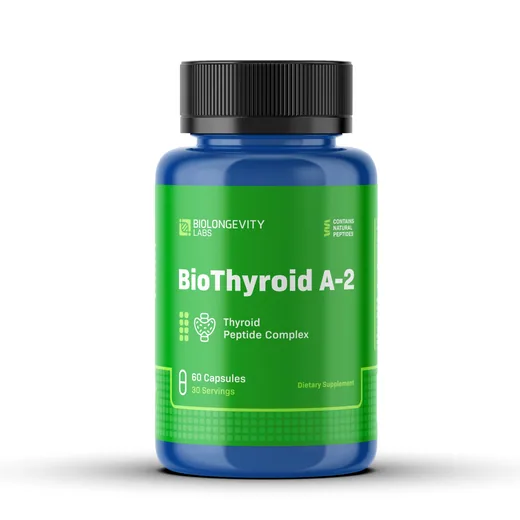
Research use only. Not for human consumption.
From $62.97 as of Nov 22, 2026. Price at merchant may differ.
View research listingEducational content from an executive health coach, written as "what I would do if I were you" guidance — not medical advice, diagnosis or treatment. Injectable products sold on this site are for research use only and are not for human consumption. Talk with your licensed clinician before changing any protocol. Last reviewed November 2026.
