
Melanotan 1
Also known as: MT-1 · Afamelanotide (Scenesse) analog
Melanotan 1 is an α-MSH analog studied for melanocyte stimulation; its related prescription drug afamelanotide is used for erythropoietic protoporphyria.
Melanotan 1 (MT-1) is a synthetic analog of α-melanocyte-stimulating hormone designed to activate melanocortin receptors involved in pigment production. It is often described as Nle4-D-Phe7-α-MSH and is related to, but should not be equated with, afamelanotide (NDP-MSH), a standardized 16-amino-acid peptide supplied as a prescription implant. Afamelanotide is approved in the United States for adults with erythropoietic protoporphyria, a rare photosensitivity disorder; that medical product and indication are distinct from unapproved online MT-1 tanning products. The shared biological theme is melanocortin signaling, especially MC1R stimulation on pigment-producing cells.
Clinical evidence is strongest for prescription afamelanotide in erythropoietic protoporphyria, not for cosmetic use of research MT-1. In a randomized, double-blind, placebo-controlled study involving 74 patients, afamelanotide increased the time patients could spend in sunlight without pain; larger pivotal studies also supported reduction in phototoxic reactions and improvement in light tolerance. These findings apply to the standardized implant and a rare disease population, not to daily self-injected tanning protocols. α-MSH analogs can increase eumelanin production, but this does not make UV exposure safe or demonstrate that an unregulated peptide prevents skin cancer.
Jay Campbell’s reported MT-1 tanning protocol is 0.5–1 mg subcutaneously daily during a loading period with sun exposure, followed by one or two doses weekly. The Handbook favors Melanotan 1 as a gradual, lower-intensity tanning option and describes a seasonal approach that builds pigmentation during low-UV hours before use on extended-exposure days. These approaches are practitioner descriptions, not afamelanotide’s clinical regimen. In medical practice, afamelanotide is administered as a 16-mg implant by a healthcare professional every two months during periods of sunlight exposure for its approved EPP indication. Dermatologic review and conventional sun protection remain appropriate.
@SupplementGraveyard review
Subscribe to @SupplementGraveyard to catch it on release.
What it is studied for
A randomized, double-blind, placebo-controlled study of 74 patients found that afamelanotide increased sunlight exposure time without pain; pivotal clinical trials also reported fewer phototoxic reactions.
Clinical experience with standardized afamelanotide shows increased pigmentation through melanocortin signaling, but those data do not validate cosmetic protocols using unregulated MT-1 products.
Cellular research supports α-MSH analog activation of MC1R–cAMP signaling and downstream melanogenic gene expression.
Practitioner literature describes gradual pigmentation protocols; controlled evidence for the safety and effectiveness of nonprescription MT-1 products is far more limited than the afamelanotide EPP evidence.
How it works
MT-1-related peptides activate melanocortin receptors, particularly MC1R on melanocytes. MC1R couples to Gs, activating adenylyl cyclase and increasing cAMP, which stimulates protein kinase A and the transcription factor MITF. MITF increases expression of melanogenic proteins, including tyrosinase, promoting melanin synthesis and a shift toward eumelanin. Afamelanotide has prolonged activity and, as a standardized implant, supports sustained melanocortin signaling in its approved EPP indication. Pigment production is not the same as blocking ultraviolet radiation: it does not eliminate UV-induced DNA damage or replace sun-protective behavior.
Protocols used in studies & practitioner literature
Informational only. These are protocols reported in published studies, product labels and practitioner references, listed so you can read the research intelligently. They are not dosing instructions. Injectable products on this site are research-use-only.
- Dose
- 0.5–1 mg
- Frequency
- Daily during loading
- Timing
- Subcutaneous; reported alongside sun exposure
- Cycle
- Loading followed by maintenance; exact duration is not standardized
- Route
- Subcutaneous injection
- Dose
- 0.5–1 mg per reported dose
- Frequency
- 1–2 times per week
- Timing
- Subcutaneous; avoid treating pigmentation as UV protection
- Cycle
- After a reported loading phase; no standardized duration
- Route
- Subcutaneous injection
- Dose
- 16 mg implant
- Frequency
- Every 2 months
- Timing
- Implanted by a healthcare professional before and during periods of sunlight exposure
- Cycle
- Repeated every 2 months as directed for the approved indication
- Route
- Subcutaneous implant
When and how it is used
- Separate the unapproved MT-1 tanning protocols from prescription afamelanotide: they are different products, formulations, and clinical contexts.
- The Handbook describes gradual early-season use during low-UV hours and occasional use on extended-exposure days. Pigmentation does not replace sunscreen, clothing, shade, or routine skin examinations.
- Monitor freckles and moles for changes in size, shape, color, or symptoms and arrange dermatology review for a concerning lesion. Any pigmentation change can complicate visual comparison over time.
- For prescription afamelanotide, implant placement and timing are handled by a healthcare professional under the product label; do not apply an injectable research-peptide protocol to the implant product.
- Unregulated MT-1 vials may have uncertain peptide identity, concentration, sterility, and storage. A generic reconstitution or injection recipe cannot establish product safety.
Synergies and stacks
Considerations and cautions
- Unregulated MT-1 tanning peptides are not FDA-approved medicines, and products marketed online may be research-use-only with uncertain content, concentration, sterility, and storage.
- Afamelanotide (Scenesse) is a prescription implant in the United States for adults with erythropoietic protoporphyria. A licensed prescriber and trained healthcare professional are required; it is not interchangeable with research MT-1 products.
- Pigmentation is not proven to prevent skin cancer or eliminate UV-related DNA damage. Do not increase UV exposure because a peptide has darkened the skin.
- Possible effects of melanocortin agonists include nausea, flushing, darkening of freckles or moles, and injection or implant-site reactions. Have changing, bleeding, or asymmetric pigmented lesions assessed by a dermatologist.
- The long-term risks of nonmedical, repeated MT-1 use are not characterized. People with a personal history of skin cancer or changing pigmented lesions should seek dermatology advice.
- Athletes should check current anti-doping rules for nonapproved substances and prescription exemptions. Use only authorized prescription products for the labeled indication.
The Handbook take
The Handbook identifies Melanotan 1 as its preferred option for gradual tanning and describes a seasonal approach to building a slow base during lower-UV hours. Its routine pairs the sun-season approach with Polypodium, niacinamide, and astaxanthin. The Handbook distinguishes MT-1 from the stronger tanning and libido effects it attributes to Melanotan 2; prescription afamelanotide for EPP is a separate product and indication.
Frequently asked questions
What is a reported Melanotan 1 dose?
Jay Campbell describes 0.5–1 mg subcutaneously daily during a loading phase, followed by one or two doses weekly. This is a practitioner-reported cosmetic protocol, not the prescription afamelanotide regimen.
How is Melanotan 1 different from afamelanotide?
Afamelanotide is a standardized prescription implant approved for adults with erythropoietic protoporphyria. Online MT-1 products and cosmetic injection protocols are not interchangeable with that medicine.
Does Melanotan 1 protect skin from the sun?
Increased pigment does not eliminate UV injury or replace sunscreen and protective clothing. Afamelanotide can improve light tolerance in EPP under medical care, but that result is not a general sun-protection claim for unregulated MT-1.
How long does Melanotan 1 take to produce pigmentation?
The timing depends on the product and individual response, and there is no validated cosmetic schedule for research MT-1. Prescription afamelanotide’s clinical use follows its EPP-specific implant schedule.
What side effects can Melanotan 1 cause?
Reported melanocortin-related effects include nausea, flushing, and darkening of freckles or moles; implant or injection reactions may also occur. A changing skin lesion should be examined by a dermatologist.
Is Melanotan 1 legal and approved for tanning?
Cosmetic MT-1 injections are not an FDA-approved tanning treatment. Afamelanotide is prescription-only for EPP, and its approval does not authorize online MT-1 products or tanning use.
Sourcing
Related entries
Research supply
BioLongevity Labs products for laboratory research, available to buy now. BioLongevity Labs takes the order and ships it; these listings are separate from the educational material. Affiliate disclosure: BioLongevity Labs links and code JASONJOHNS (15% off eligible orders) are affiliate links and a paid code; NexGen may earn a commission at no extra cost to you if you buy through them.
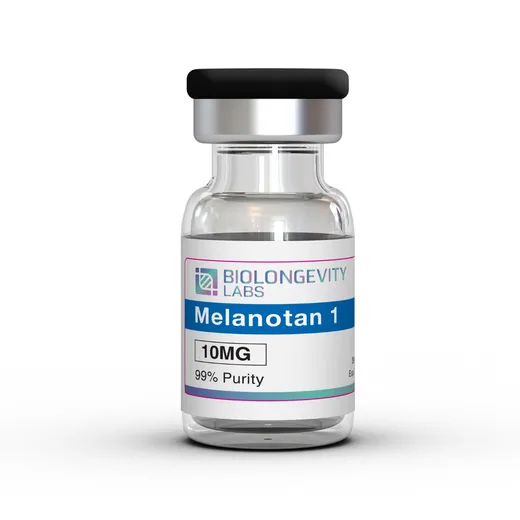
Research use only. Not for human consumption.
$44.97 as of Nov 22, 2026. Price at merchant may differ.
View research listingEducational content from an executive health coach, written as "what I would do if I were you" guidance — not medical advice, diagnosis or treatment. Injectable products sold on this site are for research use only and are not for human consumption. Talk with your licensed clinician before changing any protocol. Last reviewed November 2026.
