
Reviews Peptides Tissue Repair & Regeneration Research
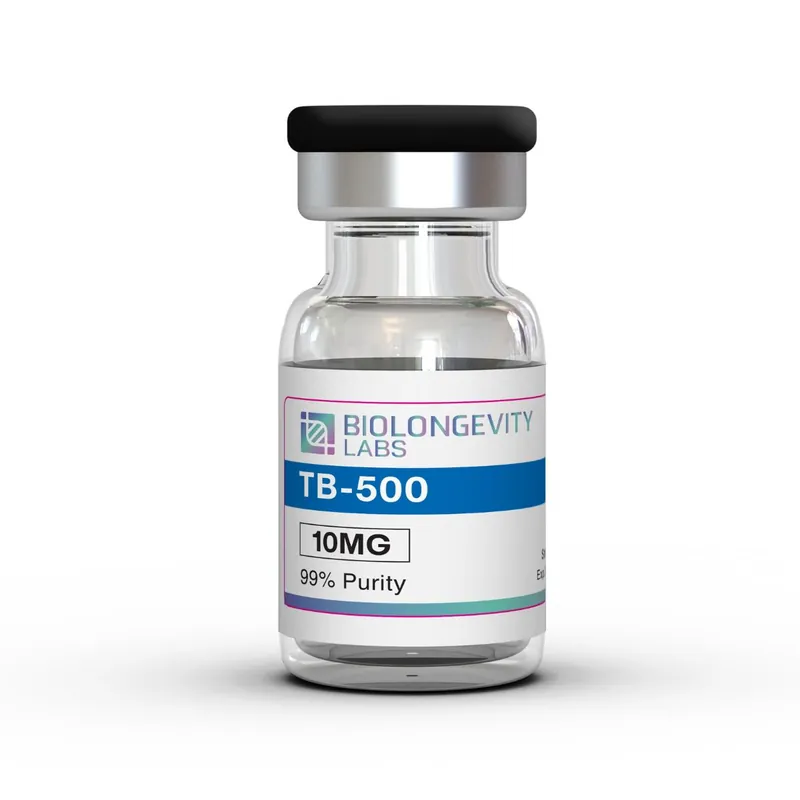
TB-500 (10 mg)
Also known as Thymosin beta-4 fragment 17-23, Ac-LKKTETQ, TB500
TB-500 as sold here is the acetylated 7-residue fragment of thymosin beta-4 (Ac-LKKTETQ), 10 mg per vial. Most healing research used the full 43-residue protein, not this fragment.
- Advanced (draft)
- Compound evidence C · Animal / preclinical
- In the Handbook of Health
- lyophilized vial
- Rank pending
Grades describe published research on the compound, not this product.
What it is
Thymosin beta-4 (Tβ4) is a 43-amino-acid actin-binding protein involved in cell migration and wound repair. BLL's TB-500 is the N-acetylated 17-23 fragment containing the actin-binding motif LKKTET, the same fragment doping labs identified in commercial 'TB-500'. Clinical trials cited for 'TB-500' were run with full-length Tβ4.
What it has been studied for
Dermal healing with full-length Tβ4
Human (small / observational)Full-length Tβ4 sped dermal healing in animal models, and two phase 2 trials in stasis and pressure ulcers reported faster healing in patients who healed; these used the full protein, not this fragment.
Fragment identity in commercial TB-500
In vitroDoping-control labs identified Ac-LKKTETQ as the active ingredient in TB-500 products and built detection methods.
Gray-market peptide safety
MechanisticA 2026 Sports Medicine review notes favourable animal data but scarce rigorous human safety data for Tβ4 and TB-500.
This study examined the research compound, not the product sold by BioLongevity Labs. The findings do not establish that the product is safe or effective for people.
Research contexts
- Actin-binding and cell-migration research
- Comparing fragment vs. full-length thymosin beta-4 literature
Cautions & unknowns
- Evidence for the fragment itself is thin; claims based on full-length Tβ4 trials do not transfer automatically.
- Pro-angiogenic and pro-migration activity is a theoretical concern with any cancer history.
- Prohibited in sport (WADA S2) and detectable in doping tests; banned in horse racing.
- Not studied in pregnancy or nursing.
- Research peptide vials are not sterile drug products; nothing here covers administration, reconstitution or dosing.
- BioLongevity Labs designates this vial for in vitro research use only; the merchant states it is not for human or veterinary administration. This review describes the compound and published research only, with no dosing, reconstitution or personal-use guidance.
- No statement here has been evaluated by the FDA; nothing in this review is medical advice.
Jason’s take
Jason's hands-on review is coming.
Handbook §§25 and 27 mention TB-500 and the distinct LVLUP Health Wolverine blend, not the BLL vial.
Handbook §27 “My Current Protocol (Bonus Exclusive Content)”: Names the distinct LVLUP Health Wolverine blend.
Handbook §25 “The Ultimate Guide to Peptides”: Mentions TB-500 without identifying this vial.
Compared products
- Product 1
BioLongevity Labs
TB-500 (10mg)
SKU TB4-10MG · 10 mg
In the Handbook of Health
Where it shines
- 10 mg per vial at $64.97 (about $6.50 per mg, list price 2026-11-22).
- BLL is precise about what it sells: the Ac-LKKTETQ fragment, with CAS and parent-region mapping.
- BLL states every batch is tested by an independent third-party lab (AV Analytics or BioRegen) against a ≥99% HPLC purity specification, with certificates published online and verifiable via QR/report codes.
Where it falls short
- TB-500 marketing commonly borrows phase 2 ulcer results that used full-length Tβ4, which overstates the evidence for this fragment.
- Certificates are published online, not shipped with the vial, and no lot certificate was independently audited for this review.
Verdict: Honestly labelled as the fragment; the healing evidence mostly belongs to the full protein.
$64.97 as of Nov 22, 2026 at BioLongevity Labs
For in vitro research use only. Not for human or animal use.
- Product 2Wolverine (BPC-157 + TB-500)
LVLUP Health
Wolverine (BPC-157 + TB-500)
In the Handbook of Health
Verdict: The distinct multi-ingredient product named in Handbook §27; not compared head-to-head.
Listed for comparison only. Not linked from this site.
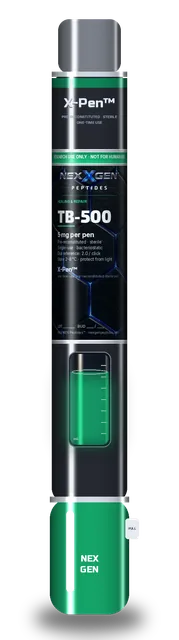
NexGen formulation
NexGen formulation in development
NexGen™ is Jason Johns' own brand. Illustrative render: formulation and name are not final.
Related reviews
- BPC-157 + TB-500 Blend (10mg)Peptides · Compound evidence D
- GLOW Blend (BPC-157 TB-500 GHK-CU) (70mg)Peptides · Compound evidence D
- KLOW Blend (GHK-Cu, BPC-157, TB-500, KPV) 80mgPeptides · Compound evidence D
- Regeno Blend (BPC-157, TB-500, Cartalax) 30mgBioregulators · Compound evidence D
- BPC-157 (10mg)Peptides · Compound evidence C
- BioRestore (oral BPC-157 + PEA + hyaluronic acid)Peptide Supplements · Compound evidence B
Sources
- TB-500 (10mg) product page BioLongevity Labs · accessed Nov 22, 2026
- TB-500 Peptide: Benefits and Side Effects Jay Campbell · accessed Nov 22, 2026
- TB-500 vs BPC-157 Jay Campbell · accessed Nov 22, 2026
- Thymosin β4 accelerates dermal healing in animal models and in patients (2012) PubMed · accessed Nov 22, 2026
- Synthesis and characterization of the acetylated 17-23 fragment of thymosin beta 4 identified in TB-500 (2012) PubMed · accessed Nov 22, 2026
- Doping control analysis of TB-500 in equine urine and plasma (2012) PubMed · accessed Nov 22, 2026
- Safety and efficacy of approved and unapproved peptide therapies for musculoskeletal injuries and athletic performance (2026) PubMed · accessed Nov 22, 2026
Updated Nov 22, 2026. Written by the NexGen research team for @SupplementGraveyard™. Jason Johns is an executive health coach, not a licensed healthcare provider. This content is educational only and does not create a provider-patient relationship.