
Reviews Peptides Immunology & Host-Defense Research
LL-37 (5 mg)
Also known as Cathelicidin LL-37, CAP-18, Ropocamptide
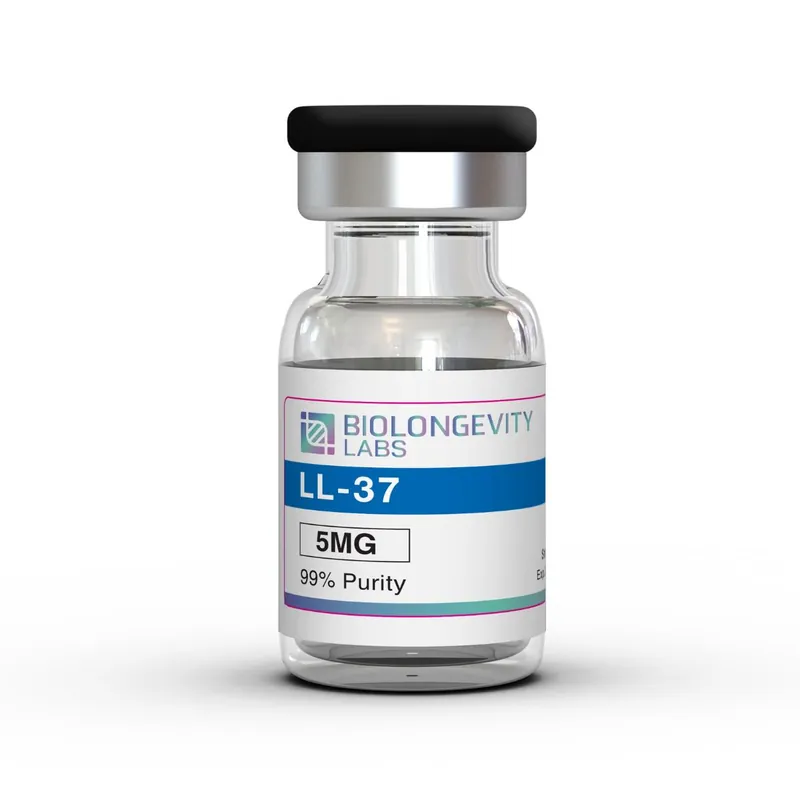
LL-37, the 37-residue human cathelicidin antimicrobial peptide, in a 5 mg vial. Two topical wound RCTs gave mixed results; it also plays a role in some inflammatory skin conditions.
- Advanced (draft)
- Compound evidence B · Limited human data
- Researched, not personally tested
- lyophilized vial
- Rank pending
Grades describe published research on the compound, not this product.
What it is
LL-37 is the active fragment of the only human cathelicidin, a host-defense peptide that disrupts bacterial membranes and modulates immune signalling. It is strongly cationic and forms an amphipathic helix. BLL supplies 5 mg of the synthetic peptide (CAS 154947-66-7).
What it has been studied for
Topical healing of hard-to-heal leg ulcers
Human RCTA 2014 placebo-controlled phase 2 study reported faster healing, but a larger 2021 multicentre RCT found no overall difference versus placebo.
Immunomodulation
MechanisticReviews describe LL-37 effects on chemotaxis, cytokines and Toll-like receptor signalling, which can be pro- or anti-inflammatory depending on context.
Role in autoimmunity
MechanisticLL-37 can complex with self-DNA/RNA and activate immune cells, implicating it in psoriasis and other autoimmune processes.
This study examined the research compound, not the product sold by BioLongevity Labs. The findings do not establish that the product is safe or effective for people.
Research contexts
- Antimicrobial-peptide and biofilm research
- Host-defense immunology literature reviews
Cautions & unknowns
- LL-37 can act as an inflammatory trigger: it is implicated in psoriasis, rosacea and lupus-type autoimmunity, which cuts against 'immune support' marketing.
- Reported links to tumour growth in some cancers and suppression in others; net effect is context-dependent.
- No human systemic-use safety data.
- Unapproved peptides fall under WADA's S0 (non-approved substances) category; not for tested athletes.
- Jay Campbell's autoimmune article presents LL-37 favourably; his co-ownership of BLL is a disclosed conflict.
- Research peptide vials are not sterile drug products; nothing here covers administration, reconstitution or dosing.
- BioLongevity Labs designates this vial for in vitro research use only; the merchant states it is not for human or veterinary administration. This review describes the compound and published research only, with no dosing, reconstitution or personal-use guidance.
- No statement here has been evaluated by the FDA; nothing in this review is medical advice.
Jason’s take
Jason's hands-on review is coming.
Compared products
One product reviewed so far. Comparison slots stay empty until Jason chooses alternatives.
- Product 1
BioLongevity Labs
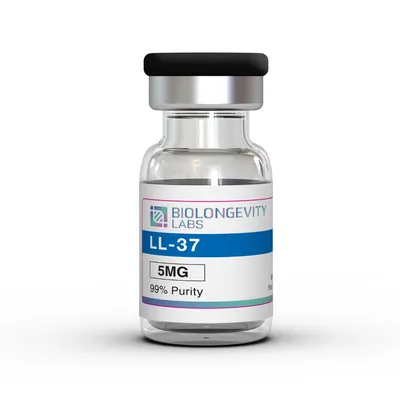
LL-37 (5mg)
SKU LL375 · 5 mg
Researched, not personally tested
Where it shines
- 5 mg per vial at $51.97 (about $10.39 per mg, list price 2026-11-22).
- Full 37-residue sequence, CAS and net charge disclosed.
- BLL states every batch is tested by an independent third-party lab (AV Analytics or BioRegen) against a ≥99% HPLC purity specification, with certificates published online and verifiable via QR/report codes.
Where it falls short
- Highest per-mg cost of BLL's immune peptides apart from specialty items.
- Certificates are published online, not shipped with the vial, and no lot certificate was independently audited for this review.
Verdict: A genuine human host-defense peptide with mixed clinical results and a two-sided immune profile.
$51.97 as of Nov 22, 2026 at BioLongevity Labs
For in vitro research use only. Not for human or animal use.
NexGen formulation
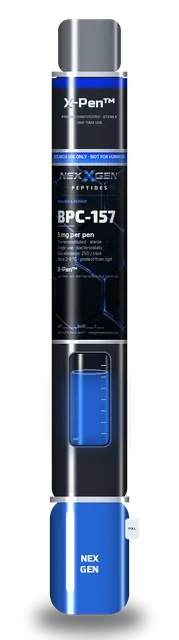
NexGen formulation in development
NexGen™ is Jason Johns' own brand. Illustrative render: formulation and name are not final.
Related reviews
Sources
- LL-37 (5mg) product page BioLongevity Labs · accessed Nov 22, 2026
- Peptides for Autoimmune Disease: KPV, TA1, and LL-37 Jay Campbell · accessed Nov 22, 2026
- Treatment with LL-37 is safe and effective in enhancing healing of hard-to-heal venous leg ulcers: RCT (2014) PubMed · accessed Nov 22, 2026
- Evaluation of LL-37 in healing of hard-to-heal venous leg ulcers: multicentric RCT (2021) PubMed · accessed Nov 22, 2026
- Significance of LL-37 on immunomodulation and disease outcome (2020) PubMed · accessed Nov 22, 2026
- Immunomodulatory role of the antimicrobial LL-37 peptide in autoimmune diseases and viral infections (2020) PubMed · accessed Nov 22, 2026
Updated Nov 22, 2026. Written by the NexGen research team for @SupplementGraveyard™. Jason Johns is an executive health coach, not a licensed healthcare provider. This content is educational only and does not create a provider-patient relationship.