
DSIP
Also known as: Delta sleep-inducing peptide
DSIP is a sleep-associated nonapeptide studied for sleep architecture, stress responses, and pain modulation.
Delta sleep-inducing peptide (DSIP) is a small peptide first isolated from rabbit brain in 1977 after researchers identified material associated with delta-wave sleep. Its reported amino-acid sequence is Trp-Ala-Gly-Gly-Asp-Ala-Ser-Gly-Glu, a nine-residue chain. DSIP has since been detected in animal and human tissues, though its physiological role and endogenous signaling system remain incompletely characterized. The name reflects the discovery context, not a reliably demonstrated ability to induce deep sleep in every setting.
Human research has included small, older studies of sleep disturbance and sleep EEG, alongside investigations of stress responses, pain, and substance withdrawal. Findings on sleep latency, sleep-stage distribution, and subjective sleep quality have been mixed; results have not established a consistent effect size or a reproducible clinical dose. Animal experiments have reported changes in stress-related behavior and pain responses, but those findings do not establish a corresponding benefit in people. Modern, large randomized trials are lacking.
In current peptide-practitioner use, DSIP is generally discussed as a short-term bedtime research peptide rather than a first-line sleep intervention. Jay Campbell’s reported protocol is 100–300 mcg subcutaneously 30–60 minutes before bed on three to five nights per week. Some practitioners pair it with magnesium or glycine, while a BioSleep-type oral bioregulator is another reported pairing. Sleep timing, awakenings, next-day alertness, and concurrent medications are useful measures to track.
@SupplementGraveyard review
Subscribe to @SupplementGraveyard to catch it on release.
What it is studied for
Small, older clinical studies examined sleep EEG and sleep complaints; reported changes in sleep measures were inconsistent, and a dependable effect size has not emerged.
Animal studies have examined behavioral and endocrine responses to stress after DSIP exposure, reporting model-dependent changes in stress-related measures.
Preclinical work has assessed nociceptive responses and opioid-related pathways; findings are experimental and do not establish a clinical analgesic effect in people.
Practitioner protocols describe bedtime use and monitor sleep quality or pain symptoms, but these reports are not controlled clinical outcome data.
How it works
DSIP is a nonapeptide, but no single validated receptor has been established as its primary human target. Preclinical work suggests interactions with GABAergic and opioid-related signaling, and studies have reported effects on corticotropin-releasing pathways, stress hormones, and neuronal excitability. These findings are varied across models and do not yet form a confirmed human mechanism. Its reported influence on delta activity may reflect indirect modulation of sleep-regulatory networks rather than a direct, selective action on a known sleep receptor. The molecular basis for any sleep, stress, or analgesic effects remains under investigation.
Protocols used in studies & practitioner literature
Informational only. These are protocols reported in published studies, product labels and practitioner references, listed so you can read the research intelligently. They are not dosing instructions. Injectable products on this site are research-use-only.
- Dose
- 100–300 mcg
- Frequency
- 3–5 nights per week
- Timing
- 30–60 minutes before bed
- Cycle
- No cycle length specified in this protocol
- Route
- Subcutaneous injection
- Dose
- No standardized dose established
- Frequency
- No standardized frequency established
- Timing
- Typically discussed for bedtime use
- Cycle
- No standardized cycle established
- Route
- Intranasal
When and how it is used
- If using a reported bedtime protocol, record sleep onset, awakenings, total sleep time, and next-day alertness; consumer wearables can provide trends but do not measure sleep stages with laboratory accuracy.
- Keep bedtime and wake time consistent while assessing any change, and avoid introducing several new sleep agents at once.
- Magnesium and glycine are practitioner-reported pairings; assess them as separate interventions so effects and unwanted reactions are easier to interpret.
- DSIP vials and nasal products may differ in concentration and formulation; follow the product’s documented storage and handling instructions rather than assuming products are interchangeable.
- Discuss persistent insomnia, loud snoring, breathing pauses, or marked daytime sleepiness with a clinician; these symptoms can warrant evaluation for an underlying sleep disorder.
Synergies and stacks
Considerations and cautions
- DSIP products sold for injection are research-use-only and are not FDA-approved medicines; product identity, purity, concentration, and sterility can vary substantially.
- Human evidence is limited and inconsistent, and DSIP has no FDA-approved indication or established standard dose. Intranasal and injected products should not be assumed to have equivalent exposure.
- Possible effects may include headache, dizziness, fatigue, or changes in sleepiness; avoid driving or hazardous activity if impaired. Potential interactions with sedatives, alcohol, opioids, or other sleep medicines have not been adequately characterized.
- People who are pregnant or breastfeeding, have significant medical conditions, or take medications affecting alertness should consult a licensed clinician before considering an unapproved peptide. DSIP is not an approved prescription medicine in the United States.
The Handbook take
The Ultimate Handbook of Health does not place DSIP in its main peptide list, though it is commonly searched and appears in the broader peptide guide/routine context. The Handbook’s sleep-related peptide discussion focuses more directly on growth-hormone secretagogues and Epithalon than on a DSIP protocol.
Frequently asked questions
What is a common DSIP dose?
A practitioner-reported dose is 100–300 mcg subcutaneously 30–60 minutes before bed, three to five nights weekly. This is not a clinically standardized dose, and products can differ in concentration.
How long does DSIP take to work?
Practitioners who use it generally assess bedtime and overnight changes over the first few uses. Human research has not defined a reliable onset time or a consistent response.
What side effects can DSIP cause?
Potentially reported concerns include headache, dizziness, fatigue, or excess sleepiness. Human safety data are limited, so interactions and longer-term effects are not well characterized.
Is DSIP taken orally, nasally, or by injection?
Subcutaneous injection and intranasal use are both described in practitioner settings. Their absorption and dosing are not interchangeable, and there is no established human comparison supporting equivalent doses.
Can DSIP be stacked with magnesium or glycine?
Magnesium and glycine are common practitioner-reported bedtime pairings. Controlled trials have not established that either combination improves DSIP outcomes, so introduce changes one at a time.
Is DSIP legal and permitted in drug testing?
DSIP is not an FDA-approved medicine, and injectable products are commonly sold for research use only. Drug-testing rules depend on the organization; check the applicable rules and current prohibited list rather than assuming it is permitted.
Sourcing
Related entries
Research supply
BioLongevity Labs products for laboratory research, available to buy now. BioLongevity Labs takes the order and ships it; these listings are separate from the educational material. Affiliate disclosure: BioLongevity Labs links and code JASONJOHNS (15% off eligible orders) are affiliate links and a paid code; NexGen may earn a commission at no extra cost to you if you buy through them.
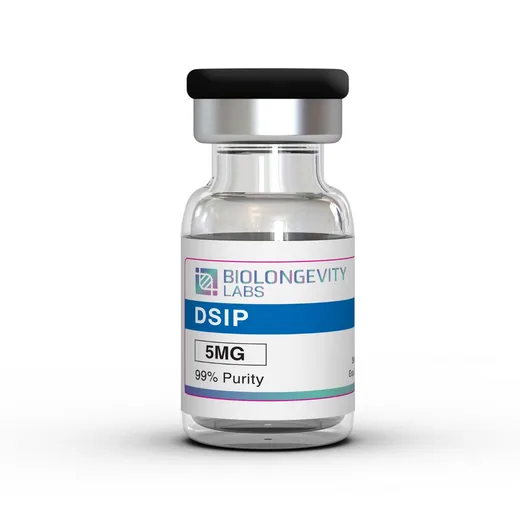
Research use only. Not for human consumption.
$39.97 as of Nov 22, 2026. Price at merchant may differ.
View research listingEducational content from an executive health coach, written as "what I would do if I were you" guidance — not medical advice, diagnosis or treatment. Injectable products sold on this site are for research use only and are not for human consumption. Talk with your licensed clinician before changing any protocol. Last reviewed November 2026.
