
Cardiogen (heart, synthetic)
Also known as: Khavinson peptide bioregulator
Cardiogen is a synthetic heart-associated tetrapeptide studied within Khavinson bioregulator research and used in practitioner protocols for cardiac support.
Cardiogen is a synthetic tetrapeptide with the sequence Ala-Glu-Asp-Leu (AEDL), associated with the Khavinson peptide-bioregulator system. It is classified as a cytogen: a short synthesized peptide intended to correspond to a particular tissue or organ. This differs from a cytomax, a natural peptide mixture or extract derived from animal tissue. Cardiogen is linked to cardiac tissue and is sold in oral capsule formulations; the broader practitioner material also describes sublingual administration for synthetic cytogens. Proposed uses center on supporting cardiac tissue function rather than acting as a conventional cardiac drug.
Research on Cardiogen is part of a broader body of Russian laboratory and clinical work on peptide bioregulators. Khavinson-associated reports describe older-adult cohorts followed for more than 20 years and report longevity and health findings during peptide-bioregulator programs. These observations concern multi-component regimens and do not isolate Cardiogen's effect. Cardiogen-specific human studies do not provide a reliable, independently replicated estimate for changes in cardiac function, arrhythmia burden, blood pressure, or cardiovascular events. The broad research program supplies a rationale for continued study, but it should not be confused with an established clinical outcome for this individual peptide.
Practitioner protocols describe 10–20 mg daily, or one to two capsules, with food for 10–30 days; shorter courses are favored for synthetic cytogens because of the reported concern about tolerance. The broader Handbook approach uses approximately 30-day cycles, up to three bioregulators at a time, and rotates the organ-system emphasis, with repeat cycles two or three times a year described in practitioner material. Cardiogen therefore appears as an elective bioregulator in a broader wellness protocol, not a substitute for evidence-based cardiac assessment, prescribed medicines, or urgent evaluation of cardiac symptoms.
@SupplementGraveyard review
Subscribe to @SupplementGraveyard to catch it on release.
What it is studied for
Cardiogen is used as a heart-focused bioregulator in practitioner protocols; reports do not establish a consistent measurable effect on cardiac function or cardiovascular events.
The short-peptide bioregulator model is studied through laboratory work on gene-expression regulation, but a Cardiogen-specific human signaling pathway has not been validated.
Khavinson-associated reports describe follow-up of older adults over more than 20 years during multi-peptide programs; the findings do not establish an isolated Cardiogen effect.
Preclinical investigation of peptide bioregulators informs the proposed tissue-specific rationale, but does not quantify clinical benefit from Cardiogen in people.
How it works
Cardiogen's proposed mechanism follows the Khavinson bioregulator model: short peptides may influence tissue-specific transcription through interactions with chromatin-associated proteins and gene-regulatory machinery. The target tissue is the heart, and the sequence is Ala-Glu-Asp-Leu (AEDL). No validated cardiogen-specific receptor or well-characterized downstream signaling pathway has been demonstrated in humans. The theory proposes modulation of cardiac-cell gene expression and tissue homeostasis, but pharmacokinetics, oral bioavailability, molecular targets, and dose-response relationships are not sufficiently characterized to connect a capsule dose to a predictable cardiac effect.
Protocols used in studies & practitioner literature
Informational only. These are protocols reported in published studies, product labels and practitioner references, listed so you can read the research intelligently. They are not dosing instructions. Injectable products on this site are research-use-only.
- Dose
- 10–20 mg (1–2 capsules) daily
- Frequency
- Once daily
- Timing
- With food
- Cycle
- 10–30 days; practitioner notes describe repeating 2–3 times per year and shorter courses for synthetic cytogens
- Route
- Oral capsule
- Dose
- 10–20 mg daily
- Frequency
- Once daily
- Timing
- With food when using the capsule protocol
- Cycle
- 10–30 days
- Route
- Sublingual formulation
When and how it is used
- The reported capsule schedule is 10–20 mg once daily with food for 10–30 days.
- The Handbook’s overall bioregulator framework uses approximately 30-day cycles, up to three bioregulators at a time, followed by rotation to another organ-system focus. Practitioner material describes repeating cycles two or three times per year.
- Do not adjust cardiac medicines based on a supplement routine. Track clinically relevant measures—such as blood pressure, resting heart rate, symptoms, and clinician-directed cardiac tests—through usual medical care.
- The protocol material gives no validated Cardiogen onset time or standardized capsule-to-sublingual conversion; use only the directions for the actual formulation.
- Store the product as directed on its label and protect capsules from moisture and excess heat.
Synergies and stacks
Considerations and cautions
- Cardiogen is not an FDA-approved medicine for heart disease or cardiovascular risk reduction. Regulatory status and product classification vary by jurisdiction and seller; check local rules and product labeling.
- Human evidence specific to Cardiogen is limited. Long-term Khavinson-associated cohort reports describe multi-component peptide programs and do not establish Cardiogen as the cause of reported outcomes.
- Do not use Cardiogen in place of prescribed cardiac treatment or clinical assessment. Seek urgent care for chest pain, fainting, severe shortness of breath, or other acute symptoms. Potential adverse effects and interactions are not as well characterized as for licensed cardiac medicines; discuss use with a clinician, especially with heart disease or prescription-drug use.
The Handbook take
The Handbook lists Cardiogen in its peptide guide and routine material but does not give a Cardiogen-specific dose or schedule. The broader bioregulator approach uses roughly 30-day cycles, up to three products at a time, and rotation across organ systems; practitioner protocols pair cardiovascular-focused products with a broader base such as Epitalon or Endoluten.
Frequently asked questions
What dose of Cardiogen do practitioner protocols use?
A reported cytogen protocol is 10–20 mg daily, or one to two capsules, with food for 10–30 days. This is a practitioner-reported schedule, not a validated cardiac-treatment dose.
How quickly does Cardiogen work?
There is no validated onset time for a Cardiogen-specific cardiac effect. Reported courses last 10–30 days, but course length does not establish when or whether a measurable benefit occurs.
What side effects are associated with Cardiogen?
Detailed adverse-event rates have not been established. Product quality and formulation can vary, so review the product with a clinician, particularly if taking cardiac medicines or managing a heart condition.
Can Cardiogen be taken sublingually?
Sublingual use is described for synthetic cytogens, while the practitioner dose protocol is written for oral capsules. Follow the actual product’s directions; a capsule dose is not automatically equivalent to a sublingual dose.
What is Cardiogen commonly stacked with?
Practitioner protocols place Cardiogen in a broader bioregulator cycle and pair cardiovascular-focused products with options such as Ventfort, with Epitalon or Endoluten as a broader base. The Handbook’s general framework uses up to three bioregulators at a time.
Is Cardiogen legal or prohibited in sports?
Its legal status depends on the product and jurisdiction, and it is not an FDA-approved cardiac medicine. Athletes should check current anti-doping rules and consider that supplement contamination can create testing risks.
Sourcing
Related entries
Research supply
BioLongevity Labs products for laboratory research, available to buy now. BioLongevity Labs takes the order and ships it; these listings are separate from the educational material. Affiliate disclosure: BioLongevity Labs links and code JASONJOHNS (15% off eligible orders) are affiliate links and a paid code; NexGen may earn a commission at no extra cost to you if you buy through them.
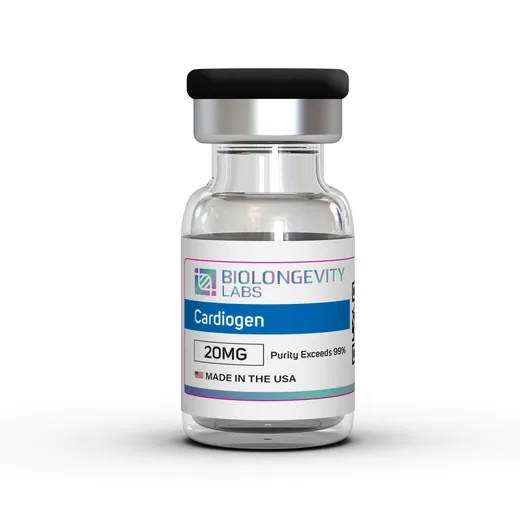
Research use only. Not for human consumption.
$69.97 as of Nov 22, 2026. Price at merchant may differ.
View research listingEducational content from an executive health coach, written as "what I would do if I were you" guidance — not medical advice, diagnosis or treatment. Injectable products sold on this site are for research use only and are not for human consumption. Talk with your licensed clinician before changing any protocol. Last reviewed November 2026.
