
Reviews Peptide Supplements Relaxation & Evening Wind-Down Research
BioSleep (magnolia + flavonoid blend)
Also known as BLL BioSleep
Melatonin-free capsule blend of honokiol, magnolia-derived compounds, apigenin, hesperidin, Chinese skullcap and piperine. Ingredient evidence is mostly animal; no study of the formula exists.
- Intermediate (draft)
- Compound evidence C · Animal / preclinical
- Researched, not personally tested
- capsule
- Rank pending
Grades describe published research on the compound, not this product.
What it is
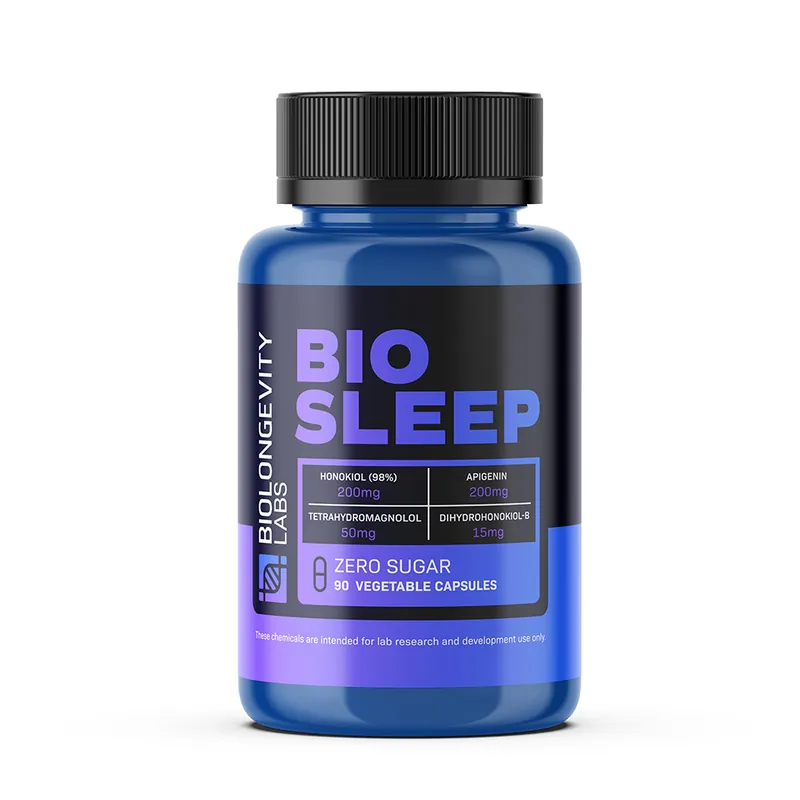
BioSleep lists 90 capsules per bottle. The label lists hesperidin, Scutellaria baicalensis extract, honokiol, apigenin, tetrahydromagnolol, dihydrohonokiol-B and black pepper extract. It lists no peptides and is not the Designs for Health BioSleep Peptides product named in the Handbook.
What it has been studied for
Honokiol and non-REM sleep via GABA-A receptors
AnimalMouse work showed honokiol promoting non-REM sleep through the benzodiazepine site of the GABA-A receptor.
Dihydrohonokiol-B and anxiety-related behaviour
AnimalRodent studies described anxiolytic-like effects and examined benzodiazepine-like side effects.
Tetrahydromagnolol at cannabinoid receptors
In vitroReceptor-binding work identified magnolol metabolites as CB2 agonists. Laboratory data only.
Hesperidin sedative effects
AnimalMouse studies reported sedative effects and reduced brain pERK1/2.
Chamomile/apigenin and magnolia blends in people
Human (small / observational)Pilot RCTs of a chamomile extract and of a magnolia/Phellodendron blend did not significantly improve primary sleep measures versus placebo; neither tested this formula.
Piperine and drug-metabolizing enzymes
In vitroPiperine inhibits human P-glycoprotein and CYP3A4, which matters for interactions rather than sleep.
This study examined the research compound, not the product sold by BioLongevity Labs. The findings do not establish that the product is safe or effective for people.
Research contexts
- Comparing melatonin-free botanical sleep formulas
- Magnolia-compound (honokiol) research reviews
Cautions & unknowns
- Sedative-acting compounds: interaction risk with alcohol, benzodiazepines, sleep medication and other sedatives (BLL's page itself warns about this).
- Piperine can change how CYP3A4 / P-glycoprotein drugs are processed.
- Honokiol and magnolol can affect platelet function in lab studies; caution with anticoagulants is reasonable (not studied for this formula).
- Name collision: Jason's Handbook 'BioSleep Peptides with PeptiSleep' is a Designs for Health product, not this one.
- BioLongevity Labs designates this product for in-vitro / laboratory research use only; the merchant states it is not a drug, food, dietary supplement or cosmetic. This review describes the compounds and published research only, with no use, dosing or personal-use guidance.
- The bottle artwork shown on the product page carries a 'Supplement Facts' panel and the standard FDA structure/function disclaimer, which does not match the merchant's research-use-only designation; the research-use designation governs this review.
- No statement here has been evaluated by the FDA; nothing in this review is medical advice.
Jason’s take
Jason's hands-on review is coming.
Handbook §8 “Everything Sleep”: Jason's sleep stack names Designs for Health 'BioSleep Peptides with PeptiSleep', a different product from BLL BioSleep.
Compared products
One product reviewed so far. Comparison slots stay empty until Jason chooses alternatives.
- Product 1
BioLongevity Labs
BioSleep
SKU SUPP-SLEEP
Researched, not personally tested
Where it shines
- Fully disclosed label with individual amounts, no proprietary blend.
- BLL's product page is candid that the human trials it cites tested different formulas and missed their primary sleep outcomes.
- About $1.14 per capsule.
Where it falls short
- No study of this combination; the magnolia compounds' sleep evidence is mostly mouse data.
- Sold under 'Peptide Supplements & Capsules' though it contains no peptide.
- Name overlaps with an unrelated Designs for Health product that Jason does use, which could confuse readers.
Verdict: A transparent botanical blend with plausible mechanisms and weak human evidence; not the 'BioSleep' Jason's Handbook refers to.
$102.97 as of Nov 22, 2026 at BioLongevity Labs
For in vitro research use only. Not for human or animal use.
NexGen formulation
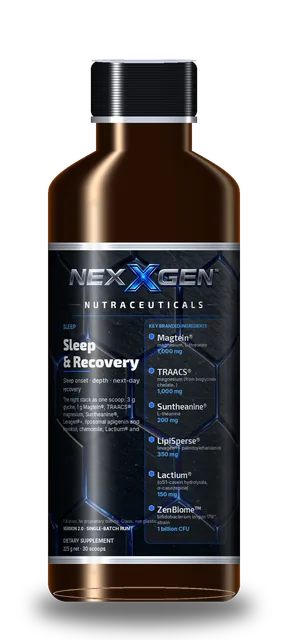
NexGen formulation in development
NexGen™ is Jason Johns' own brand. Illustrative render: formulation and name are not final.
Related reviews
Sources
- BioSleep product page BioLongevity Labs · accessed Nov 22, 2026
- Honokiol promotes NREM sleep via the benzodiazepine site of the GABA-A receptor in mice (2012) PubMed · accessed Nov 22, 2026
- Does dihydrohonokiol result in benzodiazepine-like side effects? (2000) PubMed · accessed Nov 22, 2026
- Magnolol as a lead structure for potent cannabinoid receptor agonists (2013) PubMed · accessed Nov 22, 2026
- Hesperidin, a flavonoid glycoside with sedative effect (2009) PubMed · accessed Nov 22, 2026
- Standardized chamomile extract for chronic primary insomnia: pilot RCT (2011) PubMed · accessed Nov 22, 2026
- Magnolia and Phellodendron extract on stress in healthy women: pilot RCT (2008) PubMed · accessed Nov 22, 2026
- Piperine inhibits human P-glycoprotein and CYP3A4 (2002) PubMed · accessed Nov 22, 2026
Updated Nov 22, 2026. Written by the NexGen research team for @SupplementGraveyard™. Jason Johns is an executive health coach, not a licensed healthcare provider. This content is educational only and does not create a provider-patient relationship.