
Sermorelin
Also known as: GRF 1-29 · Geref
A short-acting 29-amino-acid GHRH fragment studied for stimulating pituitary growth-hormone release and evaluating GH secretion.
Sermorelin is a synthetic 29-amino-acid fragment corresponding to the biologically active N-terminal portion of human GHRH. It binds pituitary GHRH receptors and stimulates the body’s own growth-hormone release. The former U.S. product Geref was used in pediatric growth-hormone assessment and treatment contexts; it is no longer marketed in the United States. In contemporary practitioner settings, sermorelin is often discussed as a short-acting injectable secretagogue, distinct from longer-acting GHRH analogs and from direct growth-hormone replacement.
Clinical research has examined sermorelin as a diagnostic stimulus for GH secretion and in children with idiopathic growth failure or short stature. In diagnostic testing, the rise in serum GH after administration helps assess pituitary secretory capacity. Pediatric studies reported increases in growth velocity in selected children receiving repeated treatment, although response depended on the cause of short stature and treatment duration. Evidence for claims about adult anti-aging, fat loss, sleep, or muscle gain is much less direct than the diagnostic and pediatric literature.
The Handbook lists sermorelin with tesamorelin, ipamorelin, and CJC-1295 as a GH secretagogue associated broadly with recovery, muscle growth, sleep quality, and tissue repair. Jay Campbell-style protocols describe bedtime dosing, often paired with ipamorelin and used in training blocks. These are practitioner approaches rather than a current U.S. product-label regimen. Sermorelin’s short action and GHRH mechanism make it pharmacologically different from the albumin-binding DAC form of CJC-1295.
@SupplementGraveyard review
Subscribe to @SupplementGraveyard to catch it on release.
What it is studied for
Sermorelin has been used as a diagnostic stimulation agent, with serum GH measured after administration to assess the pituitary response in suspected GH deficiency.
Pediatric treatment studies reported increased growth velocity in some children receiving repeated sermorelin; response varied with diagnosis, baseline GH function, and treatment duration.
Clinical pharmacology studies show that sermorelin can stimulate GH release, while the magnitude depends on age, pituitary function, and physiologic factors.
These goals appear in contemporary protocols and peptide guides, but the strongest clinical history concerns GH stimulation, diagnostic use, and pediatric growth rather than controlled adult physique outcomes.
How it works
Sermorelin binds the GHRH receptor on anterior-pituitary somatotrophs, activating Gs protein and adenylyl cyclase, increasing intracellular cAMP, and promoting GH synthesis and pulsatile secretion. GH then stimulates IGF-1 production, primarily in the liver, and acts in peripheral tissues. Because sermorelin is a short GHRH fragment, its effect depends on pituitary responsiveness and interacts with endogenous hypothalamic GHRH and somatostatin signaling. It stimulates endogenous release rather than replacing GH directly; downstream IGF-1 and glucose effects remain relevant even though the peptide itself is short acting.
Protocols used in studies & practitioner literature
Informational only. These are protocols reported in published studies, product labels and practitioner references, listed so you can read the research intelligently. They are not dosing instructions. Injectable products on this site are research-use-only.
- Dose
- 100–150 mcg
- Frequency
- Once nightly
- Timing
- Subcutaneous dose about 30 minutes before bed; fasted
- Cycle
- Practitioner protocols describe use during a training block followed by 4–8 weeks off
- Route
- Subcutaneous injection
- Dose
- 200–250 mcg
- Frequency
- Once nightly
- Timing
- About 30 minutes before bed; fasted
- Cycle
- Practitioner protocols describe use during a training block followed by 4–8 weeks off
- Route
- Subcutaneous injection
- Dose
- 300 mcg
- Frequency
- Five nights per week
- Timing
- Before bed, fasted
- Cycle
- Training blocks with 4–8 weeks off are described
- Route
- Subcutaneous injection
- Dose
- 300–500 mcg
- Frequency
- Five nights per week
- Timing
- Before bed, fasted
- Cycle
- During a training block; monitor IGF-1 and glucose
- Route
- Subcutaneous injection
- Dose
- 200 mcg sermorelin plus 300 mcg ipamorelin
- Frequency
- Five nights per week
- Timing
- At bedtime
- Cycle
- Used during a practitioner training block, followed by 4–8 weeks off
- Route
- Subcutaneous injection
When and how it is used
- The Handbook places sermorelin in its morning rotation of GH secretagogues; practitioner protocols more commonly describe bedtime use. Follow the clinician’s direction rather than combining schedules.
- The practitioner reference describes dosing about 30 minutes before bed while fasted. Food timing is a protocol convention, not a universal labeled instruction.
- If used under clinical supervision, discuss IGF-1 and glucose monitoring; the practitioner reference suggests an IGF-1 check at 4–6 weeks.
- Use product-specific pharmacy directions for preparation, storage, and injection. Reconstitution volume depends on the precise vial strength and diluent instructions, so do not infer a universal concentration.
- For diagnostic testing, administration and timed blood sampling belong in a clinical setting; the test result depends on the prescribed sampling schedule.
Synergies and stacks
Considerations and cautions
- Injectable peptides sold on this site are designated research-use-only. Sermorelin is not currently marketed as an FDA-approved U.S. product for general adult anti-aging, physique, or recovery use; consult a licensed prescriber.
- The former U.S. Geref product is no longer marketed. Product quality, concentration, sterility, and preparation may vary among compounded or research-sourced products.
- Potential effects related to GH/IGF-1 stimulation include injection-site reactions, flushing, headache, fluid retention, joint discomfort, and changes in glucose regulation. Monitor according to a clinician’s plan.
- Use requires additional caution in active malignancy, significant pituitary or hypothalamic disease, diabetes, and conditions affected by elevated IGF-1. Review other hormone treatments and relevant medical history with a clinician.
- WADA prohibits growth-hormone-releasing factors, including sermorelin, at all times in sport.
The Handbook take
The Handbook includes sermorelin in its GH-secretagogue group with tesamorelin, ipamorelin, and CJC-1295, linking the group broadly to recovery, muscle growth, sleep quality, and tissue repair. Its routine section places these secretagogues in a rotating morning peptide category. No sermorelin-specific dose or cycle appears in the cited Handbook material.
Frequently asked questions
What is a common sermorelin dose in practitioner protocols?
Reported protocols range from 100–150 mcg nightly for beginners to 300 mcg five nights weekly, with higher schedules also described. These are practitioner-reported amounts, not a current U.S. product-label regimen.
How long does sermorelin take to show results?
A GH response can occur after administration, but changes in growth or body composition take longer and depend on the population and treatment plan. Pediatric studies assessed growth over extended periods rather than days.
What side effects are associated with sermorelin?
Reported effects include injection-site reactions, flushing, headache, and symptoms associated with GH/IGF-1 changes such as fluid retention or joint discomfort. Glucose and IGF-1 are relevant clinician-directed monitoring targets.
Is sermorelin taken orally or by injection?
The protocols described use subcutaneous injection. Oral products are not equivalent to injectable sermorelin, and diagnostic testing requires a clinical administration and blood-sampling plan.
Can sermorelin be combined with ipamorelin?
Some practitioner protocols combine sermorelin with ipamorelin because they activate GHRH and ghrelin receptors, respectively. The combination may increase GH-axis stimulation and warrants clinician review.
Is sermorelin legal and allowed in drug-tested sport?
The former Geref product is no longer marketed in the United States, and research-sourced injectables are designated research-use-only. WADA prohibits sermorelin and other GH-releasing factors at all times.
Sourcing
Related entries
Research supply
BioLongevity Labs products for laboratory research, available to buy now. BioLongevity Labs takes the order and ships it; these listings are separate from the educational material. Affiliate disclosure: BioLongevity Labs links and code JASONJOHNS (15% off eligible orders) are affiliate links and a paid code; NexGen may earn a commission at no extra cost to you if you buy through them.
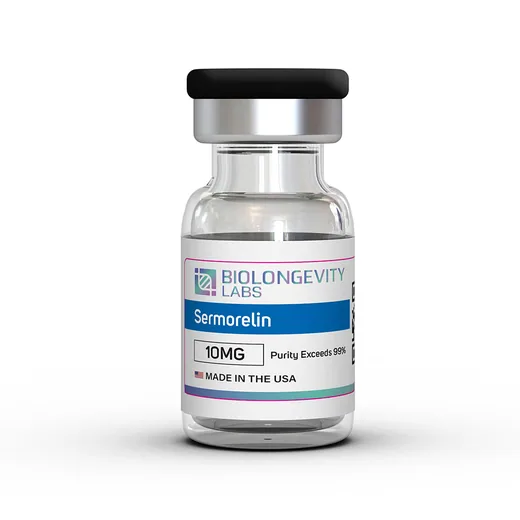
Research use only. Not for human consumption.
$80.97 as of Nov 22, 2026. Price at merchant may differ.
View research listingEducational content from an executive health coach, written as "what I would do if I were you" guidance — not medical advice, diagnosis or treatment. Injectable products sold on this site are for research use only and are not for human consumption. Talk with your licensed clinician before changing any protocol. Last reviewed November 2026.
