
Kisspeptin-10
Also known as: KP-10 · Metastin fragment
A short KISS1-derived peptide studied for stimulating GnRH release and influencing reproductive hormone signaling.
Kisspeptin-10, often abbreviated KP-10, is the ten-amino-acid C-terminal fragment of the kisspeptin precursor encoded by the KISS1 gene. Kisspeptin was first identified through research on the metastasis-suppressor gene KISS1 and later recognized as a key regulator of reproductive neuroendocrine signaling. The decapeptide binds the KISS1 receptor, also called GPR54, on hypothalamic neurons and can stimulate gonadotropin-releasing hormone (GnRH) release. Researchers study kisspeptin signaling in reproductive physiology, fertility, and sexual arousal; KP-10 is distinct from the longer kisspeptin-54 used in many clinical fertility studies.
Human studies have shown that administered kisspeptin can increase LH and, downstream, testosterone in men, with effects dependent on dose, route, and baseline reproductive state. Early studies in healthy men found a rapid LH response after intravenous kisspeptin-10, followed by changes in testosterone. Much of the more developed human fertility research uses kisspeptin-54 rather than KP-10, including IVF trigger studies; those findings should not be assumed to establish equivalent dosing for the shorter fragment. Evidence for libido, arousal, and fertility applications is developing and is not comparable in scale to established fertility treatments.
The Handbook groups kisspeptin-10 with hCG and gonadorelin as hormone-signaling peptides used in its discussion of men's hormonal support, including during TRT or a restart. Jay Campbell describes practitioner protocols of 100–200 mcg subcutaneously two to three times weekly, or 50–100 mcg daily, often in four- to eight-week cycles; these are reported protocols rather than a standardized clinical regimen. Because kisspeptin acts upstream of pituitary LH and FSH release, use depends on intact downstream signaling and should be interpreted with reproductive goals, hormone testing, and clinician oversight.
@SupplementGraveyard review
Subscribe to @SupplementGraveyard to catch it on release.
What it is studied for
Human studies in healthy men show that kisspeptin-10 can produce a rapid LH response, with subsequent testosterone changes depending on dose and protocol.
Kisspeptin signaling is studied as a reproductive hormone trigger; much of the larger IVF evidence uses kisspeptin-54, so it does not define a KP-10 dosing regimen.
Small human studies of kisspeptin signaling report changes in brain responses to sexual stimuli and related measures; outcomes and peptide formulations vary.
Animal and mechanistic research established KISS1R signaling as a potent upstream activator of GnRH neurons and gonadotropin release.
How it works
Kisspeptin-10 binds KISS1R/GPR54, a Gq/11-coupled receptor expressed on hypothalamic GnRH neurons. Receptor activation stimulates phospholipase C, intracellular calcium signaling, and neuronal activity, promoting pulsatile GnRH release. GnRH then acts at pituitary GnRH receptors to stimulate luteinizing hormone (LH) and follicle-stimulating hormone (FSH), which influence gonadal steroid production and gametogenesis. The response depends on sex, reproductive state, dose, route, and the integrity of the hypothalamic-pituitary-gonadal axis. KP-10 is rapidly cleared, so sustained effects depend on administration pattern and downstream endocrine responsiveness.
Protocols used in studies & practitioner literature
Informational only. These are protocols reported in published studies, product labels and practitioner references, listed so you can read the research intelligently. They are not dosing instructions. Injectable products on this site are research-use-only.
- Dose
- 100–200 mcg per administration; an alternative reported schedule is 50–100 mcg daily.
- Frequency
- 100–200 mcg two to three times weekly, or 50–100 mcg daily.
- Timing
- No standardized meal or time-of-day requirement is specified in these practitioner protocols.
- Cycle
- Reported cycles of 4–8 weeks.
- Route
- Subcutaneous injection
- Dose
- Dose and route varied across small studies; intravenous dosing was used in early healthy-volunteer studies.
- Frequency
- Single-dose experimental administration in early studies.
- Timing
- Administered under a controlled study protocol.
- Cycle
- Acute study session.
- Route
- Intravenous in early experimental studies.
When and how it is used
- The 100–200 mcg subcutaneous schedule is a reported practitioner protocol, not an approved product label. Do not convert it into a personal regimen without endocrine evaluation.
- Hormone assessment may include LH, FSH, total and free testosterone or estradiol, prolactin, and fertility-specific testing chosen by a clinician; timing matters because hormone concentrations vary across the day and cycle.
- The peptide is rapidly cleared, and clinical research often uses controlled acute administration. There is no standardized consumer timing relative to food, sleep, or training.
- If participating in research, use the study’s product handling and injection instructions. Research-use vials do not have a universal validated reconstitution formula or storage period.
- Track the relevant goal—such as symptoms, menstrual or ovulatory outcomes, semen parameters, or sex hormones—rather than relying on a perceived acute effect alone.
Synergies and stacks
Considerations and cautions
- Injectable kisspeptin-10 products sold online are commonly research-use-only; it is not an FDA-approved medicine and has no standardized US consumer dosing label. Fertility or endocrine use requires qualified medical oversight.
- Potential effects include flushing, headache, nausea, and changes in reproductive hormones; safety data for repeated subcutaneous use are limited compared with established fertility therapies.
- Response may be reduced or altered by pituitary or gonadal disease, exogenous sex hormones, and other medicines affecting the hypothalamic-pituitary-gonadal axis. It should not be treated as a proven replacement for TRT or a fertility treatment.
- Use only sterile, accurately characterized products in research settings. Unverified concentration, contamination, and injection technique create avoidable risks.
- WADA prohibits kisspeptin and its analogues under the S2 category for peptide hormones and releasing factors.
The Handbook take
The Handbook places kisspeptin-10 alongside hCG and gonadorelin in its hormone-support section, framing these compounds as signals that may prompt the body’s own reproductive hormone pathways. Jay Campbell’s practitioner material gives 100–200 mcg subcutaneously two to three times weekly, with an alternative daily schedule and four- to eight-week cycles; that is practitioner protocol detail, not a standardized clinical regimen.
Frequently asked questions
What does kisspeptin-10 do?
It activates KISS1R signaling in the hypothalamus, which can stimulate GnRH release and downstream LH and FSH. The resulting hormone response depends on the person’s reproductive axis and the dosing protocol.
What is a commonly reported kisspeptin-10 dose?
Practitioner literature describes 100–200 mcg subcutaneously two to three times weekly, or 50–100 mcg daily in some protocols. These are reported protocols, not a product-label dose.
How quickly can kisspeptin-10 affect hormones?
Acute human studies show that LH can rise rapidly after administration, followed by downstream testosterone changes. A quick laboratory response does not establish a lasting fertility or libido outcome.
Is kisspeptin-10 the same as kisspeptin-54?
No. KP-10 is a ten-amino-acid fragment, whereas KP-54 is longer. Many human fertility studies use kisspeptin-54, so their dosing and results do not directly define KP-10 use.
Can it be combined with gonadorelin or hCG?
These agents act at different points in reproductive hormone signaling, so combinations are not interchangeable or automatically synergistic. Endocrine and fertility plans should be clinician-directed and monitored.
Is kisspeptin-10 legal or permitted in sport?
It is not an FDA-approved consumer medicine, and online injectable products are often sold for research use only. WADA prohibits kisspeptin and its analogues under S2.
Sourcing
Related entries
Research supply
BioLongevity Labs products for laboratory research, available to buy now. BioLongevity Labs takes the order and ships it; these listings are separate from the educational material. Affiliate disclosure: BioLongevity Labs links and code JASONJOHNS (15% off eligible orders) are affiliate links and a paid code; NexGen may earn a commission at no extra cost to you if you buy through them.
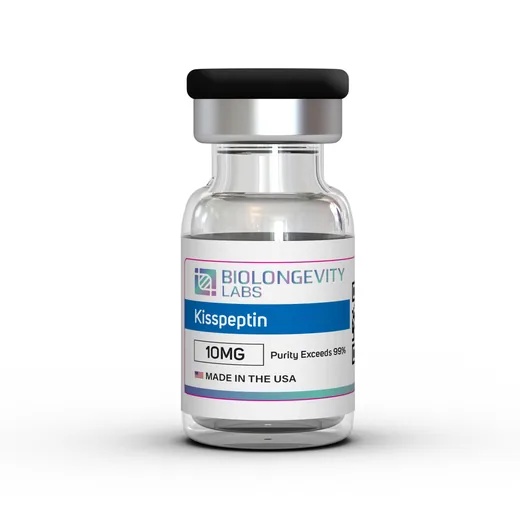
Research use only. Not for human consumption.
$52.97 as of Nov 22, 2026. Price at merchant may differ.
View research listingEducational content from an executive health coach, written as "what I would do if I were you" guidance — not medical advice, diagnosis or treatment. Injectable products sold on this site are for research use only and are not for human consumption. Talk with your licensed clinician before changing any protocol. Last reviewed November 2026.
